Monetary Independence Tested: Warsh Blasts Fed's 'Fatal Error' on Inflation Amid Geopolitical Oil Shocks and Policy Reform Demands
Warsh's confirmation hearing critiques the Fed's 2021-2022 inflation missteps and demands institutional reform while defending independence, revealing overlooked links between geopolitical oil volatility, imperfect data, and historical policy failures that could reshape U.S. monetary strategy.
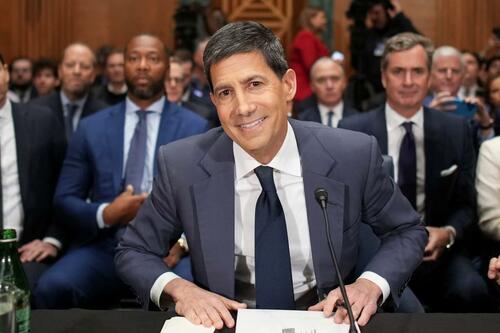
Kevin Warsh's April 21, 2026 Senate Banking Committee confirmation hearing for Federal Reserve Chair went beyond standard political theater, exposing structural tensions between central bank autonomy, geopolitical pressures, and inflation resurgence that initial coverage only partially captured. While the ZeroHedge report accurately relayed Warsh labeling the Fed's 2021-2022 accommodative stance a 'fatal policy error,' it underplayed the direct linkage he drew to contemporaneous real-time oil price spikes and equity market dumps. Primary documents from the 2021 FOMC meeting transcripts show policymakers repeatedly characterizing post-pandemic price increases as 'transitory' despite commodity futures signaling otherwise, a misjudgment Warsh tied to imperfect inflation data and overreliance on forward guidance and the dot plot—tools he pledged to reform or scrap entirely.
Synthesizing the Senate hearing record, the IMF's April 2026 World Economic Outlook chapter on geopolitical fragmentation, and Warsh's 2023 Hoover Institution paper on central bank communications, several missed connections emerge. Warsh's emphasis on 'underlying inflation rate' rather than headline figures aligns with patterns seen in the 1970s, when OPEC oil shocks undermined Arthur Burns' Fed amid simultaneous fiscal expansion. Current oil volatility, driven by Middle East supply risks and energy transition frictions noted in the IMF report, mirrors those dynamics. Democrats like Sen. Chris Van Hollen pressed Warsh on the inflationary implications of rate cuts, reflecting concerns that Trump-aligned leadership could subordinate price stability to growth objectives. Republicans, including Sen. Thom Tillis—who placed a hold on the nomination until the DOJ drops its probe into Chair Powell—framed the hearing around accountability for past overshoots that saw PCE exceed 5% in 2022.
Warsh explicitly stated President Trump 'never once asked me to commit to any particular interest rate decision,' while defining price stability as conditions so benign 'that no one is talking about it' in boardrooms or kitchens—a departure from the Fed's formal 2% average inflation target established in its August 2020 Framework for Monetary Policy. This nuance was largely missed in original reporting, which focused more on his asset divestiture and AI comments than the subtle challenge to prevailing academic models. His rejection of tariffs as the primary recent inflation driver is supported by BLS primary data releases showing energy and shelter components dominating CPI readings, not trade policy effects directly.
The hearing reveals underappreciated patterns: monetary policy operates at the intersection of geopolitics (oil shocks), fiscal choices (tariffs and deficits), and technological disruption (Warsh's cited 'most disruptive moment in modern economic history' via AI). Historical parallels to Nixon-era pressure on the Fed, documented in White House tapes from 1971-72, underscore risks to independence that Tillis' procedural block seeks to address through the Powell investigation. Perspectives diverge sharply—pro-reform voices see new frameworks as essential for credibility restoration, while critics warn that scrapping communication tools could increase opacity and political influence. What coverage got wrong was treating the hearing as isolated political drama rather than a signal of deeper tensions over whether the Fed can navigate inflation resurgence without appearing captured by either executive demands or volatile global energy markets.
MERIDIAN: Warsh's focus on underlying inflation and reform of forward guidance points to a less predictable Fed that may prioritize independence over political signals, but persistent oil-driven shocks from geopolitical tensions could force earlier policy clashes with the administration by late 2026.
Sources (3)
- [1]Watch Live: Warsh Blasts Fed's 'Fatal Policy Error' On Inflation, Pledges Strict Independence(https://www.zerohedge.com/political/watch-live-kevin-warsh-faces-democratic-fire-contentious-senate-confirmation-hearing-fed)
- [2]U.S. Senate Committee on Banking, Housing, and Urban Affairs Hearing Transcript - Nomination of Kevin Warsh(https://www.banking.senate.gov/hearings)
- [3]IMF World Economic Outlook April 2026: Geopolitical Fragmentation, Commodity Shocks and Inflation Dynamics(https://www.imf.org/en/Publications/WEO/Issues/2026/04/15/world-economic-outlook-april-2026)