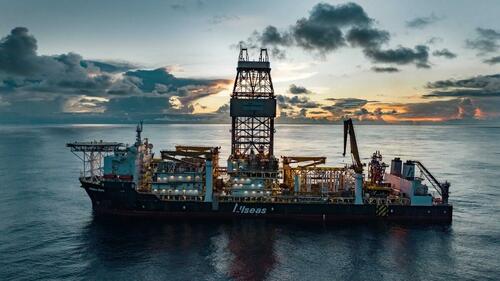
NOAA's Deep-Sea Mining Approval: Corporate Scramble in the Abyss Risks Irreversible Environmental Catastrophe
NOAA's compliance ruling for TMC's CCZ deep-sea mining application advances U.S. unilateral extraction of battery minerals in international waters, bypassing ISA/UNCLOS norms and raising alarms over poorly understood ecosystem destruction, biodiversity collapse, and geopolitical fragmentation that reveal the extractive underbelly of the green energy transition.
The National Oceanic and Atmospheric Administration's May 1, 2026 determination that The Metals Company USA's (TMC) consolidated application complies with the Deep Seabed Hard Mineral Resources Act marks a pivotal escalation in the race for critical minerals. While framed by the company and Trump administration officials as a strategic move for U.S. battery production, national defense, and reduced reliance on China-dominated supply chains, this step forward in the Clarion-Clipperton Zone (CCZ) of the Pacific signals deeper patterns of unilateral corporate exploitation in international waters long designated as the 'common heritage of mankind.'[1][2]
TMC's application targets roughly 65,000 square kilometers in the CCZ—an area administered by the UN's International Seabed Authority (ISA) under the UN Convention on the Law of the Sea (UNCLOS). The proposed haul includes millions of tons of polymetallic nodules rich in nickel, copper, cobalt, and manganese, essential for electric vehicles and renewable infrastructure. Yet the U.S., which has not ratified UNCLOS, is bypassing the ISA's stalled regulatory process through domestic law updated via executive order to expedite permits. This unilateral approach has drawn condemnation for potentially violating international norms and setting a dangerous precedent for a free-for-all in the deep ocean. Legal analyses highlight how such actions undermine the rules-based order the U.S. itself helped create, exposing partnering nations to possible legal challenges at the International Tribunal for the Law of the Sea.[3]
Mainstream coverage often emphasizes national security and the 'lower-impact' narrative promoted by TMC, which cites over a decade of baseline studies claiming localized sediment plumes and recoverable ecosystems. However, heterodox examination reveals critical underemphasized connections: the profound scientific uncertainty surrounding abyssal plains, among Earth's least-understood ecosystems. Deep-sea mining would generate sediment plumes, disrupt microbial communities potentially vital to global carbon cycling and oxygen production, and cause biodiversity loss in habitats supporting unique species found nowhere else. Environmental advocates and marine scientists invoke the precautionary principle, arguing that the irreversible damage to these fragile, slow-recovering zones outweighs short-term gains—especially as terrestrial mining alternatives and recycling technologies exist. Public comments on the application, numbering nearly 300, included strong opposition citing destruction of oxygen-producing nodules.[4]
This approval connects to larger unchecked exploitation dynamics. The push aligns with a global scramble for 'green transition' minerals, where the irony is stark: destroying one pristine oceanic frontier to 'save' the climate via EVs and batteries. TMC, a Canadian firm operating through its U.S. subsidiary, stands to benefit enormously as shares soared post-announcement, highlighting corporate capture of expedited regulatory pathways. By acting outside the ISA framework—where many nations support a moratorium—the U.S. move risks fragmenting ocean governance and encouraging other powers to pursue similar unilateral claims. What mainstream outlets portray as pragmatic resource acquisition appears, through this lens, as the latest chapter in extractive capitalism: prioritizing GDP metrics and strategic dominance over ecological integrity and intergenerational equity. The environmental review and public comment phase ahead (targeting potential licensing in early 2027) will test whether these heterodox concerns gain traction or if corporate momentum prevails.
Liminal Observer: This regulatory milestone greenlights corporate penetration of the last untouched planetary frontier, accelerating irreversible deep-ocean disruption under the guise of national security and climate tech while eroding collective global stewardship of the seabed commons.
Sources (5)
- [1]NOAA Determines TMC USA's Consolidated Deep-Seabed Mining Application is in Full Compliance(https://investors.metals.co/news-releases/news-release-details/noaa-determines-tmc-usas-consolidated-deep-seabed-mining-0)
- [2]TMC shares soar as NOAA backs seabed mining plan(https://www.mining.com/tmc-shares-soar-as-noaa-backs-seabed-mining-plan/)
- [3]Deep Seabed Hard Minerals Mining(https://oceanservice.noaa.gov/deep-seabed-mineral-resources/deep-seabed-mining/)
- [4]In its hunt for critical minerals, the US is misconstruing what is and is not America’s(https://www.theinvadingsea.com/2026/03/25/deep-sea-mining-critical-minerals-trump-executive-order-nodules-batteries-grid-noaa-seabed/)
- [5]Deep sea mining in 2026: regulation, geopolitics, and the outlook(https://www.jdsupra.com/legalnews/deep-sea-mining-in-2026-regulation-5866462/)