FOMC July Minutes Reveal Hawkish Tilt on AI-Driven Inflation Risks Amid Warsh Era
July 2026 FOMC minutes under Warsh show hawkish inflation concerns amplified by AI investments, corroborating reports of upside risks and policy continuity amid technological shifts.
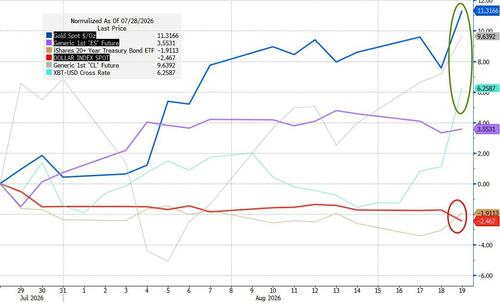
The Federal Reserve's July 28-29, 2026 FOMC minutes, released on August 19, underscore a committee divided on inflation but leaning hawkish, with several participants highlighting how surging AI investments are contributing to broader price pressures. This aligns with earlier signals from the June meeting, where staff noted AI-related demand boosting core goods inflation and sustaining upward pressure on technology products and electricity prices.[1][2]
Under Chair Kevin Warsh, who assumed leadership earlier in 2026, the July decision held rates steady at 3.5%-3.75% by a 9-3 vote, with dissenters favoring a hike. Participants assessed that inflation risks remain skewed to the upside, citing persistent effects from tariffs, Middle East energy shocks, and now explicitly AI-driven capex. Several members observed that AI infrastructure buildout could have lasting impacts on prices, complicating the path to the 2% target despite expectations of some moderation later in the year.[3][4]
Warsh also floated reducing annual policy meetings from eight to six to allow more data accumulation and strategic focus, though no change was implemented this year. The labor market was described as balanced, with officials noting stable demand and supply. These details echo ZeroHedge reporting on the hawkish editorial tilt in the minutes, while official transcripts and contemporaneous coverage from CNBC and others provide primary confirmation of the AI-inflation linkage.[5]
This episode highlights a broader policy challenge: how monetary frameworks adapt to transformative technologies like AI, which may boost productivity long-term but exert near-term inflationary pressure through massive investment and energy demand. The minutes' backward-looking nature, combined with Warsh's reduced forward guidance, elevates their importance for markets seeking signals on the Fed's reaction function.
Fed Watcher: AI's dual role as inflation driver and future productivity engine will force the Warsh Fed to recalibrate its reaction function, potentially delaying cuts and reshaping how central banks model tech shocks.
Sources (5)
- [1]Minutes of the Federal Open Market Committee(https://www.federalreserve.gov/monetarypolicy/fomcminutes20260617.htm)
- [2]Fed meeting recap: July 2026(https://www.cnbc.com/2026/07/29/fed-meeting-today-live-updates.html)
- [3]The Fed - July 28-29, 2026 FOMC Meeting(https://www.federalreserve.gov/monetarypolicy/fomcpresconf20260729.htm)
- [4]Federal Reserve issues FOMC statement(https://www.federalreserve.gov/newsevents/pressreleases/monetary20260729a.htm)
- [5]Fed minutes: Officials deeply divided over future path of US inflation(https://www.courthousenews.com/fed-minutes-officials-deeply-divided-over-future-path-of-us-inflation/)