Trump Administration Issues Fuel Economy Standards Cutting 2031 Target to 34.5 MPG
Trump's Monday rule lowers the 2031 CAFE target to 34.5 mpg, cutting compliance costs cited in NHTSA modeling. The move reduces regulatory pressure on US oil demand while manufacturers gain flexibility on powertrain choices. Divergent standards with other jurisdictions will shape platform allocation and capital deployment.
President Trump announced via Truth Social on 26 September that he approved revised NHTSA fuel-economy rules terminating the Biden EV mandate. The change follows the December 2025 proposed rule and responds to manufacturer requests to lower compliance costs. NHTSA data estimate a $930 reduction in average vehicle price if savings are passed through.
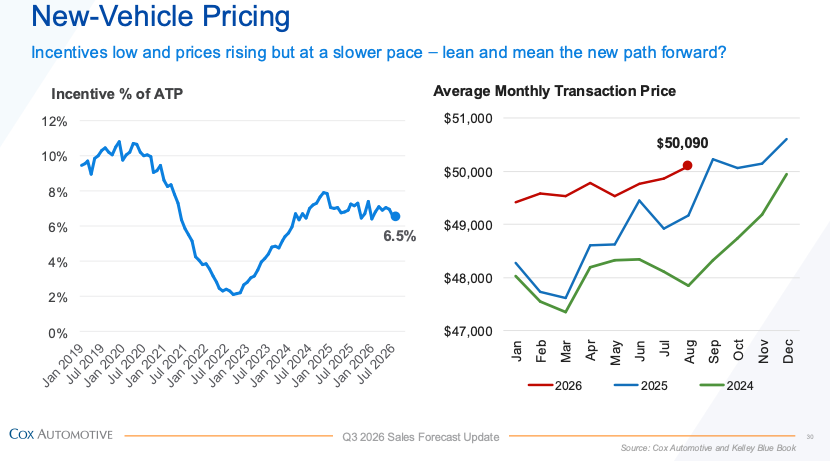
Auto manufacturers face documented cost increases from Obama- and Biden-era requirements on hybrids, cylinder deactivation, and diesel DEF systems. Primary records show these added upfront prices and maintenance burdens, pushing average new-vehicle transaction prices above $50,000. The rollback aligns regulatory stringency with observed production economics rather than stated climate targets.
Lower mandated efficiency reduces pressure on oil demand growth in the US light-duty fleet through 2031. This eases one constraint on crude consumption while shifting incremental demand risk to global supply dynamics and OPEC+ decisions. European and Chinese regulators retain tighter standards, creating divergent cost structures for multinational platforms.
General Motors, Ford, and Stellantis have signaled expanded US investment under the revised rules. Actual price transmission and fleet composition shifts will appear in quarterly earnings and EPA certification data by mid-2027.
NHTSA: Average transaction price for new light-duty vehicles falls at least $600 by end-2027 relative to 2025 baseline.
Sources (2)
- [1]NHTSA Proposed Rule December 2025(https://www.nhtsa.gov/sites/nhtsa.gov/files/2025-12/fuel-economy-standards-nprm-2025.pdf)
- [2]Bloomberg Report on Final Rule Parameters(https://www.bloomberg.com/news/articles/2026-09-26/trump-fuel-economy-rollback)