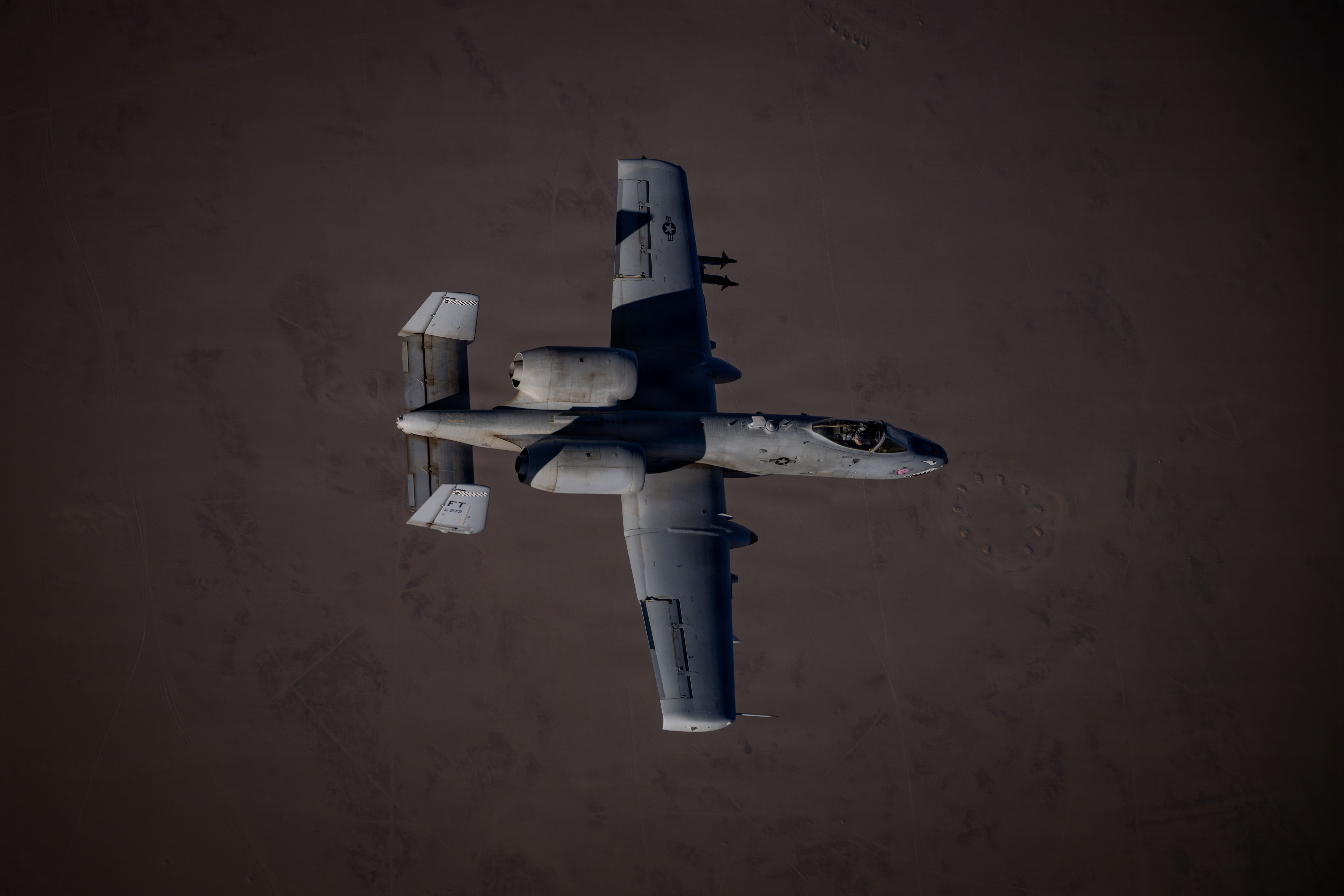
A-10 Loss Near Strait of Hormuz Exposes U.S. Vulnerabilities in Contested Chokepoint Warfare
The A-10 crash near the Strait of Hormuz, occurring simultaneously with an F-15E shootdown, reveals critical vulnerabilities in U.S. low-altitude maritime interdiction operations against improving Iranian coastal defenses. This incident highlights the strategic risk to global energy flows through a vital chokepoint and exposes operational strain across multiple U.S. aircraft types during Operation Epic Fury.
The reported crash of a U.S. Air Force A-10 Thunderbolt II near the Strait of Hormuz on April 3, 2026, is far more than a single-platform loss during Operation Epic Fury. While Defense News correctly notes the timing alongside an F-15E Strike Eagle being shot down over Iran and the successful rescue of the A-10 pilot, the coverage fails to connect this incident to the broader erosion of U.S. air dominance in a maritime chokepoint that handles roughly 21 percent of global petroleum shipments. The original report also underplays Iranian state media's claim that the A-10 was deliberately targeted in southern waters, consistent with Tehran's pattern of using coastal air-defense networks to impose costs on low-and-slow platforms.
Synthesizing the Defense News dispatch with a January 2026 CSIS report on Iranian coastal defense modernization and a Reuters analysis of energy security dated April 4, 2026, a clearer picture emerges. The A-10 had been repurposed for maritime interdiction against IRGC fast-attack craft, a mission expansion that places the aircraft squarely in the engagement envelope of Iranian MANPADS, short-range ballistic missiles, and upgraded Russian-supplied Tor and Pantsir systems. Historical patterns from the 1980s Tanker War and the 2019-2020 Iranian attacks on international shipping demonstrate Tehran's long-standing doctrine of asymmetric closure of the Strait. What the original story missed is the cumulative attrition effect: this is the latest in a string of losses including a KC-135 crash that killed six airmen, an F-35 hit on March 19, and a friendly-fire incident involving Kuwaiti F/A-18s. These events reveal coordination friction, overtasked maintenance pipelines, and the limits of current SEAD/DEAD packages against a peer-adversary air defense network.
The strategic implication is significant. Iran's layered A2/AD approach in the Persian Gulf is not merely defensive; it is designed to raise the political and economic price of sustained U.S. presence to unacceptable levels. Control of the Strait remains the ultimate leverage in any Iran conflict. Sustained disruption, even intermittent, could push Brent crude beyond $150 per barrel within days, triggering cascading effects on global inflation, European energy security, and Asian supply chains. The deployment of HC-130s and HH-60G Pave Hawks for combat search-and-rescue over Iranian-claimed waters further signals the high operational tempo and risk tolerance now required, stretching special operations and personnel recovery assets already committed across multiple theaters.
This incident fits a larger pattern of power diffusion where technologically sophisticated but vulnerable legacy platforms are being challenged by proliferated, lower-cost defensive systems. The U.S. Air Force's increased reliance on the A-10 for anti-surface warfare highlights a gap in dedicated maritime strike assets and the challenge of maintaining air superiority while simultaneously conducting close air support and interdiction in the same battlespace. As Iranian capabilities continue to benefit from Russian and Chinese technology transfers, the Hormuz theater is rapidly becoming a proving ground for 21st-century chokepoint warfare with direct implications for Taiwan Strait contingencies and global energy stability.
SENTINEL: The synchronized loss of an A-10 and F-15E demonstrates Iran's maturing integrated air defense network is successfully raising the cost of U.S. close air support in the Gulf; expect accelerated pressure on energy markets and a likely shift toward standoff munitions and increased naval surface action groups to maintain freedom of navigation.
Sources (3)
- [1]A-10 Warthog crashes near Strait of Hormuz(https://www.defensenews.com/news/your-military/2026/04/03/a-10-warthog-crashes-near-strait-of-hormuz/)
- [2]Iranian Coastal Defenses and the Future of Maritime Chokepoint Warfare(https://www.csis.org/analysis/iranian-coastal-defenses-2026)
- [3]Oil Markets on Edge After Fresh Incidents in Strait of Hormuz(https://www.reuters.com/world/middle-east/oil-markets-hormuz-incidents-2026-04-04/)