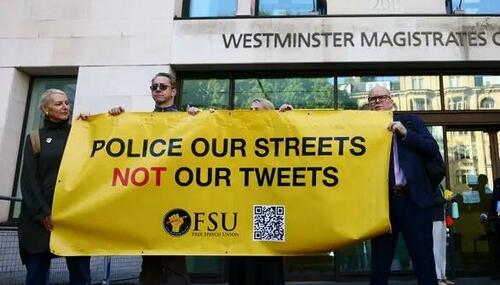
Britain's Expanding Speech Laws: Arrests, Postcode Lotteries, and the Pushback on Free Expression
Corroborated data shows over 62,000 UK arrests for communications offences amid inconsistent policing and ongoing reforms to non-crime incident recording, highlighting free speech concerns.
A new report by civil liberties group Big Brother Watch reveals that at least 62,199 people in the UK were arrested for communications offences between 2021 and 2025, based on Freedom of Information data from 38 of 45 territorial police forces. At least 18,500 were charged and 12,292 convicted under laws including the Malicious Communications Act 1988, Communications Act 2003, and Online Safety Act 2023. The true figure may approach 73,000 if non-responding forces matched national averages. Arrest rates vary dramatically by force, creating what the report calls a 'postcode lottery'—Cumbria recorded 25.69 arrests per 10,000 residents, over 13 times higher than neighbouring Northumbria's 1.9. Similar disparities appear in charging rates. While some arrests address genuine threats like harassment or domestic abuse, the gap between arrests and convictions suggests the process itself often serves as punishment, with device seizures, interviews, and stigma chilling broader expression. One documented case involved Hertfordshire parents Rosalind Levine and Maxie Allen, arrested in January 2025 after complaints about their daughter's primary school in a private WhatsApp group. They were detained for up to 11 hours on suspicion of harassment and malicious communications; Hertfordshire Police later admitted the arrest criteria were not met and paid £20,000 in compensation. Parallel developments include reforms to Non-Crime Hate Incidents (NCHIs). In March 2026, the College of Policing and National Police Chiefs' Council recommended scrapping the existing NCHI system, which recorded lawful speech without a crime, in favour of a narrower framework focused only on incidents with a clear policing purpose. The government accepted these changes, aiming to end recording of everyday disputes or online spats and redirect resources to actual crime. Critics argue vague terms like 'grossly offensive' in current statutes enable arbitrary enforcement by ideological bureaucracies. Mainstream coverage in outlets including The Guardian, Sky News, The Times, GB News, and official statements from GOV.UK and the College of Policing corroborate the scale and inconsistencies, underscoring tensions between public safety and free speech protections.
[LIMINAL]: Vague speech statutes and selective enforcement in Britain demonstrate how administrative mechanisms can expand state influence over discourse, setting patterns that other nations may adopt amid similar pressures on public debate.
Sources (6)
- [1]Big Brother Watch Report Coverage(https://bigbrotherwatch.org.uk/campaigns/save-free-speech/)
- [2]Daily Mail on Big Brother Watch Findings(https://bigbrotherwatch.org.uk/press-coverage/daily-mail-more-than-60000-arrested-for-speech-offences-in-britain-damning-report-reveals/)
- [3]Sky News on Levine and Allen Case(https://news.sky.com/story/school-ban-put-us-in-ridiculous-position-says-father-in-whatsapp-row-after-police-admit-unlawful-arrest-13471559)
- [4]The Guardian on Hertfordshire Arrest Case(https://www.theguardian.com/uk-news/2025/nov/16/hertfordshire-police-admit-unlawful-arrest-of-borehamwood-couple-in-school-whatsapp-row-report)
- [5]College of Policing on NCHI Reforms(https://www.college.police.uk/article/major-reforms-police-hate-incident-recording)
- [6]GOV.UK Government Response to NCHI Review(https://www.gov.uk/government/news/government-response-to-non-crime-hate-incidents-final-report)