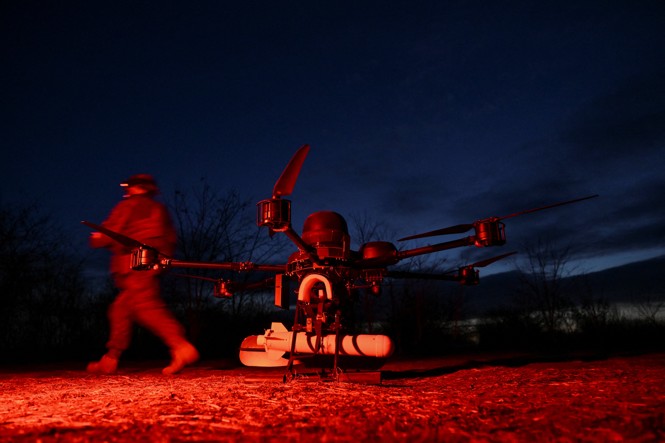
Innovation vs. Inertia: Ukraine's Drone Revolution Exposes the Limits of Traditional Tank Warfare
Ukraine's mastery of affordable drones against expensive armor reveals a pivotal shift from traditional heavy warfare to innovative, asymmetric tactics, exposing institutional resistance to change with worldwide military consequences.
The Atlantic's recent analysis correctly observes that Ukrainian forces have rendered artillery and armored vehicles far more vulnerable through rapid advancements in drone technology, raising the question of why global militaries continue investing in tanks. However, it stops short of examining the institutional inertia and historical patterns driving this disconnect. Observations from the battlefield show Ukrainian FPV drones and loitering munitions achieving high success rates against Russian armor, with documented losses exceeding 3,000 tanks since the 2022 invasion according to open-source intelligence. This contrasts sharply with the billions still allocated to main battle tank production by NATO members, Russia, and China.
Synthesizing the Atlantic piece with RUSI's detailed reports on Ukrainian attrition tactics and a 2024 CSIS study on evolving ground warfare, a clearer pattern emerges: this is not simply obsolescence but a fundamental shift toward asymmetric, low-cost systems that challenge decades of doctrine centered on heavy armor. What the original coverage missed is the hybrid reality—tanks are not disappearing but are being forced into supporting roles, often requiring drone escorts or electronic warfare shields that many forces lack. The original also underplays industrial lock-in; legacy production lines and political commitments to defense contractors sustain tank output even as data from Ukraine demonstrates their vulnerability to $500 quadcopters.
This connects to broader historical transitions, such as the machine gun's disruption of cavalry in World War I or the aircraft carrier's eclipse of battleships before World War II. In both cases, tradition yielded slowly to innovation. Opinion: The Ukrainian example highlights how nimble adaptation by a smaller power can outpace the technological conservatism of superpowers, signaling that future conflicts will reward software-savvy forces over those relying on expensive hardware. Global implications include accelerated arms proliferation, as drone kits become accessible beyond state actors, and pressure on military budgets to prioritize attritable assets over prestige platforms.
PRAXIS: This means ordinary citizens in conflict zones or near flashpoints may face more frequent low-intensity drone threats and disrupted supply chains, as cheaper innovation lowers the cost of war and encourages more nations and groups to engage in prolonged conflicts.
Sources (3)
- [1]Building Tanks While the Ukrainians Master Drones(https://www.theatlantic.com/national-security/2026/03/who-needs-tanks-age-drones/686540/)
- [2]The Russian Tank Fleet in 2024(https://www.rusi.org/explore-our-research/publications/commentary/russian-tank-fleet-2024)
- [3]The Future of Ground Warfare in the Indo-Pacific(https://www.csis.org/analysis/future-ground-warfare-indo-pacific)