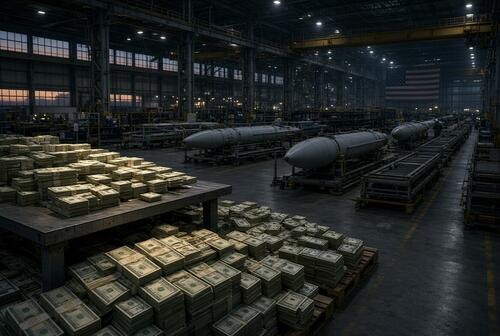
Missile Defense Shortfalls Expose Limits of U.S. Industrial Base Amid Iran Conflict
Corroborated reports confirm significant THAAD and interceptor depletion in 2025-2026 Iran conflicts due to production constraints, highlighting U.S. defense industrial limits despite financial capacity, with risks for future contingencies like China.
America's unmatched ability to finance defense through monetary creation has not overcome deep-seated constraints in its missile production capacity, leaving critical air-defense systems depleted after sustained operations against Iran and raising questions about readiness for peer conflicts. The Terminal High Altitude Area Defense (THAAD) system, designed to intercept ballistic missiles in their terminal phase, illustrates the gap: each interceptor costs approximately $12-15 million, with the U.S. military operating just eight batteries and facing production rates that historically averaged only about eight missiles per month (96 annually).[1][2]
Conflicts in June 2025 (the "Twelve-Day War") and the ongoing war that began in February 2026 have consumed hundreds of THAAD interceptors alongside Patriots and Standard Missiles. Reports indicate over 150 THAAD interceptors used in the 2025 phase alone, with cumulative expenditures exceeding 200 by mid-2026—potentially half to two-thirds or more of pre-conflict stockpiles estimated around 450-534 interceptors.[3][4][5] New deliveries remain delayed until 2027 in some pipelines, though ramp-up plans aim for 400 annually long-term.[6]
Congressional Budget Office and Defense Department Inspector General assessments peg the war's cost at $33-38 billion through mid-2026, with munitions replacement alone projected at over $21 billion and restocking timelines of three to five years even under accelerated production.[1][7] This depletion stems not from funding shortages but from industrial base bottlenecks, low peacetime output, and the inherent complexity of precision interceptors—echoing broader critiques that fiscal tools cannot instantly scale physical manufacturing. Iran’s precision strikes on U.S. defense infrastructure have compounded vulnerabilities.
Deeper implications extend to strategic posture: depleted high-end interceptors could constrain options in a Taiwan scenario against China’s large missile arsenal, as noted in CBO analysis.[8] Efforts to triple or quadruple output reflect belated recognition of these limits, yet rebuilding lags behind operational demands. The episode underscores how monetary sovereignty funds procurement but cannot bypass supply-chain realities, potentially eroding deterrence credibility and forcing tradeoffs between Middle East commitments and Indo-Pacific priorities.
LIMINAL: Persistent interceptor shortfalls could accelerate U.S. strategic retrenchment or force accelerated industrial mobilization, altering great-power deterrence dynamics within 2-3 years.
Sources (5)
- [1]The US is burning through its supply of interceptors to counter Iran’s attacks(https://www.wsj.com/world/middle-east/the-u-s-is-burning-through-its-supply-of-interceptors-to-counter-irans-attacks-f42c5ecd)
- [2]Iran war has cost $38 billion, depleted two-thirds of US missile interceptors, CBO says(https://www.militarytimes.com/news/your-military/2026/09/15/iran-war-has-cost-38-billion-depleted-two-thirds-of-us-missile-interceptors-cbo-says/)
- [3]The Depleting Missile Defense Interceptor Inventory(https://www.csis.org/analysis/depleting-missile-defense-interceptor-inventory)
- [4]The Terminal High Altitude Area Defense (THAAD) System(https://www.congress.gov/crs-product/IF12645)
- [5]Lockheed Martin to Triple THAAD Production(https://en.defence-ua.com/industries/lockheed_martin_to_triple_thaad_production_8_missiles_per_month_shows_how_unprepared_us_really_is-17128.html)