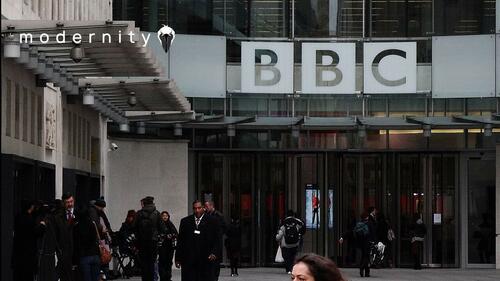
Former BBC News Director Admits 'Progressive Madness' and Trans Activism Drove Her Out, Exposing Institutional Capture
Insider testimony from Fran Unsworth and Rob Burley's investigation corroborate claims of trans activist influence and progressive bias undermining BBC impartiality, linking it to DEI policies, self-censorship, and wider institutional 'madness' on gender issues.
In a rare insider account that cuts through the typical defenses of legacy media, Fran Unsworth, who served as the BBC's Director of News and Current Affairs from 2018 to 2022, has publicly stated that bullying by trans activists and a prevailing 'progressive madness' made her position untenable, effectively driving her from the role. Speaking in an extensive interview with former BBC editor Rob Burley, Unsworth described an internal culture where editors self-censored on gender issues to avoid attacks from activist-aligned colleagues, no-platforming dissenting voices and prioritizing 'safe spaces' over rigorous debate. 'I would actually say it drove me out, just dealing with the progressive editorial issues and the bullying around them all. It was incredibly difficult,' she recounted. This was not limited to trans topics; she observed a broader pattern of staff rejecting certain viewpoints outright. Unsworth framed the BBC's struggles as symptomatic of a wider societal shift: 'The world went mad, and the BBC, because it is part of the world, went a bit mad with it.' This admission provides a high-level confirmation of what critics have long contended about ideological conformity in public broadcasting. Rob Burley's accompanying investigation, drawing on his 13 years as a senior editor including at Newsnight, details how transgender ideology systematically undermined the BBC's foundational commitment to impartiality. Beginning with style guide changes around 2013 that aligned with Stonewall advocacy positions—such as contested definitions of sex and gender—the corporation embedded activist frameworks into its editorial processes. DEI initiatives and participation in Stonewall's Diversity Champions scheme further tilted hiring and content toward affirmative perspectives, with recruiters explicitly instructed in 2024 not to hire candidates dismissive of diversity and inclusion policies. Specific examples illustrate the capture: a 2014 Newsnight debate on transgender issues was canceled after activists withdrew upon discovering a gender-critical panelist, labeling it a 'TERF trap.' Investigative features, such as Caroline Lowbridge's 2021 piece on lesbians facing pressure to date trans women, faced extraordinary internal scrutiny, delays, and backlash, including complaints from Stonewall itself. Coverage of the Tavistock gender clinic was reportedly avoided for years due to internal fears, even as affirmative children's programming proliferated. Burley highlights how 'be kind' sentiments and fear of cancellation supplanted evidence-based reporting, especially on youth transitions—a stance only shifting after external catalysts like the Cass Review, legal rulings on biological sex, and whistleblower accounts. These dynamics connect to broader patterns in legacy media, where progressive conformity on culture-war issues rarely receives the same internal scrutiny as conservative biases. Unsworth's departure, hastened by this environment, echoes other quiet exits and leaks describing 'effective censorship.' While the BBC has updated style guides post-Cass and maintains it reflects evolving evidence, trust metrics continue to decline amid parental complaints—over 650 families in 2025 accused the broadcaster of harmful 'drip-feed' pro-trans content in children's shows like Hey Duggee and medical dramas. This case reveals connections often missed in surface-level coverage: the feedback loop between HR-driven DEI screening, activist staff power, and editorial capture that transforms a public service broadcaster into an ideological vector. As Burley argues, without confronting this history, the BBC risks permanently eroding its impartiality mandate in an era of polarized information.
LIMINAL: This high-level defection from within the BBC exposes how ideological enforcement replaced journalistic norms, likely accelerating audience migration to independent outlets and forcing legacy institutions into defensive reforms or continued trust collapse.
Sources (3)
- [1]Inside the capture of the BBC(https://unherd.com/2026/05/inside-the-capture-of-the-bbc/)
- [2]BBC News boss: I was driven out by trans activism(https://www.telegraph.co.uk/news/2026/05/16/bbc-news-boss-fran-unsworth-driven-out-by-trans-activism/)
- [3]BBC told don’t hire candidates who are “dismissive” about diversity and inclusion(https://freespeechunion.org/archive/bbc-told-dont-hire-candidates-who-are-dismissive-about-diversity-and-inclusion)