Supreme Court Hears Geofence Warrant Case That Could Greenlight Mass Digital Surveillance
Supreme Court review of geofence warrants in Chatrie v. United States could decide if mass collection of bystander location data violates the Fourth Amendment, with major implications for curbing or enabling digital dragnet surveillance.
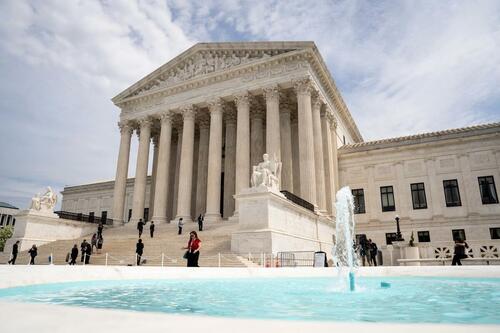
As the Supreme Court hears oral arguments today in Chatrie v. United States, the justices face a decision with once-in-a-generation implications for Fourth Amendment protections in the digital era. The case stems from a 2019 bank robbery in Virginia where law enforcement used a geofence warrant on Google to obtain anonymized location data from devices within 150 meters of the scene over a one-hour window, later expanding the timeframe and de-anonymizing data for three devices—including petitioner Okello Chatrie's—without additional warrants. This evidence contributed to Chatrie's conviction despite his confession, raising core questions about whether such 'reverse searches' constitute unreasonable searches by sweeping up location histories of countless bystanders lacking any individualized suspicion.
Building on Carpenter v. United States precedents limiting warrantless access to cell-site location information, this dispute tests the third-party doctrine's limits when phones constantly ping providers for basic functionality. Privacy advocates warn geofence warrants function as digital general warrants, inherently overbroad and failing particularity and probable cause requirements. The Brennan Center for Justice, joined by the Center for Democracy & Technology and others, filed an amicus brief arguing these tools risk opening the door to 'reverse search' warrants targeting not just physical presence but online searches, video views, or AI prompts—chilling speech, association, and privacy on a massive scale. A Fifth Circuit ruling deemed geofence warrants unconstitutional, creating a split with the Fourth Circuit's fractured decision that largely upheld the practice via good-faith exceptions.
SCOTUSblog documentation and filings from the ACLU, Electronic Frontier Foundation, and Constitutional Accountability Center highlight how law enforcement issued thousands of such requests to Google alone by 2019, often served on Apple, Uber, Lyft, and Snapchat. This reflects an expanding digital police state where constant location tracking—necessary for modern devices—transforms private movements into a searchable database. Connections missed in mainstream coverage include the potential normalization of dragnet surveillance that could extend to political protests, places of worship, or sensitive medical facilities, eroding the 'privacies of life' the Fourth Amendment was designed to protect against arbitrary power. A ruling for the government could entrench these practices; one for Chatrie might compel warrants with stricter bounds, forcing investigators toward traditional methods even as technology evolves. Experts from the CDT describe this as a fork in the road for location surveillance and reverse warrants alike.
LIMINAL: Upholding geofence warrants would likely accelerate the digital police state by legitimizing mass reverse searches on location data, while a strong privacy ruling could halt the slide toward constant, warrantless tracking of public movements and associations.
Sources (5)
- [1]Chatrie v. United States (25-112)(https://www.scotusblog.com/cases/chatrie-v-united-states/)
- [2]Okello Chatrie v. United States of America(https://www.brennancenter.org/our-work/research-reports/okello-chatrie-v-united-states-america)
- [3]Rights Groups to Supreme Court: Reject Privacy-Invasive Geofence Warrants(https://www.aclu.org/press-releases/rights-groups-to-supreme-court-reject-privacy-invasive-geofence-warrants)
- [4]A Fork In the Road for the Fourth Amendment(https://cdt.org/insights/a-fork-in-the-road-for-the-fourth-amendment-how-the-chatrie-case-could-shape-location-surveillance-and-reverse-warrants-for-the-digital-age/)
- [5]Chatrie v. United States(https://epic.org/documents/chatrie-v-united-states/)