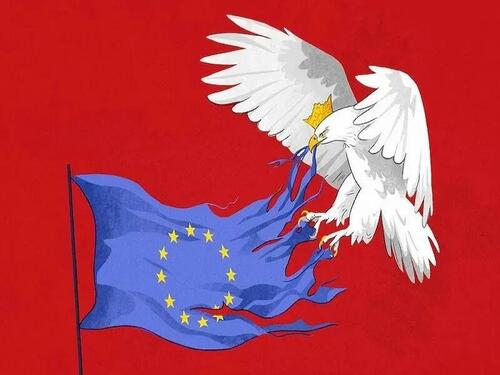
Poland's Veto: Last Fracture in the EU's Federalization Drive Signals Wider Sovereignty Revolt
Poland under President Karol Nawrocki has become the primary obstacle to EU federalization after Orbán's fall, using veto power to block defense loans and qualified majority voting shifts. This continues a pattern of national sovereignty resistance with roots in concerns over German influence, mirroring rising populist pushback across Europe.
In March 2026, Polish President Karol Nawrocki vetoed legislation that would have allowed Poland to access nearly €44 billion in EU loans under the Security Action for Europe (SAFE) program. Citing risks to national sovereignty, long-term debt in foreign currency, and potential arbitrary withholding of funds by Brussels, Nawrocki framed the move as a defense of Poland's independence in military and economic matters. Multiple outlets reported the veto as a direct clash with Prime Minister Donald Tusk's pro-EU government, which lacks the two-thirds parliamentary majority needed to override presidential decisions.[1][2]
This development comes weeks after Viktor Orbán's electoral defeat in Hungary in April 2026. European Commission President Ursula von der Leyen moved swiftly, stating that the result provided "momentum" to advance qualified majority voting (QMV) in EU foreign policy. Under QMV, decisions on sanctions, aid, and security could pass with 55% of member states representing 65% of the EU population, eliminating individual national vetoes that have long protected sovereignty. Von der Leyen explicitly linked the shift to avoiding "systemic blockages" previously caused by holdouts like Orbán.[3][4]
Poland now occupies the position Hungary once held. Nawrocki's alignment with conservative opposition leader Jarosław Kaczyński's Law and Justice (PiS) movement ensures continued veto leverage at least until parliamentary elections in 2027. Kaczyński has repeatedly warned against EU structures enabling "German neo-imperialism," including a 2021 interview in which he accused Berlin of seeking to transform the bloc into a federal "Fourth Reich"—a reference to centralized power reminiscent of historical German dominance rather than Nazism. These concerns echo in Nawrocki's rhetoric on defense loans and EU reform toward looser sovereignty-respecting structures.[5]
The pattern is clear: supranational consolidation—whether through joint borrowing, defense union, fast-tracked enlargement, or removal of vetoes—encounters persistent fractures where national electorates deliver conservative leadership. Germany's proposals for a "two-speed Europe" and von der Leyen's "veritable union of defense" represent complementary acceleration toward federalization that smaller or historically wary states resist. Poland's stand is not isolated; it reflects a continent-wide undercurrent of sovereignty pushback visible in populist surges from France and Italy to the Netherlands and Slovakia. These movements prioritize national identity, border control, and decision-making autonomy over deeper integration that critics argue dilutes democratic accountability and social cohesion.
What others miss is the eschatological parallel drawn by EU skeptics: the political "katechon"—a restraining force delaying unwanted transformation. Orbán played this role for years; with his exit, it falls squarely on Nawrocki. His ability to block federalizing legislation without immediate political cost reveals the EU's structural fragility. Rather than smooth consolidation, Brussels faces a mosaic of opt-outs, vetoes, and reform demands. If conservative forces regain parliamentary power in Warsaw by 2027, this fracture could widen, inspiring parallel resistance and forcing a genuine debate on subsidiarity over centralization. The German-led momentum toward tighter control may ultimately exacerbate the very nationalist reactions it seeks to override, exposing the limits of supranational power in the face of resilient state identities.
LIMINAL: Poland's veto role as the current brake on EU centralization highlights deepening fractures that could galvanize nationalist movements continent-wide, forcing either meaningful reform or a messy two-tiered Union rather than full federal superstate.
Sources (5)
- [1]Polish President Nawrocki rejects EU's 44B euro defense loan(https://apnews.com/article/poland-defense-european-union-loans-president-veto-c68b60654f1c4624009638ad8ecccec8)
- [2]Von der Leyen uses Orbán defeat to push for end of veto in EU foreign policy(https://www.politico.eu/article/ursula-von-der-leyen-uses-hungary-viktor-orban-defeat-to-push-for-end-of-veto-in-eu-foreign-policy/)
- [3]Polish president vetoes EU defence loan bill(https://www.reuters.com/business/polish-president-vetoes-eu-defence-loan-bill-2026-03-12/)
- [4]Polish deputy PM says Germany wants to turn EU into 'fourth reich'(https://www.theguardian.com/world/2021/dec/24/poland-jarosaw-kaczynski-germany-eu-fourth-reich)
- [5]Von der Leyen Uses Orbán Defeat To Reopen Battle Against National Veto(https://europeanconservative.com/articles/news/von-der-leyen-orban-defeat-battle-against-national-veto/)