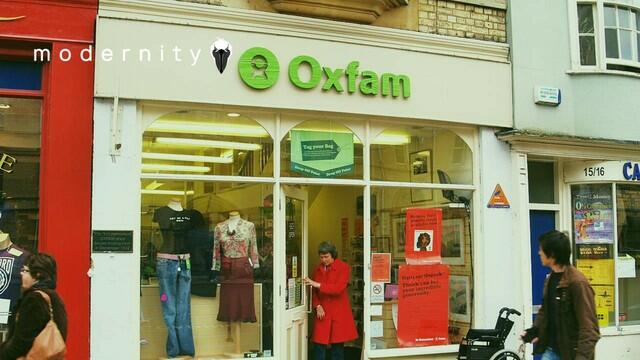
UK Charities Report Negative Ethnicity Pay Gaps Favoring Minority Staff, Sparking Debate Over Equality Act and Merit-Based Pay
Corroborated reports from Oxfam, CRUK, and British Red Cross show negative ethnicity pay gaps favoring minority staff, driven partly by workforce composition; critics link to Equality Act positive action potentially creating reverse disparities affecting pay equity and merit.
Three major UK charities—Oxfam, Cancer Research UK, and the British Red Cross—have disclosed voluntary ethnicity pay gap data showing white staff receiving lower median pay than colleagues identifying as Black or from other minority ethnic backgrounds (BPOC). Oxfam reported a -33.0% median gap (widening from -10.4% the prior year) and -12.9% mean gap, based on 69.2% of staff disclosing ethnicity, with BPOC staff at 10.5% of the workforce. The charity noted potential skew from higher disclosure rates among higher-paid BPOC staff and cautioned the figures 'cannot be seen as conclusive' but are 'suggestive of lower average pay at the charity for white workers.'
Cancer Research UK reported a -7.6% median gap in 2025 (narrowing but still favoring minorities since 2020), attributing much of it to white staff concentration in lower-paid retail roles versus minority staff in higher-paying tech positions. The British Red Cross reported an 11.4% gap favoring minority staff, who comprise 19.6% of its workforce, emphasizing fair pay regardless of ethnicity and workforce reflection of served communities.
These disclosures, drawn from organizations' own reports, have fueled criticism of 'positive action' provisions in the Equality Act 2010. Shadow Culture Minister James Wild argued pay should reward 'talent and hard work, regardless of background.' Reform UK's Suella Braverman called it 'rampant positive action schemes... actively discriminating against white, working-class Brits.' Lord Young of the Free Speech Union described the Act's positive action section as a 'get-out-of-jail-free card' for discriminating against white people. Charities uniformly deny operating positive discrimination policies, stressing merit-based processes and equal pay for equal work.
The data highlights how voluntary reporting—encouraged by government guidance but not yet mandatory—can reveal compositional effects (e.g., role distribution) rather than direct pay discrimination for identical roles. Critics connect this to broader concerns about institutional incentives under diversity initiatives potentially disadvantaging majority groups in recruitment and promotion, with implications for working-class white employees' earnings and opportunities. Official charity PDFs and sites confirm the figures, while coverage in The Telegraph and others notes the political backlash without evidence of illegal practices.
[Policy Analyst]: These gaps, rooted in voluntary disclosures and role distributions, may accelerate calls for mandatory ethnicity pay reporting and scrutiny of positive action, potentially shifting charity hiring toward stricter merit metrics to mitigate legal and reputational risks for all groups.
Sources (6)
- [1]Oxfam pays white staff 33pc less(https://www.telegraph.co.uk/money/consumer-affairs/oxfam-pays-white-staff-33pc-less/)
- [2]Oxfam Gender Pay Gap Report 2025/26(https://www.oxfam.org.uk/documents/1096/Gender_Pay_Gap_Report_2025_26.pdf)
- [3]Pay gap reports | Cancer Research UK(https://www.cancerresearchuk.org/about-us/our-organisation/responsible-organisation/gender-and-ethnicity-pay-gap-reports)
- [4]Fury as Oxfam pays white staff 33% less(https://www.express.co.uk/news/uk/2259936/fury-oxfam-pays-white-staff)
- [5]Gender pay gap: our ongoing commitment | British Red Cross(https://www.redcross.org.uk/about-us/how-we-are-run/finances/gender-pay-gap)
- [6]Is Oxfam discriminating against its white employees? | The Spectator(https://spectator.com/article/is-oxfam-discriminating-against-its-white-employees/)