Quetta Train Bombing Exposes Enduring Balochistan Security Failures and Overlooked Global Ripple Effects
The May 2026 BLA-claimed suicide bombing of a Quetta-bound train, killing dozens and injuring over 100, reveals chronic security gaps in Balochistan rooted in resource disputes and anti-CPEC sentiment, with underreported impacts on global infrastructure security, Chinese investments, and regional migration flows.
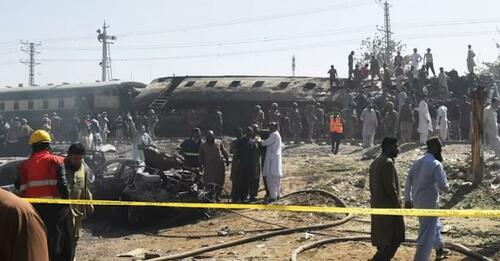
On May 24, 2026, a suicide car bomb detonated near a railway track in Quetta, the capital of Pakistan's Balochistan province, derailing a passenger train carrying security personnel and civilians. The blast killed at least 23-30 people and injured more than 70-100 others, with some reports indicating the toll could rise as rescue operations continued amid overturned coaches engulfed in flames. The Balochistan Liberation Army (BLA) promptly claimed responsibility, describing it as a targeted strike on Pakistani security forces. Pakistani Prime Minister Shehbaz Sharif condemned the attack, reaffirming the government's commitment to eradicating terrorism.
This incident is not isolated. It follows the dramatic March 2025 hijacking of the Jaffar Express by the BLA, which involved over 380 passengers, resulted in at least 21 civilian and military deaths, and highlighted the group's growing operational sophistication in sabotaging rail infrastructure. According to multiple outlets, the latest attack occurred near a cantonment area, suggesting precise intelligence on troop movements.[1][2]
Going beyond surface-level reporting, the assault underscores persistent security vulnerabilities in Balochistan, a mineral-rich region comprising nearly half of Pakistan's territory yet plagued by marginalization. The BLA frames its campaign as 'resource nationalism,' accusing Islamabad of exploiting natural gas, gold, and copper deposits while denying locals fair benefits. Increasingly, this includes opposition to the China-Pakistan Economic Corridor (CPEC), with militants viewing Chinese projects like Gwadar port as vehicles for demographic swamping by outsiders and resource extraction that bypasses Baloch interests. Attacks on Chinese workers and CPEC sites have mounted, complicating Beijing's Belt and Road ambitions and exposing fractures in the Sino-Pakistani alliance.[3][4]
These dynamics carry ripple effects on global stability often ignored in domestic coverage focused on other hotspots. Disruptions to transport and energy corridors in Balochistan threaten international supply chains, while the cycle of militant strikes and heavy-handed Pakistani counteroperations fuels internal displacement and migration pressures. Fears of ethnic Baloch being reduced to a minority through influxes of migrant labor tied to CPEC projects exacerbate local grievances, potentially accelerating refugee flows toward urban centers or abroad. Prior operations like Pakistan's responses to the 2025 hijacking and 2026 surges demonstrate that brute force alone has failed to resolve underlying ethno-nationalist drivers, raising questions about long-term stability in a region pivotal to Eurasian connectivity.[5][6]
Analysts note Pakistan's tendency to blame external actors like India or Afghanistan, yet the insurgency's roots in legitimate resource disputes and perceived exploitation suggest deeper political solutions are needed. As the BLA evolves tactics from hijackings to coordinated suicide strikes on civilian-military transport, the event serves as a stark reminder that unresolved regional conflicts in strategic peripheries can destabilize broader international partnerships and migration patterns.
[LIMINAL]: This attack signals that Baloch resource-driven separatism continues to evade Pakistan's military containment, jeopardizing CPEC viability and likely intensifying local displacement while subtly eroding confidence in China-linked global trade routes.
Sources (4)
- [1]Suicide car bombing attack on a train in Pakistan kills dozens(https://www.aljazeera.com/video/newsfeed/2026/5/24/suicide-car-bombing-attack-on-a-train-in-pakistan-kills-dozens)
- [2]A suicide bombing near a railway track in southwest Pakistan kills at least 23 people(https://www.news4jax.com/news/2026/05/24/a-powerful-bomb-has-exploded-near-railway-track-in-southwest-pakistan-wounding-more-than-two-dozen/)
- [3]The hijacking of a train marks a watershed in Balochistan insurgency(https://www.chathamhouse.org/2025/03/hijacking-train-marks-watershed-balochistan-insurgency)
- [4]Why brute force will not end Pakistan's Balochistan insurgency(https://www.chathamhouse.org/2024/09/why-brute-force-will-not-end-pakistans-balochistan-insurgency)