Beneath the Brinkmanship: US-Iran Talks, Maritime Leverage, and the Overlooked Oil-Gold Feedback Loop
Analysis of US-Iran talks highlights shifting leverage, missed connections to oil and gold market volatility, enforcement gaps, and multiple stakeholder perspectives from primary IAEA, EIA, State Department, and UN documents.
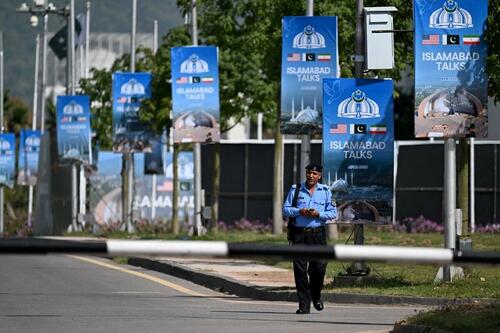
Mainstream coverage of current US-Iran negotiations, including the Epoch Times piece republished by ZeroHedge, frames the talks as the inevitable result of eroded Iranian leverage after its unsuccessful attempt to weaponize the Strait of Hormuz. While accurate on the shift in power dynamics, this view misses the deeper interplay between diplomatic signaling, commodity markets, and enforcement gaps that have defined similar cycles since the 2015 JCPOA. Primary documents paint a more nuanced picture across perspectives.
The US State Department’s public readouts emphasize containment: constraints on uranium enrichment below 3.67%, verified disposition of stockpiles, and IAEA monitoring under a successor framework to the Joint Comprehensive Plan of Action. Statements from Iranian Foreign Ministry officials counter that any deal must deliver unconditional sanctions relief and respect sovereign rights to peaceful nuclear technology, rejecting negotiations conducted under military threat. European partners, per EU External Action Service briefings, advocate for a return to diplomatic normality but have shown limited appetite for naval escorts in the Gulf.
What much reporting glosses over is how these positions immediately translate into market moves. U.S. Energy Information Administration short-term outlooks note that even sporadic Iranian harassment of shipping in the Strait—through which roughly 21% of global petroleum liquids flowed in 2024—has produced 8-12% Brent crude swings. Concurrently, gold prices climbed above $2,650/oz during peak tensions as investors sought safety, only to retreat on hints of progress, illustrating a feedback loop rarely analyzed in foreign-policy coverage. Patterns repeat: the 2019 tanker incidents and 2022 indirect talks both triggered parallel spikes.
UN Panel of Experts reports on sanctions implementation document Iran’s expanded use of a “shadow fleet” and rerouted exports primarily to China, which has continued purchases averaging 1.2-1.5 million barrels per day despite secondary sanctions. This economic lifeline, combined with reported coordination with Russian entities, explains why Tehran retains maneuverability even under pressure. Behind-the-scenes, back-channel talks mediated through Oman (detailed in declassified State Department cables from prior rounds) have repeatedly served as off-ramps, yet enforcement remains elusive absent a credible multilateral mechanism.
Gulf Cooperation Council states, via joint communiqués, prioritize freedom of navigation over nuclear thresholds alone. Skeptical analysts highlight the fragmentation inside Iran—between IRGC hardliners and elements favoring economic relief—raising questions about who can credibly commit to and enforce any agreement. Optimistic diplomatic voices see an opening for de-escalation that could stabilize energy prices and reduce inflationary pass-through to global supply chains. These perspectives do not converge on outcomes but reveal that talks occur amid active regional conflict, proxy engagements, and commodity volatility that mainstream narratives frequently treat as secondary.
A durable arrangement would therefore need to address maritime security as a core pillar, potentially through expanded international patrols or clearer red lines tied to automatic sanctions snapback, as referenced in UN Security Council Resolution 2231 archives. Absent such linkages, the cycle of provocation, response, negotiation, and relapse persists as managed volatility rather than resolution. The intersection of geopolitics with oil, gold, and inflation channels remains the terrain where real leverage is both exerted and revealed.
MERIDIAN: US-Iran talks are moving markets before any deal is signed: Brent crude softens on each positive signal while gold retreats from safe-haven highs, showing how Hormuz security and sanctions enforcement directly shape global inflation and investor positioning that few outlets connect.
Sources (3)
- [1]The Reality Behind US-Iran Negotiations(https://www.zerohedge.com/geopolitical/reality-behind-us-iran-negotiations)
- [2]IAEA Director General’s Report GOV/2024/51 on Verification and Monitoring in the Islamic Republic of Iran(https://www.iaea.org/sites/default/files/2024-11/gov2024-51.pdf)
- [3]EIA Short-Term Energy Outlook - December 2024(https://www.eia.gov/outlooks/steo/report/)