Alibaba's Qwen-Robot Suite Marks China's Accelerated Entry into Embodied AI, Signaling Deeper Strategic Push in Robotics
Alibaba's June 2026 release of the Qwen-Robot Suite underscores China's methodical advance in embodied AI, with models for navigation, manipulation, and world modeling poised to reshape robotics applications and challenge Western dominance in physical intelligence systems.
Alibaba's Tongyi Lab announced the Qwen-Robot Suite on June 15, 2026, introducing three specialized foundation models—Qwen-RobotNav for navigation and mobility, Qwen-RobotManip for physical manipulation and interaction, and Qwen-RobotWorld as a predictive video world model. These models bridge the gap between vision-language understanding and real-world robotic actions, enabling robots to follow complex instructions, manipulate objects, navigate environments, and predict outcomes without preloaded maps.
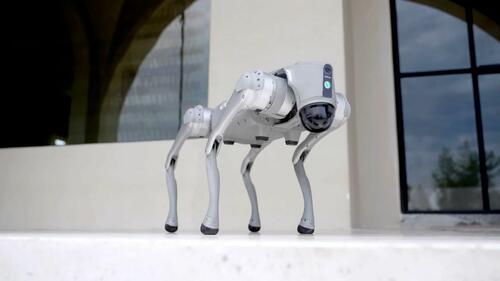
The suite builds directly on Alibaba's Qwen family of models and has entered pilot testing with select Alibaba Cloud enterprise clients. Demonstrations include a Unitree Go2 quadruped navigating unfamiliar spaces using only a low-resolution camera and NVIDIA Jetson hardware, with Qwen-RobotManip achieving top scores in the generalist category of the RoboChallenge benchmark (process score 59.83, 45% task success rate) after training on over 38,000 hours of open-source robotic data. An accompanying Qwen-RobotClaw agent framework and open-sourced Chat2Robot platform further support integration.
This launch reflects China's coordinated national emphasis on embodied AI and robotics as a strategic priority, extending beyond language models into physical-world intelligence. Alibaba's cloud ecosystem positions these models for rapid enterprise scaling in logistics, manufacturing, and services—areas where Western reporting often focuses narrowly on U.S. players like Figure or Tesla without fully accounting for China's data advantages, hardware integration, and state-backed ecosystem development. Connections to broader initiatives, such as robotics training hubs and cross-embodiment training frameworks, suggest compounding effects that could accelerate deployment timelines compared to fragmented Western efforts.
While global competition intensifies, Alibaba's open-sourcing elements and tight coupling with existing Qwen infrastructure highlight a pragmatic path to scaling physical AI, potentially influencing standards and supply chains in ways that extend China's influence in next-generation automation.
Tongyi Lab / Alibaba Cloud: Qwen-Robot models will serve as foundational infrastructure for Chinese robotics ecosystems, enabling faster iteration in real-world deployments than siloed Western approaches and embedding Alibaba's AI stack deeper into global supply chains.
Sources (5)
- [1]A Foundation Model Suite for Physical World Intelligence(https://qwen.ai/blog?id=qwen-robotsuite)
- [2]Alibaba eyes physical world with its first suite of AI models for robots(https://www.scmp.com/tech/big-tech/article/3357260/alibaba-eyes-physical-world-its-first-suite-ai-models-robots)
- [3]Alibaba Debuts Suite of AI Models for Robots(https://www.pymnts.com/news/artificial-intelligence/2026/alibaba-debuts-suite-ai-models-robots/)
- [4]Alibaba unveils Qwen-Robot series with three foundation models for embodied AI(https://technode.com/2026/06/17/alibaba-unveils-qwen-robot-series-with-three-foundation-models-for-embodied-ai/)
- [5]Qwen-RobotManip Technical Report: Alignment Unlocks Scale for Robotic Manipulation Foundation Models(https://arxiv.org/abs/2606.17846)