Missing US Troops in African Lion Exercise Expose Strategic Risks in North Africa Operations
The disappearance of two US troops during the African Lion exercise in Morocco highlights operational risks in unstable regions, exposing gaps in AFRICOM’s strategies, safety protocols, and diplomatic balancing acts. Beyond the immediate search, the incident reflects systemic challenges in US military engagements in Africa.
The disappearance of two US service members during the African Lion exercise near Tan Tan, Morocco, on May 3, 2026, as reported by U.S. Africa Command (AFRICOM) and the Moroccan Royal Armed Forces, is not merely a tragic incident but a stark reminder of the inherent risks of conducting large-scale military drills in geopolitically volatile regions. While the original coverage by Defense News focuses on the immediate search-and-rescue efforts near Cap Draa, it overlooks the broader strategic vulnerabilities and operational challenges facing US military engagements in North Africa. African Lion, AFRICOM’s flagship annual exercise involving over 5,000 personnel from 40 countries, aims to enhance interoperability with NATO allies and African partners. However, this incident raises critical questions about the adequacy of risk assessments, the preparedness of joint forces in rugged terrains like southern Morocco, and the potential for such events to strain diplomatic relations with host nations.
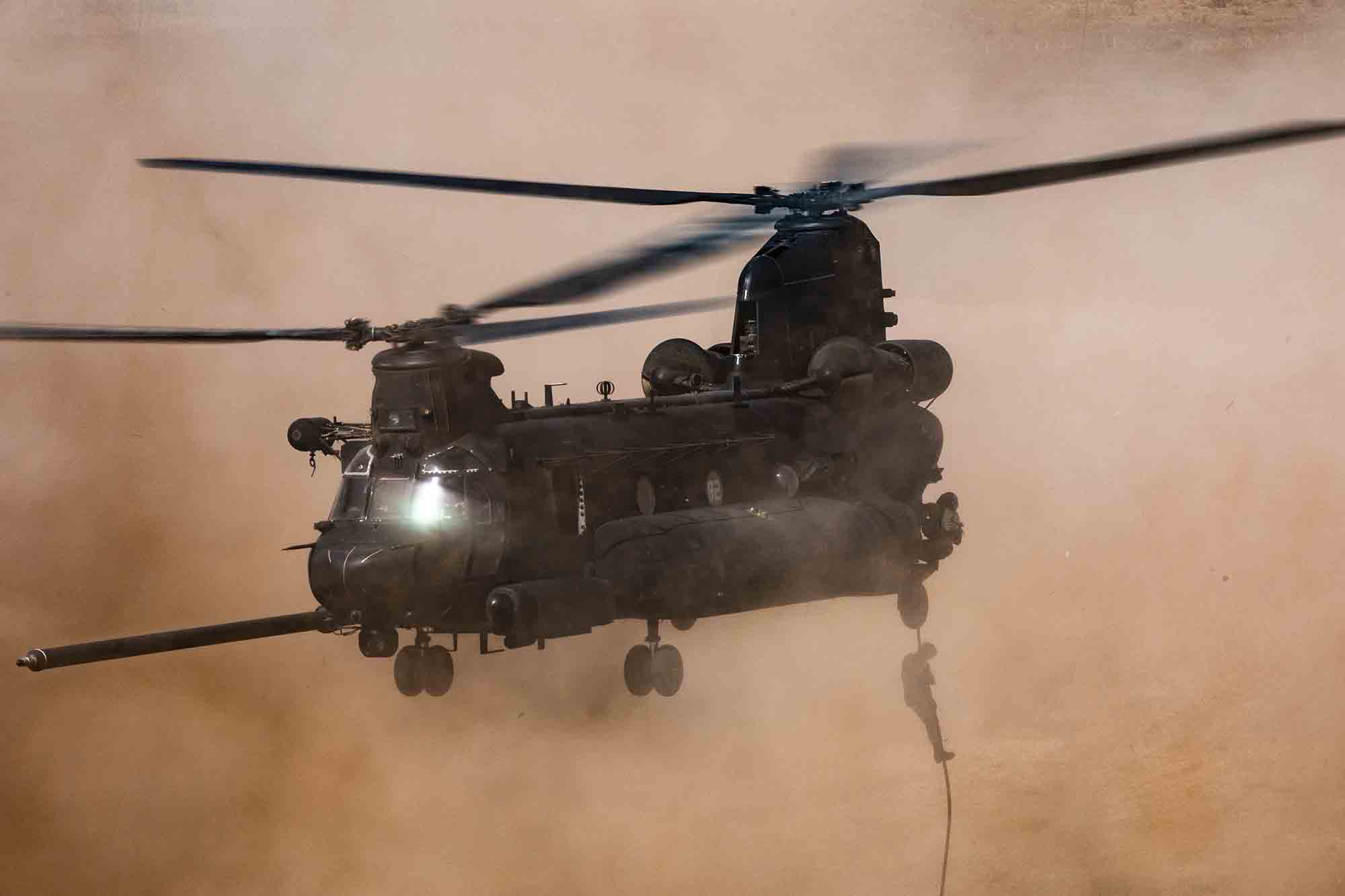
Beyond the immediate incident, the disappearance near a cliff—a detail briefly mentioned in the original report—suggests possible lapses in situational awareness or safety protocols during high-intensity training scenarios like fast-roping, a common feature of African Lion as seen in past iterations. This is not an isolated concern; historical patterns of US military operations in Africa reveal recurring challenges. For instance, the 2017 ambush in Niger, where four US soldiers were killed during a counterterrorism mission, exposed gaps in intelligence and support structures for troops operating in remote areas. Similarly, the Moroccan terrain near Tan Tan, while less hostile than Niger’s Sahel region, presents its own dangers—rugged cliffs, unpredictable weather, and proximity to Western Sahara, a disputed territory with simmering tensions. The original coverage fails to address how such environmental and geopolitical factors amplify risks for US personnel, particularly in exercises involving multinational forces with varying levels of training and coordination.
Moreover, the incident underscores a broader strategic dilemma for AFRICOM: balancing the need to project power and build partnerships in Africa against the human and political costs of operational mishaps. Morocco, a key US ally and host of African Lion’s largest segment, has been a linchpin in US efforts to counter Russian and Chinese influence in North Africa. Yet, an incident like this could erode trust with Moroccan authorities or fuel domestic criticism of foreign military presence, especially if search efforts disrupt local communities or fail to yield results swiftly. The original story misses this diplomatic dimension, focusing solely on the tactical response rather than the potential ripple effects on US-Morocco relations or AFRICOM’s credibility among African partners.
Drawing on additional context, a 2023 report by the Center for Strategic and International Studies (CSIS) highlighted AFRICOM’s struggle to adapt its operational frameworks to Africa’s diverse and often unstable environments, noting that joint exercises like African Lion sometimes prioritize symbolic displays of unity over practical readiness for real-world contingencies. Similarly, a 2025 Pentagon assessment (as covered by Military Times) flagged persistent issues with troop safety protocols during multinational drills, citing inadequate pre-deployment training for terrain-specific risks. These sources, combined with the current incident, suggest that AFRICOM may need to reassess its approach to exercises in regions like southern Morocco, where natural hazards intersect with geopolitical sensitivities.
Ultimately, the disappearance of these two service members is a microcosm of the broader challenges facing US military strategy in Africa: the tension between ambitious partnership goals and the gritty realities of operating in high-risk zones. It is imperative that AFRICOM not only resolves this incident but also conducts a transparent post-mortem to address systemic vulnerabilities—whether in training, intelligence, or host-nation coordination. Failure to do so risks not just lives but the long-term viability of US engagement in a continent increasingly courted by rival powers.
SENTINEL: I anticipate that if unresolved, this incident could prompt AFRICOM to scale back high-risk elements of future African Lion exercises, prioritizing safety over optics, while facing scrutiny over its readiness in complex African terrains.
Sources (3)
- [1]2 US troops reported missing amid African Lion exercise(https://www.defensenews.com/news/your-military/2026/05/03/2-us-troops-reported-missing-amid-africa-lion-exercise/)
- [2]U.S. Military Posture and National Security Challenges in Africa(https://www.csis.org/analysis/us-military-posture-and-national-security-challenges-africa)
- [3]Pentagon Report Highlights Safety Concerns in Multinational Drills(https://www.militarytimes.com/news/pentagon-congress/2025/03/15/pentagon-report-safety-concerns-multinational-drills/)