Canada's Online Harms Push Exemplifies Global Censorship Trend Disguised as Cultural and Child Protection
Canada's latest online regulation push under Minister Miller, tied to prior criticized bills like C-63, mirrors UK, Australian, and EU efforts that critics say prioritize censorship and narrative control over genuine free speech protections, often under guises of child safety and cultural preservation that dominant media under-scrutinizes.
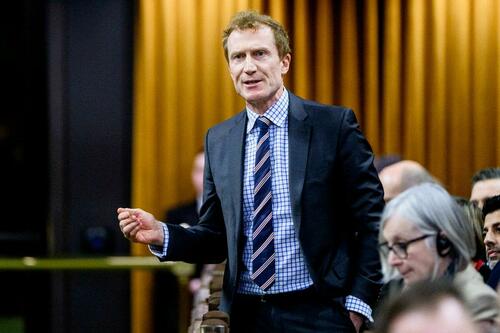
Canadian Heritage Minister Marc Miller recently stated that regulating online content and addressing 'egregious online harms' is squarely a federal government duty, noting Canada lags behind Australia, Britain, and France. Miller indicated new legislation is in development, potentially including youth social media bans and AI restrictions, as the government has reconvened its Expert Advisory Group on Online Safety (Bloomberg, April 2026; Western Standard, April 2026). This marks the third attempt following the lapsed Bill C-63 and earlier proposals, which faced criticism for vague definitions of harm and expansive regulatory powers.
While framed around protecting children from exploitation, cyberbullying, and hateful content, this initiative fits a broader international pattern in which governments expand control over digital speech under pretexts of safety and 'cultural protection.' The BCCLA and other civil liberties voices have highlighted how Bill C-63's provisions risked chilling legitimate expression, including protest speech, minority viewpoints, and criticism of institutions, by incentivizing platforms to over-moderate to avoid severe penalties (BCCLA, 2024; Tech Policy Press, 2025).
Connections to parallel regimes are clear: the UK's Online Safety Act has been described as 'a licence for censorship,' resulting in mass filtering, age verification mandates, and removal of broad categories of content well beyond illegal material, with critics warning of global precedent for repression (The Guardian, 2025; EFF reporting). Australia's under-16 social media ban and the EU's Digital Services Act similarly impose licensing, content duties, and proactive moderation that frequently suppress unpopular but legal speech. Global benchmarking shows at least six jurisdictions now require platform registration or age verification, with Canada aligning its 'future online safety regime' to these models (Cullen International, 2026; Kings & Spalding analysis).
Mainstream outlets like Global News and CBC heavily feature child advocates urging rapid action, emphasizing protection narratives while marginalizing free speech concerns raised by opposition parties and groups like the BCCLA. The deeper, underreported link is the role of ministries of 'Canadian Identity and Culture' in these efforts—suggesting not just harm reduction but curation of national narratives amid political polarization. Elastic definitions of 'hate' and 'harms' enable mission creep, transforming child safety into a Trojan horse for broader surveillance and narrative control, a pattern repeating across Five Eyes allies and beyond.
This trend risks eroding the open internet, setting precedents that normalize preemptive government intervention in online discourse. Far from lagging, Canada is catching up to a coordinated global shift that mainstream reporting often fails to contextualize beyond official safety talking points.
Liminal Analyst: Canada's 'safety' legislation will likely normalize elastic definitions of harm that expand to police dissent globally, turning child protection rhetoric into permanent infrastructure for state-aligned digital narrative control.
Sources (6)
- [1]Canada Mulls Age Restrictions on AI Chatbots and Social Media(https://www.bloomberg.com/news/articles/2026-04-15/canada-is-mulling-age-restrictions-on-ai-chatbots-and-social-media)
- [2]Ottawa pushes renewed internet regulation as minister admits Canada lagging behind Europe(https://www.westernstandard.news/news/ottawa-pushes-renewed-internet-regulation-as-minister-admits-canada-lagging-behind-europe/73122)
- [3]What's in Bill C-63, and why we are alarmed(https://bccla.org/2024/09/whats-in-bill-c-63-why-are-we-alarmed/)
- [4]The UK’s Online Safety Act is a licence for censorship – and the rest of the world is following suit(https://www.theguardian.com/commentisfree/2025/aug/09/uk-online-safety-act-internet-censorship-world-following-suit)
- [5]Global Trends in social media regulation(https://www.cullen-international.com/news/2026/02/Global-Trends-in-social-media-regulation.html)
- [6]Minister says Ottawa is 'very seriously' considering youth social media ban(https://globalnews.ca/news/11803954/ottawa-very-seriously-considering-youth-social-media-ban/)