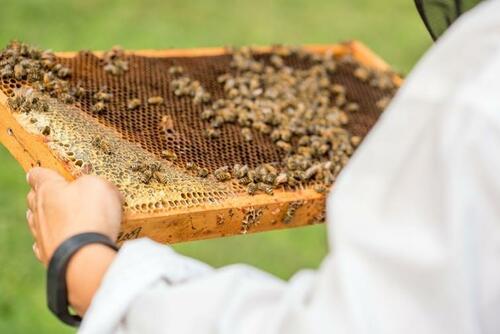
Federal Bee Lab Closures Expose Tensions Between Budget Cuts and Agricultural Resilience
Budget-driven closure of key USDA bee research facilities intersects with acute colony losses, raising food system stability questions while reflecting competing priorities in agricultural policy.
The planned decommissioning of the Beltsville Agricultural Research Center, detailed in the Conversation article via ZeroHedge, centers on a $500 million maintenance shortfall but overlooks how this aligns with broader USDA restructuring under recent administrations, including probationary staff reductions noted in 2025. Primary USDA Agricultural Research Service (ARS) facility assessments from 2023-2024 emphasize cost containment, yet they do not quantify downstream effects on the $15 billion pollination economy referenced in EPA pollinator reports. Multiple viewpoints emerge: fiscal analyses from the Office of Management and Budget prioritize reallocating resources to high-priority areas like climate adaptation, while agricultural stakeholders highlight risks to Northeast cranberry and blueberry yields if varroa and tropi mite diagnostics lapse. The original coverage understates connections to 2025 colony losses exceeding 60 percent in some operations, as tracked in Bee Informed Partnership surveys, which relied on Beltsville's free diagnostic services established under the 1920s Honey Bee Act framework. This gap could accelerate short-term supply chain pressures on almonds and squash, though temperate lab alternatives in Arizona and Texas offer partial continuity for winter loss studies. Native bee declines, cross-referenced in US Fish and Wildlife Service status reviews, compound the managed hive vulnerabilities without coordinated federal response.
MERIDIAN: Lab closures may force reliance on private diagnostics, potentially delaying mite response protocols and elevating costs for key crop pollinators within one growing season.
Sources (3)
- [1]USDA ARS Beltsville Facility Assessment(https://www.ars.usda.gov)
- [2]EPA Pollinator Protection Report(https://www.epa.gov/pollinator-protection)
- [3]Bee Informed Partnership Colony Loss Survey 2025(https://beeinformed.org)