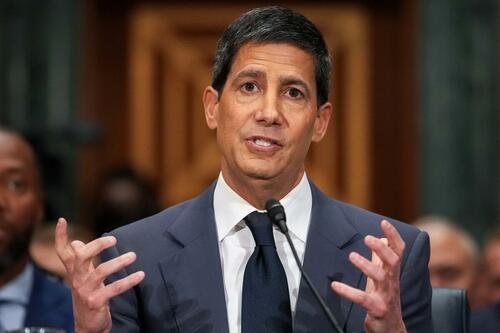
Kevin Warsh Confirmed as Fed Chair: A Turning Point for U.S. Monetary Policy Amid Global Uncertainty
Kevin Warsh’s confirmation as Fed Chair by a narrow 54-45 Senate vote signals a potential shift in U.S. monetary policy amid 3.8% inflation and geopolitical tensions. His past critiques of Fed overreach, combined with political pressures for rate cuts, raise questions about independence and global market impacts. This analysis explores overlooked historical context, debt constraints, and international ripple effects.
The U.S. Senate’s confirmation of Kevin Warsh as Federal Reserve Chair on May 12, with a historically narrow 54-45 vote, marks a pivotal moment for U.S. monetary policy. This partisan divide—the tightest ever for a Fed Chair confirmation—underscores deep political rifts over the central bank’s direction during a period of economic fragility and persistent inflation. Warsh, a former Fed governor from 2006 to 2011, returns to lead the institution amid a backdrop of 3.8% annual inflation (as of April 2026) and geopolitical tensions, notably the 11-week-old Iranian conflict driving energy prices to a national average of $4.50 per gallon. Beyond the immediate challenges, Warsh’s tenure could redefine the Fed’s role in balancing independence with political pressures, shaping global financial stability.
The original coverage by ZeroHedge and The Epoch Times focused on the partisan nature of the vote and inflation concerns but overlooked critical historical context and broader implications. Warsh resigned in 2011 over disagreements on quantitative easing (QE) post-2008 crisis, criticizing the Fed’s expansive balance sheet policies as inflationary risks. His return signals a potential shift toward tighter monetary policy, especially as he has recently advocated for scaling back the Fed’s balance sheet while suggesting AI-driven disinflation could allow rate cuts. This duality—balancing hawkish tendencies with selective dovish rhetoric—positions Warsh at a complex crossroads. Missing from initial reports is how his past critiques of Fed overreach might clash with President Trump’s public demands for lower rates, raising questions about operational independence despite Warsh’s affirmations of autonomy.
Contextually, Warsh’s confirmation echoes the contentious 1980s era under Paul Volcker, when high inflation and geopolitical oil shocks (akin to today’s Iranian conflict) forced aggressive rate hikes, triggering a recession but ultimately stabilizing prices. Unlike Volcker’s era, however, Warsh faces a modern economy intertwined with tech-driven deflationary pressures and unprecedented debt levels—U.S. federal debt surpassed $34 trillion in 2025 per Treasury data. This debt burden limits the Fed’s maneuverability; aggressive rate hikes risk debt servicing crises, while sustained low rates could fuel further inflation. The original coverage also underplayed global ripple effects: a hawkish Warsh-led Fed could strengthen the dollar, pressuring emerging markets with dollar-denominated debt, as seen during the 2013 ‘taper tantrum.’
Synthesizing primary sources, the Senate Banking Committee’s April 21, 2026, hearing transcript reveals Warsh’s nuanced stance—he emphasized data-driven policy over political influence but dodged direct commitments on rate timelines. The Bureau of Labor Statistics’ April 2026 inflation report confirms the 3.8% spike, driven by energy costs, aligning with geopolitical analyses from the Energy Information Administration (EIA) noting a 15% rise in Brent crude since the Iranian conflict’s onset. These sources collectively highlight a structural inflation risk unaddressed in initial reporting, compounded by core inflation at 2.8%, above the Fed’s 2% target.
Analytically, Warsh’s leadership could fracture Fed consensus. His historical skepticism of QE suggests a push for normalization—potentially accelerating balance sheet reduction from its current $7.5 trillion (per Fed data). Yet, with Trump’s vocal expectations for rate cuts, Warsh risks being perceived as a political instrument, eroding market confidence. The lone Democratic support from Sen. John Fetterman hints at possible bipartisan bridges on economic pragmatism, but the broader partisan split forecasts legislative gridlock on future Fed reforms. Globally, a tighter U.S. policy could destabilize markets anticipating liquidity, particularly in Europe, where the ECB is already grappling with stagflation risks per 2025 Eurostat data. Warsh’s first meeting in June 2026 will be a litmus test—will he prioritize inflation control or yield to growth pressures? History suggests the former, but today’s polarized environment and debt dynamics add unprecedented uncertainty.
MERIDIAN: Warsh’s first policy meeting in June 2026 will likely avoid immediate rate cuts, prioritizing inflation control over political pressure, given his historical hawkish stance and current data trends.
Sources (3)
- [1]Senate Banking Committee Hearing Transcript on Kevin Warsh Nomination(https://www.banking.senate.gov/hearings/nomination-hearing-kevin-warsh-federal-reserve-chair)
- [2]Bureau of Labor Statistics April 2026 Inflation Report(https://www.bls.gov/news.release/cpi.nr0.htm)
- [3]Energy Information Administration Report on Crude Oil Prices(https://www.eia.gov/petroleum/weekly/)