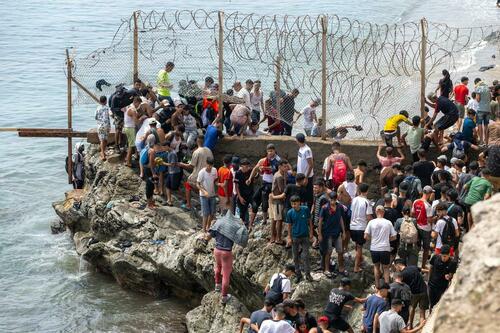
Ceuta Crisis Exposes Deepening EU Fault Lines on Migration and Sovereignty
The Ceuta events have crystallized a north-south and left-right split in the EU over migration, with Meloni-led pushback signaling potential policy shifts toward stricter controls.
The 2026 Ceuta migrant crisis, unfolding in late July, saw an estimated 72,000 mostly young men from Morocco cross into the Spanish enclave, marking one of the largest single surges in recent European migration history. Spanish authorities reported that roughly 70,000 returned voluntarily within days, though the event left at least 100 deaths and exposed critical gaps in external border management.[1][2]
Italian Prime Minister Giorgia Meloni responded swiftly by reimposing temporary border controls on travelers from Spain under the Schengen framework, citing national security threats from uncontrolled migration. This move, echoed in a letter signed by leaders of 22 EU member states calling for stronger external border enforcement, highlighted a emerging divide between Spain's socialist government under Pedro Sánchez and a coalition of national-conservative and pragmatic states. Sánchez faced domestic and international backlash, including accusations that his policies—including a mass regularization program for over a million undocumented migrants—acted as a pull factor.[3][4]
Spain retaliated with its own checks on arrivals from Italy, framing them as responses to irregular migration pressures, further straining intra-EU relations. The episode transcends immediate border management, revealing philosophical tensions: one side views migration through lenses of humanitarianism and labor needs, while the other prioritizes sovereignty and cultural cohesion. Connections to broader trends include how such crises amplify right-wing electoral gains across Europe and test the viability of Frontex and shared asylum rules. Analysts note this could accelerate reforms toward mandatory returns and external processing, potentially reshaping EU cohesion ahead of future summits. The crisis also underscores Morocco's leverage in migration flows, linking North African diplomacy to European internal politics in ways often overlooked in mainstream coverage.
[Geopolitical Analyst]: This crisis accelerates the fragmentation of unified EU migration policy, bolstering national veto power and conservative coalitions in upcoming elections and treaty negotiations.
Sources (5)
- [1]2026 Ceuta migrant crisis(https://en.wikipedia.org/wiki/2026_Ceuta_migrant_crisis)
- [2]Spain says migrants are returning from Ceuta after 57 die(https://www.reuters.com/world/africa/spain-morocco-halt-deadly-rush-spanish-enclave-after-49000-cross-day-2026-07-31/)
- [3]Ceuta crisis: 22 EU leaders gang up against Spain's Sánchez(https://www.politico.eu/article/ceuta-crisis-22-eu-leaders-letter-spain-pedro-sanchez-migration-policy/)
- [4]Spanish PM Sanchez fends off blistering criticism(https://abcnews.com/International/wireStory/spanish-prime-minister-sanchez-fends-off-blistering-criticism-135344770)
- [5]Spain attacks 'selfish' response of some EU countries(https://www.bbc.com/news/articles/cx2v91xn1z9o)