Young Americans' Homeownership Dreams Fade Amid Soaring Costs, Reshaping Life Milestones
Gallup and supporting surveys confirm young Americans are postponing or forgoing homeownership due to costs, with cascading effects on wealth, family plans, and economic mobility that extend well beyond 2026.
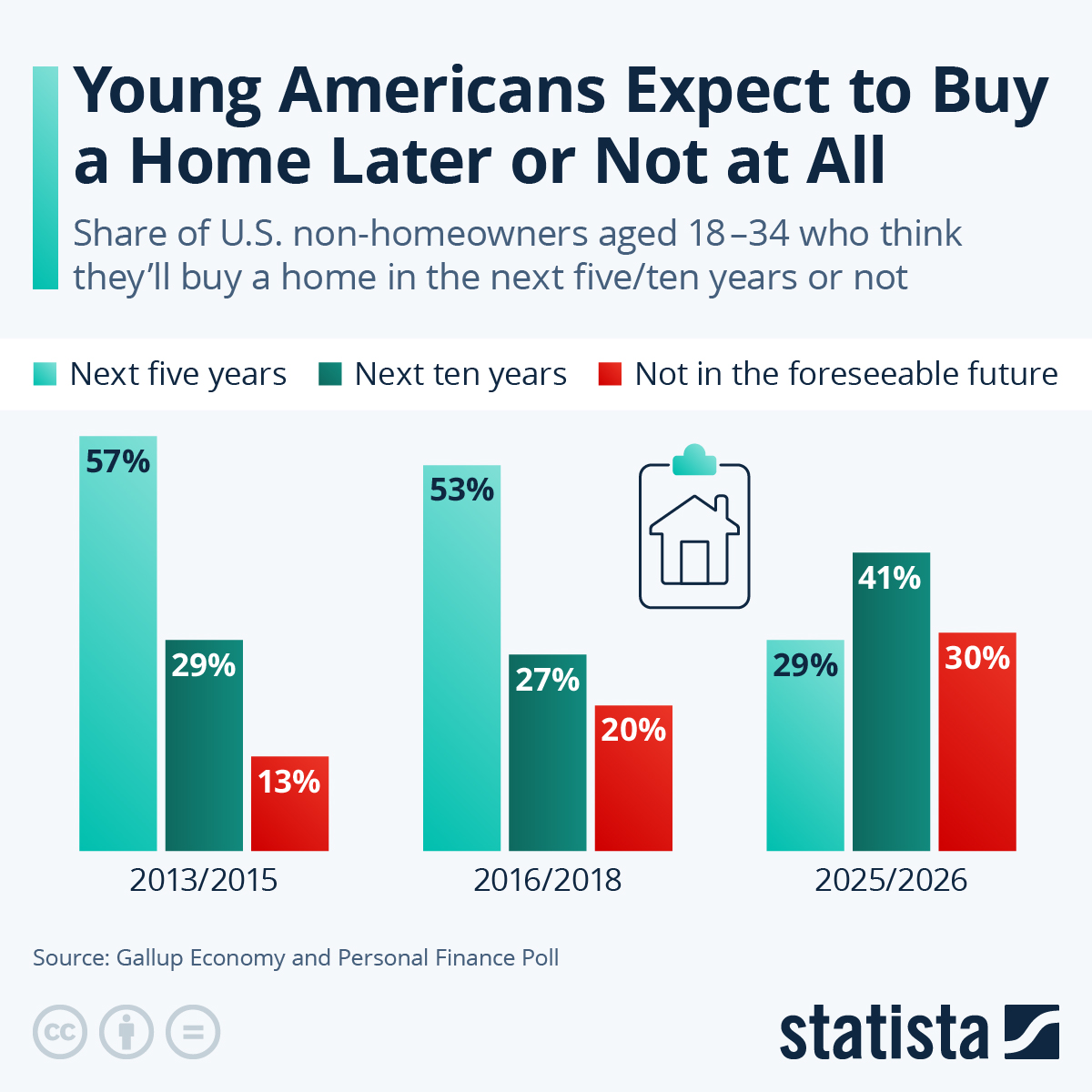
For generations, buying a home marked the transition to full adulthood in the U.S., embodying stability and the American Dream. New data reveals this milestone is slipping further away for young adults, with profound effects on personal finances, family formation, and long-term wealth building. A Gallup poll released in April 2026 shows that just 29% of non-homeowners aged 18-34 expect to purchase a home in the next five years, down sharply from 57% in 2013/2015. Overall, only 25% of all non-homeowners anticipate buying within five years—the lowest figure since Gallup began tracking in 2013—while 30% now see no foreseeable path to ownership, up from 13%.
These shifts stem primarily from elevated home prices, elevated mortgage rates, and stagnant real wages that have priced out middle-class buyers. The emotional toll is evident: many young people report delaying not just homeownership but also marriage, children, and career moves tied to property ownership. An IPX1031 survey from late 2025 found 62% of Americans view buying a home in 2026 as unrealistic, with 82% of Gen Z and 62% of Millennials citing affordability barriers—only 36% believe they can afford it. This disconnect extends beyond housing; it correlates with broader trends in delayed adulthood, where high rents, student debt, and credit card burdens compound the issue, as noted in National Association of Realtors generational buyer reports.
Deeper connections emerge when examining secondary impacts. Mercury Insurance data from early 2026 indicates nearly one-third of millennial and Gen Z non-homeowners are unsure if they'll ever own, with many planning major lifestyle sacrifices like extended cohabitation with parents or forgoing vacations to save. This isn't mere delay—it's a potential abandonment of the ownership model, accelerating a renter economy that transfers wealth to landlords and investors rather than building equity for individuals. Official data trails like Census homeownership rates for younger cohorts already reflect stagnation, hinting at a structural shift where the 'dream' becomes a luxury for prior generations or the affluent.
LIMINAL: Persistent high costs will lock in a multi-year renter majority among under-35s, eroding intergenerational wealth transfer and forcing policy debates on housing supply or subsidies by 2028.
Sources (6)
- [1]Homebuying Intentions Decline Further in U.S.(https://news.gallup.com/poll/708995/homebuying-intentions-decline-further.aspx)
- [2]Young Americans Expect To Buy A Home Later In Life (Or Not At All)(https://www.zerohedge.com/personal-finance/young-americans-expect-buy-home-later-life-or-not-all)
- [3]Fewer non-homeowners expecting to buy a home within 5 years(https://thehill.com/homenews/5855926-poll-shows-drop-in-homeownership/)
- [4]Homeownership Rate & Statistics in 2026(https://www.ipx1031.com/homeownership-rate-statistics/)
- [5]What Millennials and Gen Z Will Sacrifice to Buy a Home(https://www.mercuryinsurance.com/resources/home/gen-z-millennials-homeownership-sacrifices.html)
- [6]Home Buyers and Sellers Generational Trends(https://www.nar.realtor/research-and-statistics/research-reports/home-buyer-and-seller-generational-trends)