Saudi Arabia's Covert Strikes on Iran: Unreported Escalation Risks Global Energy Markets
Saudi Arabia's covert strikes on Iran during Operation Epic Fury, revealed by Reuters, signal a historic escalation in Middle East tensions. Beyond military implications, this risks global oil supply disruptions and undermines fragile de-escalation efforts. Analysis highlights overlooked energy market impacts and U.S. policy entanglements.
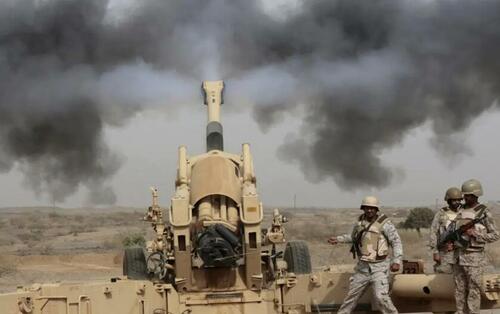
Recent revelations of Saudi Arabia's unpublicized military strikes on Iranian soil during Operation Epic Fury, as reported by Reuters, mark a significant and previously undisclosed escalation in Middle East tensions. According to Western and Iranian officials, the Saudi Air Force conducted multiple retaliatory strikes in late March, responding to Iranian attacks on the Kingdom. This development, alongside similar actions by the UAE, indicates a bolder posture from Gulf states traditionally reliant on U.S. and Israeli military support against Iran. While the original coverage by ZeroHedge highlights the risk of spiraling conflict, it overlooks critical broader implications for global energy markets and the fragility of regional de-escalation efforts.
Saudi Arabia's direct military engagement with Iran, a first in publicly acknowledged history, shifts the geopolitical landscape. Historically, Saudi-Iranian rivalry has played out through proxies in Yemen, Syria, and Iraq, as documented in the U.S. State Department's 2022 Country Reports on Terrorism. Direct strikes signal a departure from this pattern, potentially undermining diplomatic backchannels. Saudi Arabia's public stance on de-escalation, as reiterated by a senior foreign ministry official in the Reuters report, contrasts sharply with these covert operations, suggesting a dual-track policy of military assertiveness and diplomatic restraint. This contradiction raises questions about the sustainability of initiatives like the China-brokered Saudi-Iran rapprochement of March 2023, which aimed to normalize relations.
What the original coverage misses is the profound impact on global oil markets. Saudi Arabia and Iran collectively account for approximately 15% of global oil production, per the International Energy Agency (IEA) 2023 World Energy Outlook. Escalation between these powers risks disruptions to key supply routes like the Strait of Hormuz, through which 20% of the world's oil passes. Past incidents, such as the 2019 Iranian drone attack on Saudi Aramco facilities, led to a temporary 5% spike in global oil prices, as noted in IEA reports. Renewed conflict could exacerbate current energy price volatility, already strained by the Russia-Ukraine war and OPEC+ production cuts. ZeroHedge's focus on military tit-for-tat neglects this economic ripple effect, which could impact inflation and energy security worldwide.
Moreover, the original story underplays the role of U.S. policy in enabling or restraining Gulf state actions. Declassified U.S. Department of Defense briefings from early 2023 indicate that American military presence in the Gulf, including bases in Saudi Arabia and the UAE, has long been a deterrent against direct Iranian aggression. However, Operation Epic Fury's heavy U.S. involvement may have emboldened allies to act independently, assuming American backing. This dynamic risks entangling the U.S. further in a conflict it has publicly framed as limited, as evidenced by former President Trump's description of the war as an 'excursion.' The potential renaming of the Iran conflict to 'Sledgehammer,' as reported by NBC, suggests a Pentagon recognition of escalating stakes that Gulf allies' actions may have accelerated.
In synthesizing these perspectives, it becomes clear that Saudi Arabia's strikes are not merely retaliatory but indicative of a broader strategic shift among Gulf states toward self-reliance in confronting Iran. This shift, while underreported, aligns with patterns seen in the UAE's increasing military autonomy, as detailed in a 2023 SIPRI report on arms transfers. The risk of miscalculation looms large, particularly as Iran has vowed to 'punish' countries hosting U.S. bases, per Iranian state media. Without transparent dialogue or renewed ceasefire mechanisms, the region teeters on the edge of a wider conflict with global economic consequences.
MERIDIAN: I anticipate that continued covert actions by Gulf states like Saudi Arabia could provoke Iranian retaliation targeting energy infrastructure, potentially causing a 5-10% spike in global oil prices within the next quarter if de-escalation fails.
Sources (3)
- [1]Saudi Arabia Launched Strikes on Iran - Reuters(https://www.reuters.com/world/middle-east/saudi-arabia-launched-numerous-strikes-iran-retaliation-attacks-kingdom-2023)
- [2]U.S. State Department 2022 Country Reports on Terrorism(https://www.state.gov/reports/country-reports-on-terrorism-2022/)
- [3]International Energy Agency World Energy Outlook 2023(https://www.iea.org/reports/world-energy-outlook-2023)