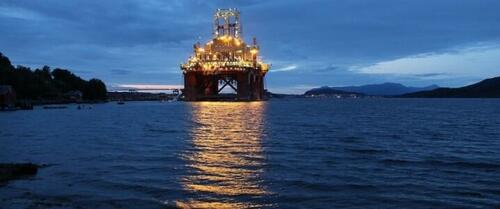
UK's Permanent North Sea Ban: Ideological Lock-In Amid Iran-Driven Energy Crisis Raises Security Risks
Labour's Energy Independence Bill permanently bans new North Sea licenses despite Iran conflict price spikes, prioritizing net zero over domestic production. This risks higher import reliance, lost tax revenue, Scottish jobs, and European supply strain while offering limited climate gains, as new fields' output trades globally. Unions, opposition, and allies criticize the timing; deeper links show tension between ideology and geopolitics in a declining basin.
The UK Labour government has moved to legislatively entrench its pre-election pledge, announcing an Energy Independence Bill in the King's Speech that makes it illegal to issue new oil and gas exploration licenses in the North Sea. This permanent ban, alongside a formal prohibition on onshore fracking, forms the centerpiece of a broader package including measures to accelerate renewables, grid buildout, and support for energy efficiency via a new Warm Homes Agency. While framed as securing a path to clean energy superpower status by 2030, the timing—coming amid spiked oil prices and supply disruptions linked to the 2026 Iran conflict—highlights a decisive and controversial energy policy pivot with underappreciated ripple effects on European supply chains, Scottish industry, and global fossil fuel markets.
Critics, including opposition parties, industry groups, and even Labour-affiliated unions like Unite and GMB, argue the policy is 'utterly deluded.' It does not reduce global emissions meaningfully since North Sea oil is traded on international markets, yet it accelerates the basin's decline, forgoing billions in tax revenue that could fund the green transition itself. North Sea production had already plummeted ahead of the Iran war, leaving UK energy security fragile and increasingly dependent on imports that now constitute the majority of its fossil fuel mix. Norway, operating in the same waters, has responded to Hormuz disruptions by reopening shuttered gas fields—underscoring a pragmatic European divergence that Britain is rejecting.
Deeper analysis reveals connections often missed in mainstream coverage: this ban entrenches a post-Brexit, post-Ukraine, and now post-Iran ideological commitment to net zero at all costs, even as short-term geopolitics expose vulnerabilities. The legislation includes 'Transitional Energy Certificates' to squeeze more from existing fields, a tacit admission that abrupt shutdowns risk jobs calamity in Scotland. Yet by making reversal harder for future governments, it signals to markets and allies that the UK is doubling down on import dependence, potentially straining EU partners already debating boosted domestic gas amid the Iran fallout. US officials have repeatedly urged fuller use of UK reserves, viewing the ban as misaligned with Western energy security needs.
Heterodox voices have long warned that rapid decarbonization without reliable baseload or domestic resources creates precisely this exposure. Lost revenues from untapped fields like Rosebank could have offset bills and subsidized renewables; instead, the policy risks political backlash, with Reform UK and Conservatives pledging reversal, and murmurs of a Labour leadership challenge that could soften the stance. Globally, faster North Sea decline marginally boosts demand for OPEC+, US shale, or Norwegian output, subtly reshaping alliances and price floors in volatile markets. While proponents claim it ends the 'roller-coaster of fossil fuels,' the Iran-induced price surge demonstrates that banning domestic supply simply shifts the ride to foreign suppliers—often less stable ones. This move may prove a case study in whether climate symbolism withstands real-world energy shocks.
LIMINAL: Labour's permanent North Sea ban amid Iran-driven oil shocks locks Britain into greater import dependence and forgone revenues, undermining European energy resilience and revealing how net-zero ideology can conflict with pragmatic security needs in an unstable world.
Sources (5)
- [1]UK to introduce Energy Independence Bill: Government(https://www.argusmedia.com/en/news-and-insights/latest-market-news/2827009-uk-to-introduce-energy-independence-bill-government)
- [2]North Sea license and onshore fracking bans to be enshrined in UK law(https://www.eenews.net/articles/north-sea-license-and-onshore-fracking-bans-to-be-enshrined-in-uk-law/)
- [3]Government rejects calls for new oil and gas licences in the North Sea(https://www.holyrood.com/news/view,government-rejects-calls-for-new-oil-and-gas-licences-in-the-north-sea)
- [4]What does the war in Iran mean for the UK's net zero goals?(https://www.managementtoday.co.uk/does-war-iran-mean-uks-net-zero-goals/long-reads/article/1957348)
- [5]UK must double down on renewables as wars drive up fossil fuel prices(https://www.theguardian.com/environment/2026/mar/05/uk-clean-energy-iran-war-fossil-fuel-prices-surge)