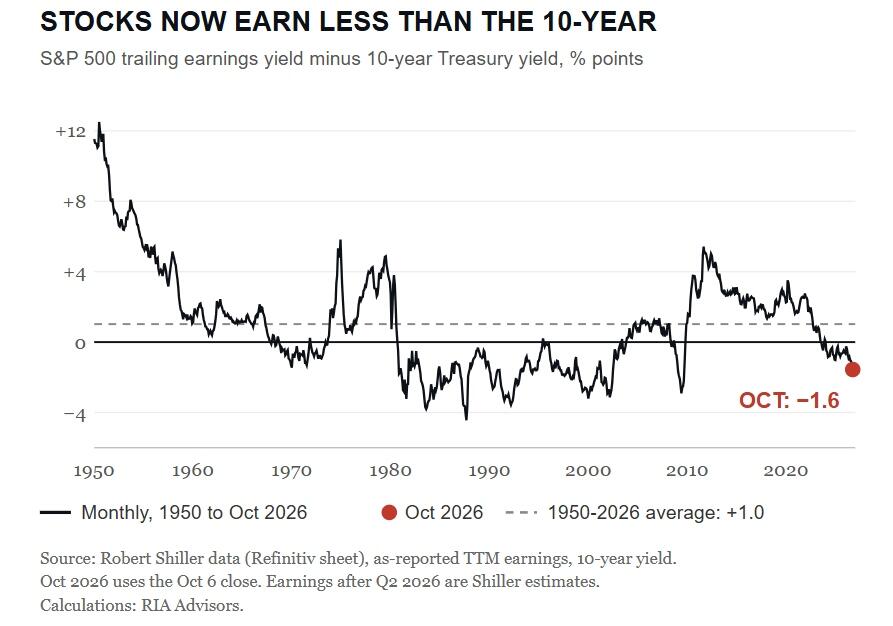
S&P 500 Earnings Yield Falls to 3.7% as 10-Year Treasury Hits 5.31%, Turning Equity Risk Premium Negative
Negative equity risk premium at current valuations signals limited excess returns ahead. Data separates cheap-start episodes from expensive ones, showing starting earnings yield as the decisive variable. Bonds now compete directly with equities on yield without volatility.
Shiller monthly data through October shows the premium averaging +1.0 point since 1950. Forward P/E of 19.0 from FactSet lifts the earnings yield only to 5.3%, matching the Treasury rate and eliminating any excess return buffer. This leaves investors with no compensation for equity volatility over government bonds.
Historical sorting of months since 1950 reveals negative premiums alone do not predict poor returns when valuations start cheap. The early 1980s delivered 10.3% real annual returns over the subsequent decade because earnings yields exceeded 5% and often 12%, allowing both stocks and bonds to benefit from falling yields. Current 3.7% earnings yield places markets in the expensive cohort that averaged just 3.7% real returns with over 25% of periods finishing negative.
Zero-yield cash environments previously forced flows into equities under TINA conditions. Higher bond yields now reverse that incentive, offering savers compensation to wait rather than stretch for equity returns at elevated multiples. Primary records from Treasury auctions and earnings releases confirm the rate differential without reliance on forward guidance.
Sustained negative premium at these valuations historically preceded periods of multiple compression or earnings growth shortfalls that realigned returns with starting prices.
Market Data Analyst: Real S&P 500 ten-year annualized returns will average below 4% through 2034 unless trailing earnings yield rises above 5%.
Sources (2)
- [1]Shiller Data(https://www.econ.yale.edu/~shiller/data.htm)
- [2]FactSet Earnings Data(https://www.factset.com)