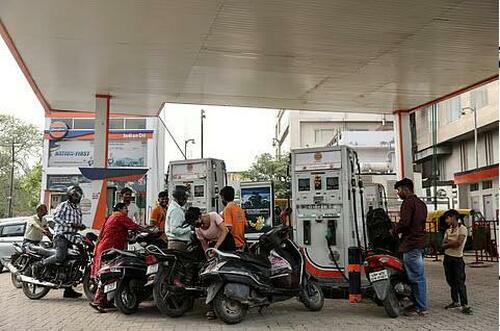
India Imposes Retail Fuel Caps Amid Middle East Supply Disruptions: Rationing Signals Hit Consumers and Commerce
Credible reports confirm India's retail fuel limits (200L diesel cap, commercial ban) due to Middle East/Hormuz disruptions; measures protect subsidized retail supply but signal rising costs and potential mobility impacts for consumers and businesses over coming months.
India has enacted temporary restrictions on retail fuel sales to avert localized shortages, capping diesel at 200 liters per customer or vehicle daily while barring commercial and industrial buyers from retail outlets entirely. The measures, effective for an initial 90-day period starting around June 11-12, 2026, stem from supply strains linked to Middle East conflict disrupting flows through the Strait of Hormuz, which previously accounted for over 40% of India's crude imports. State-run retailers, offering subsidized prices, faced depletion as bulk buyers shifted from pricier dedicated channels, prompting the government order reported by Reuters and corroborated across Bloomberg and domestic outlets like Livemint.[1][2]
This policy builds on earlier private-sector moves, including Reliance Industries capping purchases at ~₹1,000 per visit at its BP joint-venture pumps in April amid similar pressures. Broader context includes India's pivot to alternative crude sources from Latin America and Africa (Venezuela, Brazil, Angola, Nigeria) as Hormuz traffic faced restrictions tied to the Iran-related conflict, with imports from those regions rising sharply in April-May.[3] Wholesale inflation has accelerated, fuel prices have risen sharply year-over-year, and the rupee has weakened, amplifying cost pressures on trucking, agriculture, and daily commuters. The caps aim to preserve retail availability for households but risk indirect effects on supply chains and mobility if commercial operators face higher bulk costs or delays.
Deeper connections reveal this as part of a pattern: similar fuel rationing emerged in Bangladesh earlier in 2026 due to the same regional tensions, while India's state refiners continue absorbing losses on underpriced retail fuel. The 90-day horizon allows for potential early cancellation if supplies stabilize, but persistent Hormuz issues could extend strains into late 2026, affecting economic activity beyond immediate wallets.
LIMINAL: Retail caps will likely raise effective costs for commercial transport and small businesses within 1-3 months, pressuring consumer prices and regional mobility as bulk alternatives lag or cost more.
Sources (4)
- [1]India curbs bulk fuel buying at retail pumps, caps diesel sales(https://www.reuters.com/world/india/india-restricts-sale-high-speed-diesel-motor-spirit-retail-outlets-2026-06-11/)
- [2]India Caps Fuel Sales to Avoid Shortages(https://oilprice.com/Latest-Energy-News/World-News/India-Caps-Fuel-Sales-to-Avoid-Shortages.html)
- [3]Govt bars commercial users from buying bulk fuel at retail petrol pumps, caps diesel sales to trucks(https://www.livemint.com/news/india/govt-curbs-commercial-users-from-buying-bulk-fuel-buying-at-retail-petrol-pumps-caps-diesel-sales-to-trucks-11781230217470.html)
- [4]India turns to Latin American, African oil after Hormuz disruption(https://www.reuters.com/business/energy/india-turns-latin-american-african-oil-after-hormuz-disruption-2026-05-25/)