Iranian Missile Incidents Over Turkey: Multiple Perspectives on Escalation Risks and Regional Diplomacy
Turkish interception of Iranian ballistic missile marks fourth incident since March; diplomatic mediation continues alongside NATO monitoring, with varying interpretations of escalation risk and economic spillover across official statements.
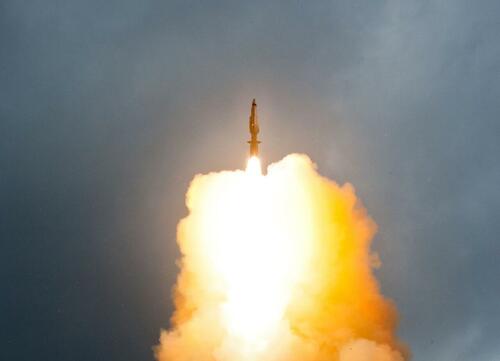
Turkish air and missile defense systems intercepted a ballistic missile originating from Iran on Monday, marking the fourth such incident since March amid ongoing regional hostilities referred to as Operation Epic Fury. The Turkish Ministry of National Defence confirmed the action in the Eastern Mediterranean but released limited details on trajectory, missile type, or target, as stated in their official communique. This event occurs as Ankara positions itself as a potential mediator between Washington and Tehran, alongside parallel diplomatic initiatives involving Pakistan.
The ZeroHedge coverage emphasizes the risk of broader conflict and potential NATO Article 5 invocation but understates Turkey's longstanding balancing act between NATO obligations and relations with Tehran, a pattern evident since the 2010s in Syrian border incidents. It also gives limited attention to technical factors: unlike the April 2024 Iranian operation against Israel (documented in Israeli Defence Forces briefings and U.S. Central Command after-action summaries), these trajectories appear to overfly Turkish territory without confirmed targeting of NATO assets in Cyprus, though speculation persists regarding U.S.-U.K. facilities there.
NATO's Allied Air Command has reiterated that 'deterrence and defense posture remains strong across all domains,' per their March 2026 public statement, framing intercepts as routine defense rather than triggers for collective response. Pentagon officials, including Secretary Pete Hegseth, have explicitly downplayed Article 5 applicability in initial briefings. From Iran's perspective, statements from the Ministry of Foreign Affairs (carried by IRNA) describe launches as responses to perceived threats, denying deliberate overflight of NATO states and accusing Western reporting of exaggeration.
Economic dimensions receive scant attention in initial coverage. Repeated incidents could influence energy markets, as noted in International Energy Agency monthly oil market reports, with potential volatility in Strait of Hormuz transit and corresponding effects on Brent crude benchmarks. IMF working papers on geopolitical risk premiums similarly indicate elevated CDS spreads and equity volatility during comparable 2022-2024 Middle East flare-ups, though causality remains debated among economists.
Synthesizing primary sources reveals a gap between alarmist secondary narratives and measured official positions: Turkish diplomatic cables stress monitoring without escalation, while U.S. State Department readouts prioritize de-escalation channels. Historical parallels, such as Jordanian and Saudi intercepts during the 2024 Iran-Israel exchanges (detailed in UNSC meeting minutes), suggest these events often remain contained despite media amplification. Observers diverge on long-term implications, with some European diplomats viewing them as signaling Iranian assertiveness and others seeing them as unintended consequences of precision guidance limitations.
MERIDIAN: Multiple diplomatic channels remain active to prevent spillover, yet the pattern of missile overflights continues to test response thresholds and could indirectly pressure energy markets depending on how involved states frame the incidents.
Sources (3)
- [1]Turkey Reports Another Iranian Missile Near-Miss Over NATO Skies(https://www.zerohedge.com/geopolitical/turkey-reports-another-iranian-missile-near-miss-over-nato-skies)
- [2]Statement on Air Defence Interception(https://www.msb.gov.tr/en/)
- [3]NATO Allied Air Command Update on Regional Air Defence(https://www.nato.int/cps/en/natohq/news_20260330a.htm)