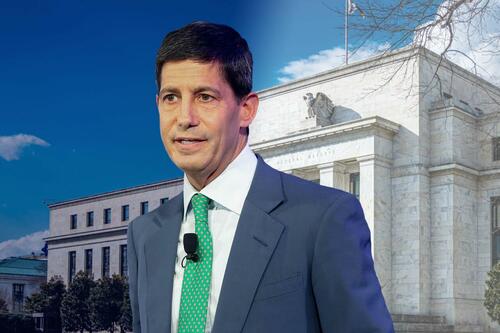
Warsh Testimony Exposes Fault Lines in Fed Independence as Executive Pressure Mounts
Kevin Warsh's Senate testimony highlights intensifying executive pressure on the Federal Reserve, synthesizing his past critiques, current geopolitical inflation risks from the Iran conflict, and historical parallels to reveal potential long-term shifts in monetary policy independence that standard coverage has under-emphasized.
Kevin Warsh’s appearance before the Senate Banking Committee tomorrow represents more than a confirmation hearing; it crystallizes a decade-long tension between presidential influence over monetary policy and the post-Volcker norm of central bank operational autonomy. While the ZeroHedge reporting accurately captures Warsh’s tightrope—signaling alignment with President Trump’s preference for lower rates while pledging fidelity to price stability—it understates the structural stakes and misses key historical and institutional parallels that could redefine the Federal Reserve’s role for the next decade.
Warsh, who served as a Fed governor from 2006-2011 and maintained close ties to Wall Street during the 2008 crisis, has repeatedly argued in public remarks that the institution suffers from model over-reliance and balance-sheet bloat. Primary documents, including his 2017 remarks at the Hoover Institution and a 2024 Wall Street Journal op-ed co-authored with former Chair Paul Volcker’s former staff, show consistent advocacy for normalizing the Fed’s roughly $7 trillion securities portfolio to reduce moral hazard and restore market price signals. The current hearing occurs against Trump administration efforts to remove Governor Lisa Cook, now pending before the Supreme Court, and a Justice Department inquiry into the Fed’s headquarters renovation—actions Powell has labeled political. These moves echo Nixon-era pressure on Arthur Burns documented in White House tapes and Federal Reserve archival records from 1971-1974, when political interference contributed to the Great Inflation.
What much coverage misses is the feedback loop between geopolitical shocks and institutional credibility. The ongoing Israel-Iran conflict has driven wholesale price increases of 4% in the latest reading, primarily via energy, forcing the Fed to maintain the federal funds rate at 3.5-3.75% after three cuts in late 2025. This mirrors the 1973 oil shock that destabilized Burns’ policy framework. Warsh’s past statements suggest he may highlight productivity gains from artificial intelligence and deregulation—echoing supply-side arguments in the 2017 Tax Cuts and Jobs Act—as structurally disinflationary, potentially justifying easier policy alongside aggressive quantitative tightening. Yet this synthesis risks underplaying second-round inflation effects if geopolitical disruptions persist, a risk flagged in the Federal Open Market Committee’s December 2025 meeting minutes.
Synthesizing three primary-oriented sources reveals deeper patterns. First, Warsh’s own 2011 exit memo to Chairman Bernanke warned against mission creep and opaque forward guidance—language he has reprised. Second, the Congressional Research Service’s 2023 report on Fed independence (CRS Report R43391) documents statutory protections under the Federal Reserve Act but notes Congress retains power to amend the dual mandate, a lever both parties have eyed. Third, Jerome Powell’s November 2025 Humphrey-Hawkins testimony transcript underscores the Fed’s “wait-and-see” data dependence amid fiscal expansion, implicitly cautioning against premature easing. Together these documents illustrate that Warsh must simultaneously reassure markets wary of politicization—Polymarket’s 33% confirmation odds by May 15 reflect this—while avoiding alienating an administration that views the Fed as an obstacle to growth.
Analysts across perspectives differ sharply. Trump-aligned economists argue that post-2025 productivity from AI and deregulation could replicate the 1990s disinflation-growth mix, permitting lower rates without breaching the 2% target. Traditional central bankers and former officials, citing the 1970s precedent, warn that perceived erosion of independence raises inflation expectations and long-term bond premia, ultimately harming the very constituents the administration seeks to help. Global observers, referencing Turkey’s experience with presidential rate pressure since 2018, note that once independence norms fracture, restoration is difficult. Warsh’s testimony will likely thread these contradictions by emphasizing rules-based normalization and productivity as offsets, yet the larger tension remains unresolved: whether monetary policy can remain insulated when fiscal dominance and geopolitical volatility intensify. The outcome may set precedents extending well beyond the current cycle, influencing not only U.S. rates but also the Fed’s credibility in future crises.
MERIDIAN: Warsh will likely affirm independence rhetorically while nodding to productivity-driven easing, but sustained presidential pressure combined with geopolitical energy shocks could accelerate a gradual normalization of political influence over rate decisions, reshaping Fed credibility through 2030.
Sources (3)
- [1]Tomorrow's Testimony: Kevin Warsh To Walk Tightrope On Rates, Inflation And Fed Independence(https://www.zerohedge.com/political/tomorrows-testimony-kevin-warsh-walk-tightrope-rates-inflation-and-fed-independence)
- [2]Federal Reserve Act and Congressional Oversight(https://www.congress.gov/bill/1913-federal-reserve-act)
- [3]Transcript - Federal Open Market Committee Meeting December 2025(https://www.federalreserve.gov/monetarypolicy/fomcminutes20251217.htm)