Iran-Hormuz Conflict Triggers LNG Shock, Driving Asian Nations Back to Coal and Exposing Green Transition Fragility
Escalating Iran conflict has closed the Strait of Hormuz, slashing global LNG supply by ~20% after attacks on Qatar facilities, causing LNG prices to double and forcing Japan, India, South Korea and other Asian nations to revive coal power generation as a short-term necessity. This second major energy crisis of the decade highlights vulnerabilities in green transition strategies and the enduring role of coal in energy security.
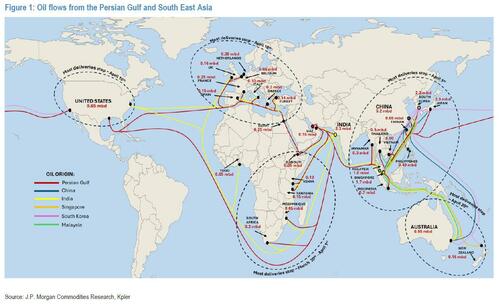
The ongoing US-Israel-Iran conflict has effectively paralyzed shipping through the Strait of Hormuz, disrupting roughly one-fifth of global LNG supply, particularly from Qatar's Ras Laffan facility which suffered direct attacks and force majeure declarations. This marks the second major energy supply shock this decade, following Russia's invasion of Ukraine, but with potentially more severe long-term consequences for energy policy. Bloomberg reports that the gas supply shock is pushing top LNG consumers back toward coal, the dirtiest fossil fuel, as Asian utilities face doubled spot LNG prices and scramble for alternatives. Countries including Japan, India, South Korea, Thailand, and Bangladesh are restarting or ramping up coal-fired power plants, lifting operating caps on older units, and prioritizing affordable electricity over emissions targets. Reuters detailed Japan's decision to relax rules for one year to boost coal generation and reduce LNG needs, while Fortune noted similar moves in Thailand and South Korea alongside longer-term interest in nuclear. The International Energy Agency's Fatih Birol has warned of high energy prices driving temporary upward pressure on coal use for both power and industry. This crisis reveals deeper patterns of energy realpolitik: decades of policy pushing LNG as a 'bridge fuel' to renewables has left Asia heavily exposed to Middle East chokepoints, with 80-90% of relevant flows destined for the region. Wood Mackenzie and Goldman analysts describe this as a larger disruption than the Russian war for some nations lacking gas buffers, forcing fuel switching with limited choices. The episode underscores the fragility of green energy transitions—renewables buildout has not yet provided sufficient baseload resilience, exposing policy failures in ignoring geopolitical risks and over-reliance on just-in-time globalized fuel markets. China appears somewhat insulated through domestic coal and diversified supplies, while Europe and the US face secondary ripple effects, potentially hitting California hardest. Rather than accelerating purely renewable paths, the shock may entrench coal longer in developing Asia while prompting faster nuclear and diversified LNG investments.
[LIMINAL]: This crisis shows how quickly geopolitics can force nations to abandon short-term climate goals for energy security, proving coal remains the reliable backup when globalized gas markets fail and revealing that true energy independence requires diversified sources beyond fragile chokepoints.
Sources (5)
- [1]Iran War’s Gas Supply Shock Pushes Top Consumers Back to Coal(https://www.bloomberg.com/news/articles/2026-03-29/iran-war-s-gas-supply-shock-pushes-top-consumers-back-to-coal)
- [2]Japan to relax rules from April to boost coal-fired power(https://www.reuters.com/business/energy/japan-considers-increasing-coal-fired-power-war-disrupts-lng-imports-2026-03-27/)
- [3]Coal is back and nuclear is next: The Iran war is rewiring Asia’s energy system(https://fortune.com/2026/03/29/iran-war-hormuz-asia-energy-crisis-coal-nuclear/)
- [4]Asia boosts coal use as Iran war squeezes global LNG supplies(https://www.npr.org/2026/03/24/g-s1-114940/asia-boosts-coal-use-as-iran-war-squeezes-global-lng-supplies)
- [5]Asia Turns Back to Coal as War Chokes Off Natural Gas(https://www.nytimes.com/2026/03/18/business/iran-war-lng-asia-japan.html)