Beyond Kamikaze: AeroVironment's MAYHEM 10 and the Rise of Versatile Autonomous Systems in Contested Warfare
AeroVironment's MAYHEM 10 fuses reconnaissance, EW, and strike into a modular, autonomous drone with 62-mile range, directly applying hard lessons from Ukraine and Middle East conflicts about operating in jammed, high-threat environments while advancing the Pentagon's attritable mass strategy.
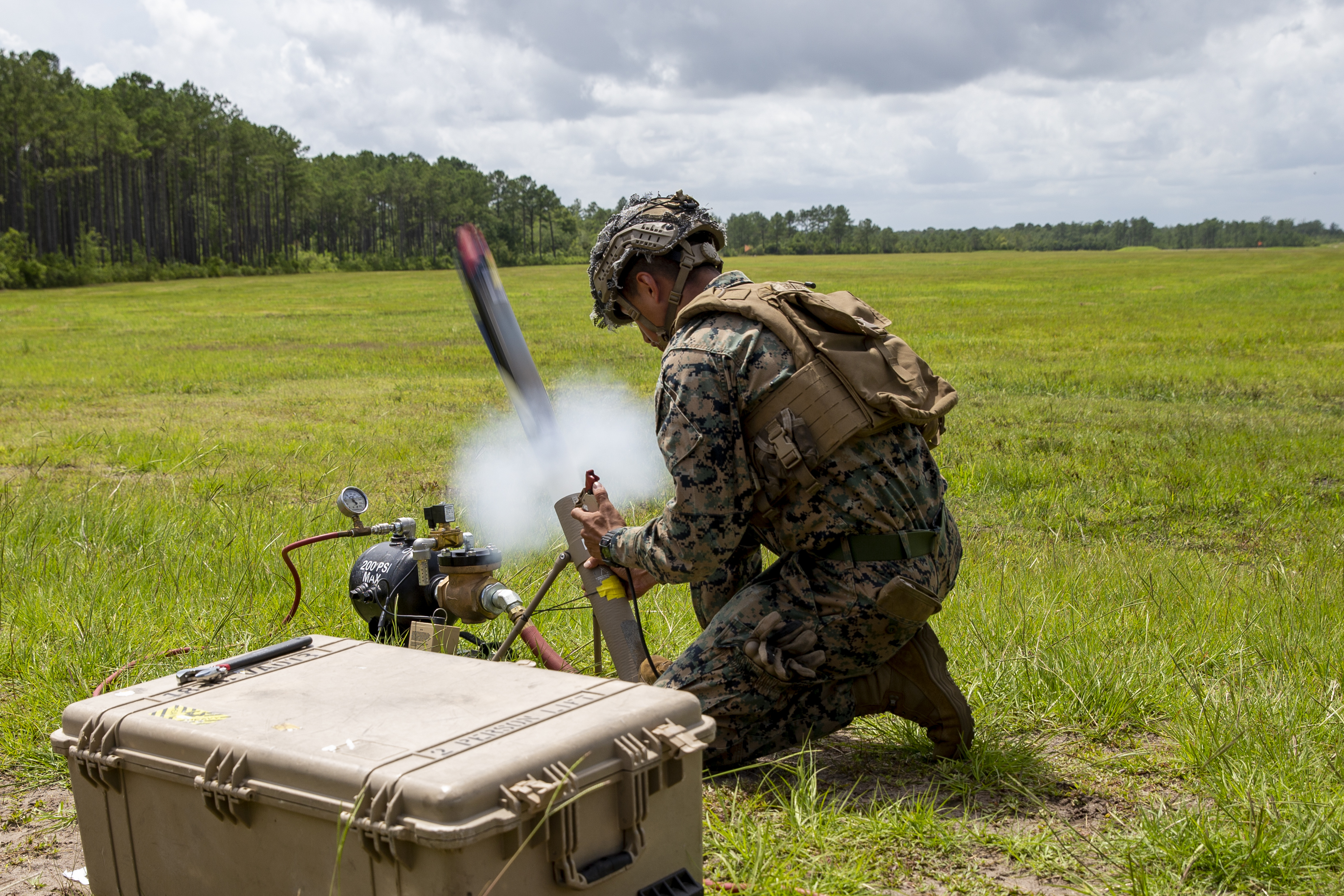
AeroVironment's announcement of the MAYHEM 10 multifunctional drone variant represents far more than an incremental upgrade to the proven Switchblade family. While the original Defense News coverage accurately reports the system's 62-mile range, 50-minute endurance, 10-pound modular payload, sub-five-minute launch capability, and tri-domain launch flexibility (air, ground, maritime), it largely frames the story as a product launch. What it misses is the deeper doctrinal signal: the rapid convergence of ISR, electronic warfare, and kinetic effects into a single attritable platform that directly responds to lethal lessons from Ukraine's drone-saturated battlefields, Houthi and Hezbollah operations in the Middle East, and the Pentagon's own Replicator initiative.
The Switchblade 600 Block 2 and 300 Block 20 systems procured by the Army for $186 million earlier this year remain largely one-way attack munitions. MAYHEM 10 breaks that mold by integrating interchangeable payloads that allow real-time shifting between reconnaissance, comms disruption, and strike. This mirrors the rapid capability iteration seen in Ukraine, where both Russian and Ukrainian forces have moved beyond commercial FPV drones to systems resilient against heavy GPS jamming and EW. A 2024 RUSI report on "Attritable Mass and Ukraine's Drone Evolution" documented how single-mission loitering munitions suffered attrition rates above 70% in jammed environments; platforms that could first detect, then jam enemy air-defense radars before striking achieved markedly higher success. MAYHEM 10 appears engineered for exactly this multi-step kill chain.
Original coverage also underplays the autonomy angle. CEO Wahid Nawabi's reference to "advanced autonomy" and "rapid adaptability" points to onboard AI that reduces reliance on contested satellite links — a vulnerability brutally exposed in both Ukraine and Israeli operations against Iranian-backed proxies. The CSIS 2025 brief "Unmanned Systems in High-Intensity Conflict" notes that Chinese and Russian forces are prioritizing AI-enabled swarming and cognitive EW; MAYHEM 10's design suggests an American counter, allowing small Marine and Army units organic multi-domain effects without waiting for higher-echelon assets.
The strategic pattern is clear. From the Black Sea to the Red Sea, modern conflicts demonstrate that exquisite, expensive platforms are unsustainable against cheap, proliferating threats. The Pentagon's shift toward "affordable mass" — publicly articulated in Deputy Secretary Hicks' Replicator program — finds concrete expression here. Yet genuine analysis reveals risks the announcement glosses over: a 10-pound payload may constrain kinetic effect against future armored targets, and the system's own electromagnetic signature could become a liability as adversary counter-drone AI improves. Integration with JADC2 networks will ultimately determine impact.
By synthesizing the Defense News release, RUSI's Ukraine drone findings, and CSIS analysis of loitering munitions, a coherent picture emerges: unmanned systems are evolving from disposable strike tools into intelligent, multi-role nodes. This is the new baseline for peer competition. Nations failing to field similar adaptable, rapidly updatable platforms will cede tactical initiative at the lowest echelons of combat.
SENTINEL: MAYHEM 10 accelerates the shift toward attritable, multi-role unmanned systems that embed EW and autonomy at the tactical edge. Expect accelerated adversary countermeasures from China and Russia, with these platforms becoming standard issue for forward-deployed units by late 2028 and reshaping small-unit lethality in the Indo-Pacific.
Sources (3)
- [1]AeroVironment launches new multifunctional drone variant(https://www.defensenews.com/news/your-military/2026/04/15/aerovironment-launches-new-multifunctional-drone-variant/)
- [2]Attritable Mass: Ukraine's Drone Evolution and Lessons for NATO(https://rusi.org/explore-our-research/publications/commentary/attritable-mass-ukraine-drone-lessons)
- [3]Loitering Munitions and Autonomous Systems in Future Conflict(https://www.csis.org/analysis/loitering-munitions-autonomous-systems-future-conflict)