China's Waning Grip on Rare Earths: A Shift in Global Supply Chains and Geopolitical Leverage
China’s dominance over rare earth elements, vital for tech and defense, is weakening as firms like Lynas Rare Earths in Malaysia and U.S.-backed initiatives diversify supply chains. Beyond trade war optics, this shift impacts green energy goals, national security, and global resource politics, though challenges like environmental costs and China’s entrenched advantages remain.
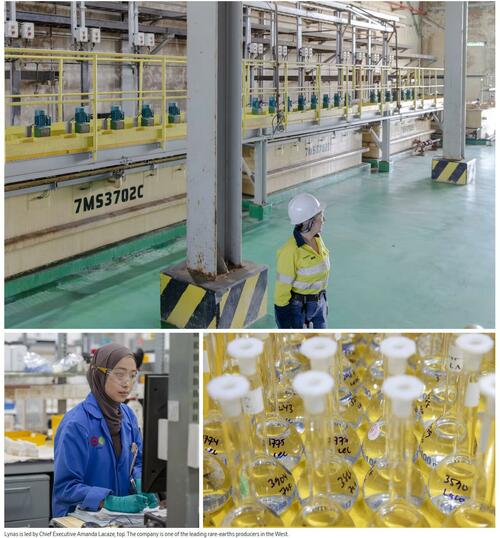
China's long-standing monopoly on rare earth elements (REEs), particularly the heavy rare earths critical for high-tech and defense applications, is eroding as Western nations and their allies ramp up efforts to diversify supply chains. This shift, highlighted by recent developments such as Australia's Lynas Rare Earths beginning production of heavy rare earths in Malaysia, marks a significant geopolitical and economic pivot. The original coverage by ZeroHedge (2023) notes Lynas’s breakthrough in Kuantan and the Pentagon’s $96 million deal to secure supplies, but it misses deeper implications for global trade dynamics, environmental policy trade-offs, and the strategic chessboard of U.S.-China relations.
Rare earths, while not scarce in the ground, are notoriously difficult to refine due to the toxic, multi-stage processes involved. China has dominated this space for decades, leveraging lax environmental regulations and state subsidies to control over 80% of global REE processing as of 2020, according to the U.S. Geological Survey (USGS) Mineral Commodity Summaries (2021). The ZeroHedge piece correctly identifies the refining bottleneck but overlooks how China’s dominance was also a deliberate geopolitical tool, as seen in its 2010 export restrictions during a dispute with Japan over the Senkaku Islands. This weaponization of supply chains prompted a wake-up call for the U.S. and allies, yet progress has been slow until recent years.
What the original coverage misses is the broader context of green energy and technology sectors, where REEs like dysprosium and terbium are indispensable for electric vehicle (EV) motors and wind turbine magnets. The International Energy Agency (IEA) warned in its 2021 report, 'The Role of Critical Minerals in Clean Energy Transitions,' that a failure to diversify REE supplies could delay global decarbonization goals by decades, as demand is projected to quadruple by 2040. Lynas’s production, alongside initiatives like MP Materials in the U.S. and USA Rare Earth’s acquisition of Brazil’s Serra Verde Group, signals a nascent but critical reorientation of supply chains. However, these efforts are not without challenges—refining outside China often faces higher costs and stricter environmental standards, a tension the original piece glosses over. For instance, Lynas’s Malaysian operations have historically drawn local protests over radioactive waste, a recurring issue in non-Chinese refining hubs.
Another underexplored angle is the geopolitical ripple effect. The Pentagon’s investment in Lynas and other firms isn’t just about securing magnets for jet fighters; it’s a direct counter to China’s Belt and Road Initiative, which has locked up REE resources in Africa and Latin America through debt-trap diplomacy. The U.S. Department of Defense’s 2020 report on 'Strategic and Critical Materials' explicitly frames REE dependency as a national security risk, citing China’s ability to disrupt supply as a leverage point in trade or military standoffs. By contrast, ZeroHedge frames the story primarily as a trade war subplot ahead of a Trump-Xi summit, missing how this fits into a decade-long pattern of resource nationalism and industrial policy revival in the West.
Synthesizing multiple perspectives, it’s clear that while China’s grip is loosening, it retains significant advantages. The USGS data shows China still holds the largest reserves of heavy REEs, and its processing capacity far outstrips nascent Western efforts. Yet, initiatives like the U.S.-led Minerals Security Partnership, launched in 2022 with allies including Australia and the EU, aim to pool resources and expertise, a collaborative angle absent from the original reporting. Meanwhile, Beijing may respond with further export controls or price undercutting, as it did post-2010, per historical trade data from the World Trade Organization (WTO). The interplay between economic viability and strategic imperatives will shape whether this diversification succeeds or becomes a costly symbolic gesture.
Ultimately, the decline of China’s REE monopoly is less about immediate independence and more about long-term resilience in tech and green energy supply chains. It’s a slow burn, not a sudden break, with environmental and diplomatic hurdles ahead. The story is bigger than a single company or deal—it’s a microcosm of how resource politics are reshaping global power in the 21st century.
MERIDIAN: The diversification of rare earth supply chains will likely gain momentum over the next decade, but full independence from China remains elusive due to cost and capacity gaps. Expect periodic supply shocks as Beijing adjusts export policies to maintain leverage.
Sources (3)
- [1]U.S. Geological Survey Mineral Commodity Summaries 2021(https://pubs.usgs.gov/periodicals/mcs2021/mcs2021-rare-earths.pdf)
- [2]International Energy Agency: The Role of Critical Minerals in Clean Energy Transitions(https://www.iea.org/reports/the-role-of-critical-minerals-in-clean-energy-transitions)
- [3]U.S. Department of Defense: Strategic and Critical Materials 2020 Report(https://www.defense.gov/News/Releases/Release/Article/2371838/dod-releases-strategic-and-critical-materials-report/)