Ceasefire Loophole or Constitutional Crisis? Hegseth's War Powers Claim Deepens U.S.-Iran Standoff
Defense Secretary Pete Hegseth’s claim that a ceasefire with Iran pauses the War Powers Resolution’s 60-day clock sparks constitutional debate and reveals executive overreach. Amid U.S.-Iran tensions over the Strait of Hormuz and skyrocketing oil prices, this loophole risks setting a dangerous precedent for unchecked military action, ignoring historical patterns of conflict escalation and the lack of a clear strategic endgame.
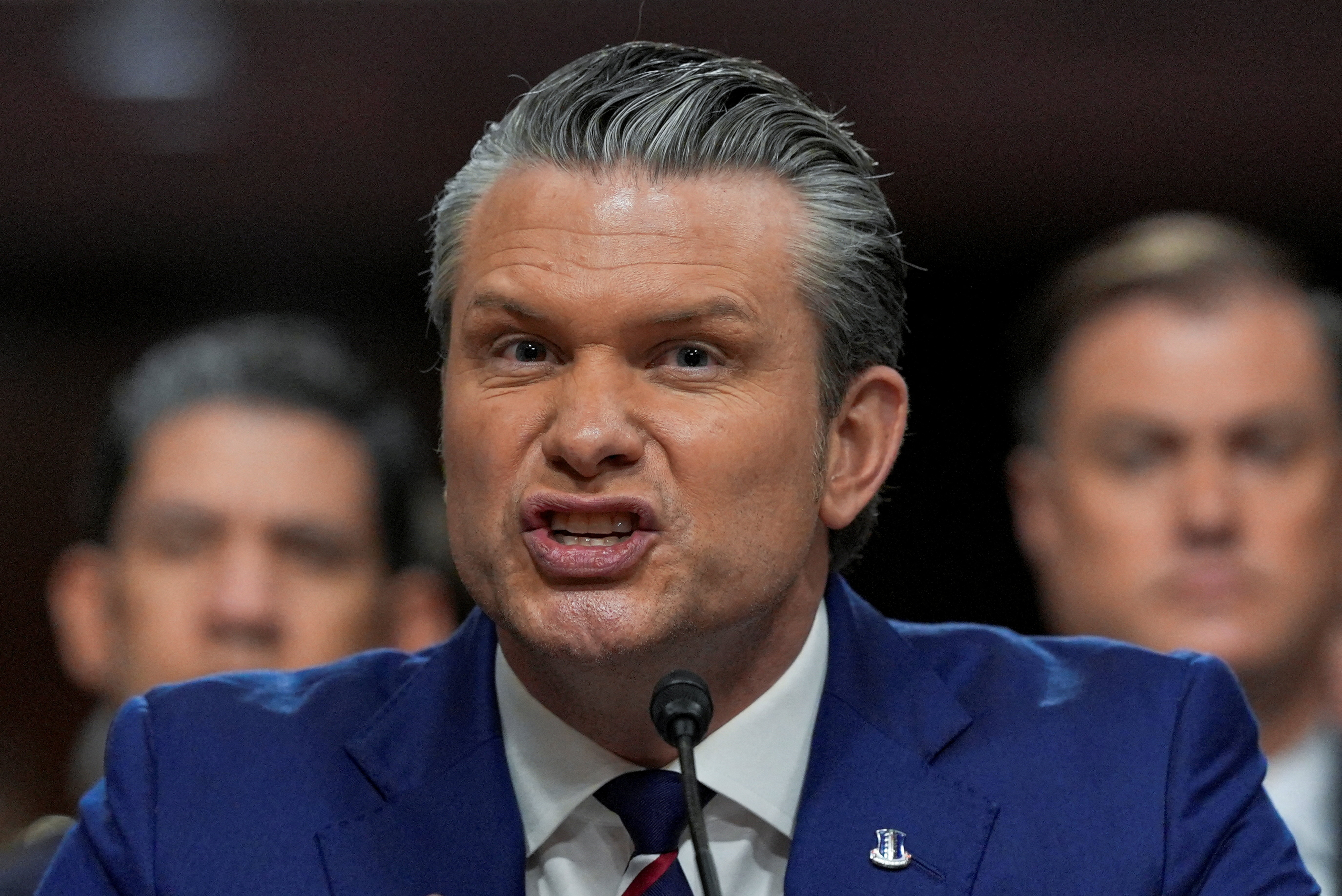
Defense Secretary Pete Hegseth's assertion that a ceasefire with Iran 'pauses' the 60-day War Powers Resolution clock has ignited a constitutional and strategic firestorm, revealing deeper tensions in U.S. Middle East policy and executive overreach. During a Senate Armed Services Committee hearing, Hegseth argued that the April 7 ceasefire—brokered after intense U.S. strikes under Operation Epic Fury—effectively halts the legal mandate requiring President Donald Trump to seek congressional approval for continued military action against Iran. This interpretation, challenged sharply by Sen. Tim Kaine (D-VA), exposes a critical gap in the 1973 War Powers Resolution, which makes no explicit mention of ceasefires as a mechanism to reset or suspend the timeline. Kaine's pushback, grounded in constitutional concerns, underscores a recurring pattern: the executive branch's attempt to sidestep legislative oversight during periods of heightened geopolitical tension.
Hegseth's claim is not merely a legal technicality; it reflects a broader strategic calculus. With the Strait of Hormuz effectively seized by Iran—a chokepoint for 20% of global oil supply—and Trump's retaliatory blockade driving Brent crude to a wartime peak of $126 per barrel, the administration appears to be buying time to maintain military pressure without congressional interference. This maneuver echoes historical precedents, such as the Reagan administration's actions during the 1980s Tanker War, where U.S. naval operations in the Persian Gulf escalated without formal war declarations. Yet, unlike then, today's digital surveillance and real-time global markets amplify the stakes, with economic ripple effects felt from Riyadh to Tokyo.
What the original coverage misses is the broader context of executive war powers erosion. Since 9/11, successive administrations have exploited ambiguities in the War Powers Resolution to sustain military engagements—think Libya 2011 or Yemen 2018—without explicit congressional consent. Hegseth's interpretation could set a dangerous precedent, effectively allowing any temporary cessation of hostilities to indefinitely delay oversight. This is particularly alarming given Iran's asymmetric warfare capabilities, including cyber operations and proxy militias, which could reignite conflict at any moment without triggering a 'new' 60-day clock.
Moreover, the administration's rhetoric—Hegseth's branding of congressional critics as 'reckless naysayers' and Trump's insistence on preventing Iran's nuclear ambitions—masks a lack of coherent endgame. The ceasefire, while halting direct fire, has not addressed Iran's regional influence or nuclear program, nor has it mitigated the risk of miscalculation in the Strait. Historical patterns, such as the 2019 Abqaiq drone attacks on Saudi oil facilities, suggest Iran often uses lulls to regroup and strike through proxies, a dynamic the administration seems unprepared to counter diplomatically or militarily.
Drawing on additional sources, including a 2023 Congressional Research Service report on War Powers disputes and a 2026 Reuters analysis of Persian Gulf tensions, it’s clear that Hegseth’s stance aligns with a long-standing executive push for unchecked authority, while ignoring the economic and strategic costs of prolonged stalemates. The blockade, for instance, risks alienating allies dependent on stable oil flows—South Korea and Japan, for example, have already signaled concern over supply disruptions. What’s missing from the discourse is a sober assessment of whether this ceasefire truly de-escalates or merely postpones an inevitable clash, potentially on terms less favorable to U.S. interests.
Ultimately, Hegseth’s claim isn’t just a legal debate; it’s a symptom of a broken system of checks and balances in U.S. foreign policy. Without legislative clarity or a unified strategy, the U.S. risks stumbling into a wider conflict with Iran, driven by executive hubris rather than strategic necessity. As global oil markets teeter and Iran’s proxies lurk, the ceasefire may pause the clock—but it does not stop the countdown to crisis.
SENTINEL: Without swift congressional action to clarify War Powers rules on ceasefires, expect further executive overreach in U.S.-Iran policy, risking escalation through miscalculation or proxy conflict in the Gulf.
Sources (3)
- [1]Ceasefire ‘stops’ War Powers clock on Iran, Hegseth claims(https://www.defensenews.com/news/pentagon-congress/2026/04/30/ceasefire-stops-war-powers-clock-on-iran-hegseth-claims/)
- [2]Congressional Research Service: War Powers Resolution: Concepts and Practice(https://crsreports.congress.gov/product/pdf/R/R42699)
- [3]Reuters: Tensions Rise in Persian Gulf as U.S. Blockade Continues(https://www.reuters.com/world/middle-east/tensions-rise-persian-gulf-us-blockade-continues-2026-04-29/)