Tesla's $573 Million in Sales to Musk's Companies Sparks Governance Concerns Amid Tech Conglomerate Scrutiny
Tesla's $573 million in sales to Elon Musk's other companies, including SpaceX and xAI, raises significant corporate governance concerns amid increasing scrutiny of tech conglomerates. Beyond the transactions, historical patterns of overlap, regulatory shifts, and potential impacts on the EV sector highlight risks to investor trust and stock valuations.
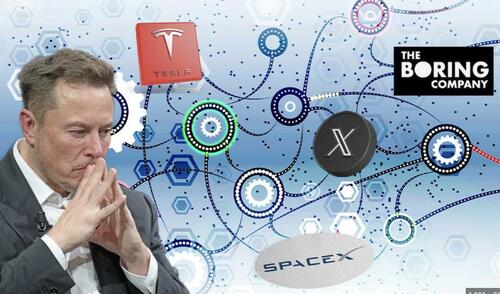
Tesla's recently disclosed financial transactions with other Elon Musk-controlled entities, totaling $573 million in sales for 2023, have raised significant questions about corporate governance and potential conflicts of interest. According to Tesla's filings with the Securities and Exchange Commission (SEC), the electric vehicle giant sold approximately $430 million in Megapack battery systems to xAI and $143 million in vehicles, primarily Cybertrucks, to SpaceX. In return, Tesla invested $2 billion in SpaceX and xAI and paid over $15 million for commercial and consulting services. While the original coverage by ZeroHedge highlights the scale of these transactions, it misses critical historical and regulatory context, as well as the broader implications for investor trust in tech conglomerates.
Historically, Musk's business empire has operated with significant overlap between entities. For instance, Tesla engineers have been reassigned to projects at X (formerly Twitter), and Musk has openly discussed integrating technologies like xAI's Grok into Tesla vehicles. This pattern of resource-sharing, while innovative, echoes past controversies over insider dealings in conglomerates like Enron, where opaque intercompany transactions eroded investor confidence before the company's collapse in 2001. Unlike Enron, there is no evidence of fraud in Musk's empire, but the lack of transparency in how these transactions are valued and approved raises similar red flags. The original ZeroHedge article does not address how Tesla's board, which has faced criticism for lacking independence due to Musk's influence, oversees these deals—an omission that undercuts a full understanding of governance risks.
Moreover, the timing of these disclosures coincides with heightened regulatory scrutiny of tech conglomerates. The Federal Trade Commission (FTC) and SEC have intensified focus on insider transactions and antitrust concerns in companies with overlapping ownership structures, as seen in recent investigations into Amazon and Google. Tesla's $158 billion compensation package for Musk in 2025, nearly 40 times the company's annual net income, amplifies concerns about capital allocation and whether shareholder interests are being prioritized over Musk's broader empire-building ambitions. This figure, while staggering, was glossed over in the original reporting as a mere attention-grabber rather than a potential catalyst for legal challenges or shareholder lawsuits, as occurred with Musk's 2018 compensation package, which was contested in Delaware courts.
A deeper concern missed by initial coverage is the impact on the electric vehicle (EV) sector as a whole. Tesla's stock, often a bellwether for EV valuations, could face volatility if investors perceive governance risks as systemic to Musk's empire, especially if SpaceX goes public and invites further Wall Street scrutiny. This could ripple through competitors like Rivian and Lucid, which are already struggling with profitability and investor confidence. Additionally, the integration of xAI's technology into Tesla products raises questions about intellectual property ownership and whether Tesla shareholders are adequately compensated for innovations that may benefit Musk's other ventures.
Drawing on multiple sources, including Tesla's 2023 10-K filing with the SEC and a 2022 FTC report on conglomerate oversight, it is clear that the regulatory environment is shifting toward stricter oversight of intercompany dealings. A third perspective from a 2023 Bloomberg analysis of Musk's compensation highlights ongoing shareholder discontent with Tesla's governance structure, noting that proxy advisory firms like Institutional Shareholder Services (ISS) have repeatedly flagged concerns about board independence. Synthesizing these, the core issue is not just the transactions themselves but the precedent they set for accountability in an era where tech leaders wield outsized control over multiple industries.
Ultimately, while Musk's vision of a synergistic empire may drive innovation, the lack of clear boundaries between his companies risks undermining investor trust. The original coverage failed to connect these transactions to broader patterns of conglomerate scrutiny or the potential for sector-wide fallout in the EV market. As regulators and shareholders demand greater transparency, Tesla's ability to balance Musk's ambitions with fiduciary responsibility will be a critical test for the future of tech conglomerates.
MERIDIAN: Tesla's intercompany dealings with Musk's other ventures could trigger regulatory probes or shareholder lawsuits within the next 12-18 months, especially if SpaceX goes public and amplifies scrutiny of governance practices.
Sources (3)
- [1]Tesla, Inc. 2023 Annual Report (Form 10-K)(https://www.sec.gov/ix?doc=/Archives/edgar/data/1318605/000095017024008422/tsla-20231231.htm)
- [2]FTC Report on Conglomerate Oversight (2022)(https://www.ftc.gov/news-events/news/press-releases/2022/09/ftc-report-congress-digital-platforms)
- [3]Bloomberg: Musk's Tesla Pay Package Faces Shareholder Scrutiny (2023)(https://www.bloomberg.com/news/articles/2023-06-15/musk-s-tesla-pay-package-draws-scrutiny-from-shareholders)