NASA's Artemis II Data Challenge: Why a Crew of Four Could Redefine How We Prepare for Mars
NASA's crowdsourced challenge seeks innovative statistical and computational methods to extract reliable insights from the small-sample, multi-system Artemis II deep-space human data, an overlooked but essential step for evidence-based lunar bases and Mars missions.
While headlines about Artemis have centered on splashdowns, hardware tests, and international partnerships, NASA's new Human Research Data Methodology Challenge reveals a more fundamental and overlooked reality: we still lack robust ways to learn from the tiny number of humans who will travel beyond low Earth orbit.
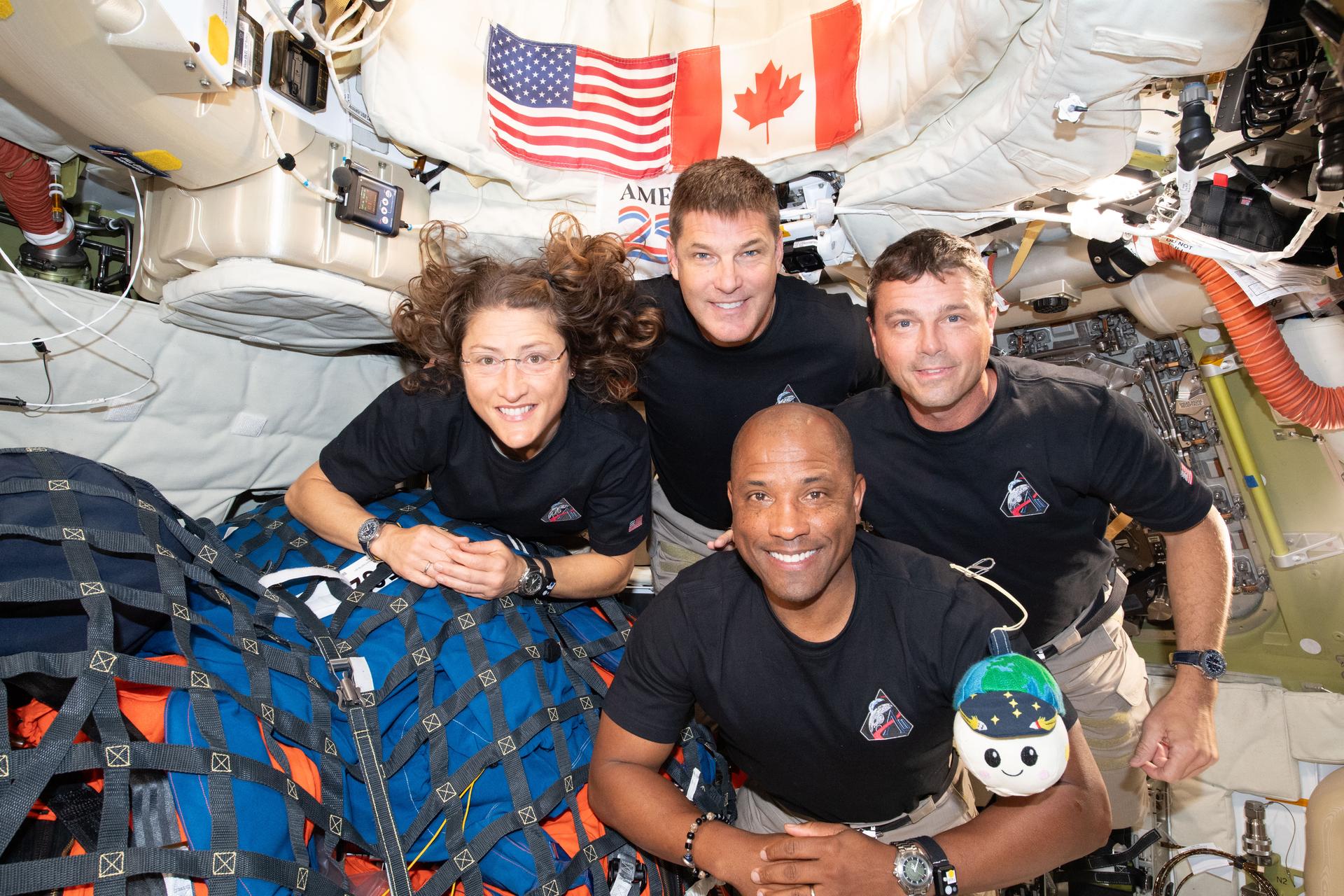
Artemis II carried four astronauts farther from Earth than any humans since Apollo 17. For the first time in over 50 years, researchers gained direct measurements of how real people respond to deep-space radiation, prolonged isolation in a novel spacecraft, and the combined stressors of a lunar flyby mission. NASA's Human Research Program correctly calls this dataset "irreplaceable." Yet as the agency itself notes, the sample size is only four. That limitation renders many conventional statistical tools nearly useless.
Mainstream coverage has largely celebrated the mission as a stepping stone while missing this core scientific bottleneck. Traditional biomedical research demands dozens or hundreds of subjects to establish statistical significance. Space medicine has always struggled with small cohorts; the landmark NASA Twins Study (Garrett-Bakelman et al., Science, 2019), a peer-reviewed multi-omics analysis of identical twins where only one spent a year on the ISS, illustrated both the power and severe constraints of n=1 or n=2 research. That work, conducted in the relatively shielded environment of low-Earth orbit, still required sophisticated longitudinal profiling across immune, metabolic, epigenetic, and cognitive systems. Artemis II data adds the critical variable of deep-space galactic cosmic radiation that ground analogs and ISS missions cannot replicate.
The challenge, run through the Center of Excellence for Collaborative Innovation, offers $25,000 for novel analytical approaches. It implicitly admits that standard frequentist methods fall short. Promising directions likely include Bayesian hierarchical models that incorporate prior ISS and analog data, machine-learning techniques tuned for high-dimensional low-n datasets, network-based systems physiology that maps interactions rather than isolated biomarkers, and integrative approaches that treat the astronaut as a complex adaptive system.
This pattern echoes beyond NASA. Rare-disease researchers and oncologists studying outlier responders have developed similar small-sample toolkits. By crowdsourcing solutions, NASA is wisely looking outside aerospace silos. Success here would not only sharpen predictions for Artemis III surface missions and eventual Mars transits but could cross-pollinate Earth-based precision medicine.
Limitations remain clear: four subjects cannot represent the genetic, experiential, and sex diversity of future crews. Individual variability in spaceflight responses (vision changes, immune dysregulation, bone loss) is already well documented. Any methodology emerging from this challenge must be validated iteratively against larger ISS cohorts and ground analogs before being trusted for flight rules that protect astronaut health on multi-year Mars journeys.
The original NASA announcement understates the deeper shift this represents: moving from closed institutional research toward open innovation at the methodological level. In an era when both lunar bases and Mars missions will likely operate with small crews and limited real-time ground support, analytical efficiency becomes a mission-critical technology as important as propulsion or life support. The June 5, 2026 deadline offers the scientific community and citizen innovators a rare chance to shape the evidence base for humanity's deep-space future.
HELIX: With only four crew members, Artemis II's rich deep-space dataset defies traditional statistics. This public methodology challenge signals NASA's recognition that smarter analytical tools, not just more missions, are required before we can safely commit humans to multi-year Mars voyages.
Sources (3)
- [1]NASA Artemis II Human Research Data Methodology Challenge(https://www.nasa.gov/directorates/stmd/prizes-challenges-crowdsourcing-program/center-of-excellence-for-collaborative-innovation-coeci/nasa-artemis-ii-human-research-data-methodology-challenge/)
- [2]The NASA Twins Study: A Multidimensional Analysis of a Year-Long Human Spaceflight(https://www.science.org/doi/10.1126/science.aau8650)
- [3]NASA Human Research Program(https://www.nasa.gov/humans-in-space/human-research-program/)