AI-Assisted Discovery Reveals Critical PHP Vulnerabilities Impacting Up to 70% of Websites
AI tools enabled discovery of severe PHP core flaws (PHP2Shell), leading to emergency patches after a leak; affects vast swath of internet infrastructure with RCE risks.
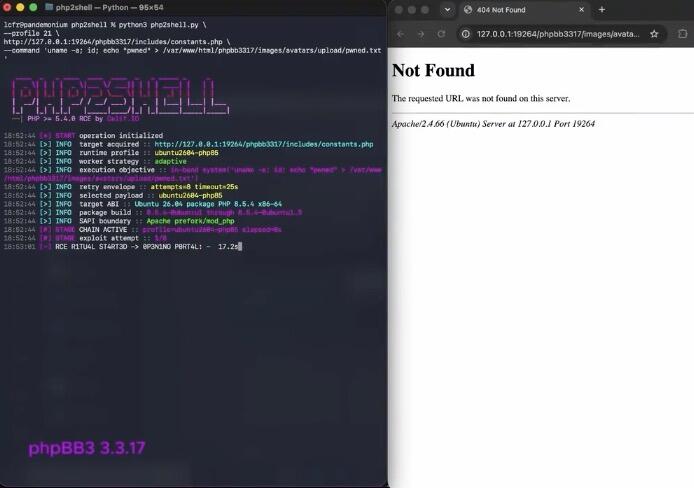
Security researchers using advanced AI models uncovered two critical remote code execution vulnerabilities in the PHP programming language, collectively dubbed PHP2Shell (CVE-2026-109618 and CVE-2026-109619). These flaws, present in PHP versions dating back to 5.4, affect the core engine and enable unauthenticated attackers to execute malicious code or leak memory on vulnerable servers, independent of the web application running on top.
The vulnerabilities were identified in August 2026 by Ryan Austin of Calif using OpenAI’s GPT-5.6 Sol as part of the 'Patch the Planet' project, with independent discovery by Wiz researchers employing Gemini 4 Argon, GPT-5.6 Sol, and Wiz Atlas. Prior to AI assistance, the memory-safety issues were considered too complex to exploit practically. Patches were developed in coordination with PHP maintainers, OpenAI, and Wiz, modifying substantial code before a planned October 22 disclosure.
Details leaked on Hacker News on October 20, prompting an accelerated release of fixes on October 21 for PHP 8.2.35, 8.3.36, 8.4.27, and 8.5.12. Exploitation attempts were observed shortly after announcement by entities including Cloudflare. The incident highlights AI’s dual role in accelerating vulnerability research while potentially enabling faster exploit development by adversaries. PHP powers a significant portion of the web, including popular platforms like WordPress, with mitigations available for unpatched older versions but full remediation requiring updates and worker restarts.
Broader implications include heightened urgency for coordinated disclosure frameworks and the shrinking window between discovery and potential widespread attacks in an AI-augmented threat landscape.
[LIMINAL]: AI is compressing the vulnerability lifecycle for both defenders and attackers, making proactive patching and AI-resistant secure coding practices essential for core web technologies.
Sources (7)
- [1]PHP2Shell - Wikipedia(https://en.wikipedia.org/wiki/PHP2Shell)
- [2]PHP2Shell: All You Need to Know About CVE-2026-109618 and CVE-2026-109619 - JFrog Security Research(https://research.jfrog.com/post/php2shell-all-you-need-to-know-about-cve-2026-109618-and-cve-2026-109619/)
- [3]PHP2Shell: AI uncovers critical RCE vulnerabilities affecting 70% of the Internet | Wiz Blog(https://www.wiz.io/blog/php2shell-php-rce)
- [4]Websites shut down globally after AI finds cybersecurity flaw affecting 70% of the internet | CNN Business(https://www.cnn.com/2026/10/21/tech/php2shell-vulnerability-ai-intl)
- [5]OpenAI model uncovered massive flaw in web's foundational code - Axios(https://www.axios.com/2026/10/21/php-openai-ai-bug-hunting-cyberattacks)
- [6]php2shell (CVE-2026-109618 and CVE-2026-109619) – PHP critical vulnerability fixes available | Ubuntu(https://ubuntu.com/blog/php2shell-vulnerability-fixes-available)
- [7]PHP2Shell: Critical PHP Vulnerabilities - Check Point Blog(https://blog.checkpoint.com/security/php2shell-what-we-know-about-the-leaked-critical-php-vulnerabilities-cve-2026-109618-cve-2026-109619/)