Social Media Verdicts: Testing the Boundaries of Section 230 and Platform Business Models
Jury verdicts against Meta and YouTube on youth mental health and platform design risk eroding Section 230 protections through novel legal theories, with implications for tech business models that original coverage under-emphasizes.
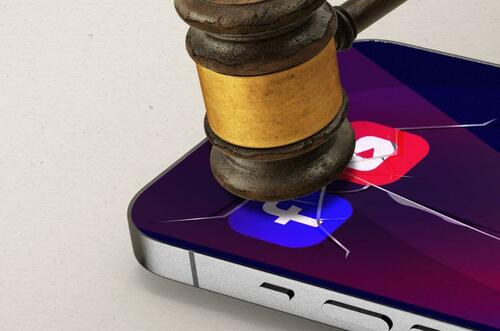
Recent jury findings against Meta and YouTube in Los Angeles and New Mexico, as reported by The Epoch Times via ZeroHedge, mark notable developments in holding social media platforms accountable for harms to young users. The Los Angeles case awarded $6 million total against Meta (70%) and YouTube (30%) for allegedly addictive design features such as infinite scroll and algorithms, while the New Mexico case imposed a $375 million penalty for violations of the state's Unfair Practices Act after investigators posed as minors and encountered explicit content. The original coverage emphasizes the potential for copycat lawsuits and class actions but underplays how these rulings test the foundational limits of Section 230 of the Communications Decency Act of 1996.
Primary legal text in 47 U.S.C. § 230(c)(1) provides that no interactive computer service provider 'shall be treated as the publisher or speaker of any information provided by another information content provider.' The plaintiffs in these matters focused on platform design and business practices rather than third-party content, a distinction the source correctly notes. However, what the reporting missed is the risk that courts could view algorithmic amplification and engagement-maximizing features as sufficiently integral to content delivery to erode this immunity over time. This connects to patterns seen in the 2023 Supreme Court decision in Gonzalez v. Google LLC (No. 21-1333), where the Court declined to issue a sweeping reinterpretation of Section 230 but left room for future challenges on algorithmic recommendations.
Multiple perspectives emerge. Child safety advocates and state attorneys general, including New Mexico's Raúl Torrez, argue these verdicts address documented harms supported by internal company documents and whistleblower testimony, framing the issue as corporate exploitation of vulnerable users rather than protected speech. In contrast, tech industry representatives and constitutional scholars contend that such liability could compel platforms to over-moderate or alter core features, raising free speech concerns and increasing compliance costs. Legal analysts note the novelty of applying public nuisance doctrines to digital platforms, traditionally tied to physical property as highlighted in the source.
Synthesizing the Epoch Times coverage with the text of Section 230 and the Gonzalez opinion reveals an undercovered threat: repeated successful claims could incentivize a fundamental shift in tech business models reliant on attention economies, prompting reevaluation of valuations by investors wary of billion-dollar legal exposure. These cases also occur amid broader global policy divergences, such as the EU's Digital Services Act, which imposes proactive risk assessments on very large online platforms. While not directly altering U.S. federal law, accumulating state-level precedents may pressure Congress or the Supreme Court to clarify intermediary liability boundaries. The original source correctly flags appeal prospects and bellwether status but does not fully connect these threads to potential sector-wide valuation pressure or the slow erosion of safe harbors that have defined internet policy since 1996.
MERIDIAN: These social media verdicts may accelerate challenges to Section 230 by focusing on design choices rather than content, potentially forcing algorithmic changes and pressuring valuations across the sector as more jurisdictions test similar theories.
Sources (3)
- [1]How Social Media Verdicts Could Upend Tech Industry(https://www.zerohedge.com/technology/how-social-media-verdicts-could-upend-tech-industry)
- [2]47 U.S. Code § 230 - Protection for private blocking and screening of offensive material(https://www.law.cornell.edu/uscode/text/47/230)
- [3]Gonzalez v. Google LLC, 598 U.S. ___ (2023)(https://www.supremecourt.gov/opinions/22pdf/21-1333_6jfl.pdf)