Illiquidity Exposed: Goldman COO Warns of Systemic Risks as Retail Inflows Accelerate in $1.7 Trillion Private Credit Market
Goldman COO John Waldron’s warning on private credit illiquidity reveals retail investor misconceptions and systemic vulnerabilities tied to geopolitical risks, liquidity mismatches, and regulatory gaps—elements frequently omitted in yield-focused mainstream narratives.
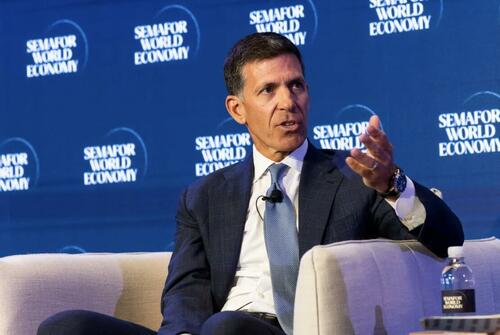
Speaking at Semafor’s World Economy event in Washington, Goldman Sachs President and COO John Waldron directly addressed growing concerns in private credit, stating that 'not everybody has marketed their product as clearly as we would like' and emphasizing that the asset class 'is really not a liquid product. It’s not semi-liquid. It’s really illiquid.' He noted that retail investors, now representing roughly one-fifth of the U.S. market, often hold 'the perception of more liquidity than is the reality,' especially as the sector has expanded to $1.7 trillion amid higher interest rates and redemption pressures.
While the ZeroHedge report accurately quotes Waldron and contextualizes near-term pressures, it underplays the deeper structural patterns and policy implications. Mainstream coverage frequently prioritizes yield-chasing narratives—highlighting 10-15% returns versus traditional bonds—while glossing over liquidity mismatches, valuation opacity, and potential contagion channels that Waldron’s comments indirectly expose. This retailization of private credit echoes post-GFC shifts where banks retreated from leveraged lending due to Basel III and Dodd-Frank rules, creating space for non-bank lenders, insurance firms, and now retail vehicles such as interval funds and BDCs with lowered minimums.
Synthesizing primary sources reveals a consistent regulatory concern. The IMF’s April 2024 Global Financial Stability Report documents the rapid growth of private credit and flags liquidity and valuation risks, noting that these markets can amplify shocks through correlated fire sales when redemption gates rise. Similarly, the Bank for International Settlements’ September 2023 Quarterly Review analysis of non-bank financial intermediation highlights how private credit’s lack of daily mark-to-market discipline creates an illusion of stability, differing markedly from public debt markets. FSOC’s 2023 annual report further identifies private funds as a monitoring priority due to interconnections with traditional banks via credit lines and shared borrowers.
Waldron tempered his remarks by citing the U.S. economy’s 'extraordinary resilience' and lack of 'real evidence' of weakness in earnings, yet he flagged geopolitical triggers—particularly escalation involving Iran, potential disruption of the Strait of Hormuz, and resulting oil spikes—that could produce 'demand destruction.' This intersection is underexplored in most coverage: an adverse geopolitical shock could simultaneously impair borrower repayment capacity in private credit portfolios (often extended to middle-market leveraged firms) while triggering retail redemption runs against quarterly 5% gates.
Perspectives differ sharply. Industry advocates view private credit as beneficial policy innovation that fills a financing gap for SMEs overlooked by regulated banks, thereby supporting growth and diversification. Regulatory voices and systemic-risk analysts counter that the opacity and first-mover advantages in illiquid assets mirror pre-2008 shadow-banking vulnerabilities, with retail participation broadening the base of exposed households. What original reporting missed is how current 'evergreen' fund structures and redemption caps are untested at scale in a true stress scenario combining higher-for-longer rates, refinancing cliffs, and geopolitical oil shocks.
The core vulnerability lies in the widening gap between marketed liquidity and contractual reality. When undercurrents of trouble appear, gates rise precisely as investors seek exits, potentially forcing secondary-market discounts or forced asset sales that transmit stress across non-bank and banking sectors. As Waldron observed, absent a broader economic crack, immediate crisis is not forecast; however, the retail-driven growth of this market introduces a policy tension between financial innovation and systemic stability that regulators have only begun to address through SEC private-fund rules.
MERIDIAN: Waldron’s illiquidity warning underscores how retail inflows into private credit could convert a liquidity mismatch into systemic stress if geopolitical shocks—such as Strait of Hormuz disruptions—trigger corporate defaults and redemption surges that existing gates cannot contain.
Sources (3)
- [1]It's Really Illiquid: Goldman COO Warns Retail About Private Credit And The Perception Of Liquidity(https://www.zerohedge.com/markets/its-really-illiquid-goldman-coo-warns-retail-about-private-credit-and-perception-liquidity)
- [2]Global Financial Stability Report, April 2024(https://www.imf.org/en/Publications/GFSR/Issues/2024/04/16/global-financial-stability-report-april-2024)
- [3]BIS Quarterly Review, September 2023 - Non-bank financial intermediation(https://www.bis.org/publ/qtrpdf/r_qt2309.htm)