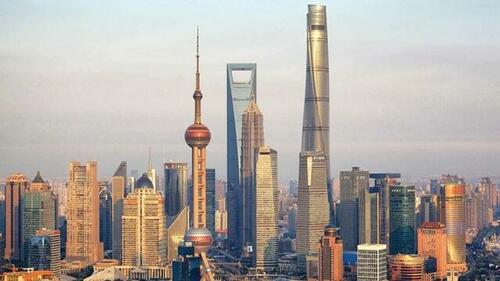
Saudi Arabia's Shanghai Gambit: PIF Office Deepens China Alliance, Eroding Petrodollar Foundations
Saudi Arabia’s PIF has opened a Shanghai office to deepen investment and deal flow with China, signaling a strategic shift from petrodollar reliance toward yuan-based ties and diversified partnerships. This reflects broader Gulf hedging amid US-China competition, regional instability, and Vision 2030 priorities, with implications for global economic power balances.
Saudi Arabia’s Public Investment Fund (PIF), valued at approximately $1 trillion, has opened a new office in Shanghai to pursue outbound deals in China and attract greater Chinese investment into the Kingdom, according to Bloomberg. Registered last year and operating under the Beijing branch led by Lily Cong, this outpost expands PIF’s global footprint alongside existing offices in New York, London, Hong Kong, and Paris. While the US remains an important partner, the move underscores Riyadh’s accelerating pivot toward Beijing amid the intensifying US-China strategic rivalry. Bloomberg reports this strengthens already deep strategic and financial links in energy, finance, and technology sectors.
Deeper analysis reveals connections often missed in mainstream coverage: this is not mere diversification but a calculated hedge against perceived fragility in Western security guarantees and dollar dominance. Fortune recently detailed how Saudi Arabia declined to formally renew its exclusive US dollar oil pricing commitment in 2024, following a $7 billion currency swap agreement with China and active participation in the mBridge blockchain-based cross-border payment platform. As China has overtaken the US as Riyadh’s largest oil customer, economic gravity is pulling toward yuan settlement, even as most transactions remain dollar-denominated for now. The Wall Street Journal previously reported on long-running talks for yuan-priced oil sales to China, which would directly challenge the 50-year petrodollar architecture established in the 1970s.
These financial maneuvers intersect with broader regional disruptions, including tensions involving Iran and disruptions in the Strait of Hormuz, exposing vulnerabilities in traditional energy trade routes and accelerating Gulf interest in non-dollar alternatives. South China Morning Post has quoted Saudi officials expressing openness to “petroyuan” experiments and welcoming Chinese firms in electric vehicles, renewables, and infrastructure — domains critical to Crown Prince Mohammed bin Salman’s Vision 2030. Similar moves by Abu Dhabi funds suggest a coordinated Gulf recalibration.
The underreported thread is the quiet architecture of a parallel financial system: mBridge enables direct yuan-riyal exchanges outside SWIFT, while Chinese capital and technology fill gaps left by cautious Western investors. In the context of US-China rivalry, Saudi Arabia’s actions reveal a multipolar bet — leveraging Beijing’s economic gravity to reduce over-reliance on Washington without fully severing ties. This realignment carries potential to reshape global capital flows, commodity pricing power, and ultimately erode the dollar’s exorbitant privilege if scaled across OPEC+ producers.
LIMINAL: Saudi Arabia's Shanghai office and yuan experiments mark an early but decisive crack in the petrodollar order, likely pulling more Gulf capital and oil trade toward China and hastening a multipolar financial system that diminishes Western monetary dominance within the decade.
Sources (4)
- [1]Saudi PIF Opens Shanghai Office to Facilitate China Dealmaking(https://www.bloomberg.com/news/articles/2026-05-06/saudi-pif-opens-shanghai-office-to-facilitate-china-dealmaking)
- [2]2 years ago, Saudi Arabia quietly canceled the 'petrodollar' agreement with the US(https://fortune.com/2026/04/07/what-is-petrodollar-petroyuan-saudi-china-dollar-strength/)
- [3]Saudi Arabia Considers Accepting Yuan Instead of Dollars for Chinese Oil Sales(https://www.wsj.com/world/middle-east/saudi-arabia-considers-accepting-yuan-instead-of-dollars-for-chinese-oil-sales-11647351541)
- [4]Saudi Arabia ‘open’ to petroyuan, closer China ties, minister says(https://www.scmp.com/economy/global-economy/article/3277788/saudi-arabia-open-petroyuan-closer-china-ties-minister-says)