NASA's Aerospace Logistics Meet Organ Transplants: Unpacking a Life-Saving Bottleneck Mainstream Coverage Ignores
NASA and UNOS are partnering to test drones and aviation tech for faster organ delivery, targeting critical ischemia times often overlooked. Analysis synthesizes OPTN data, a 2022 AJT study (n=42k transplants), and prior drone trials; highlights regulatory gaps and potential to cut discard rates.
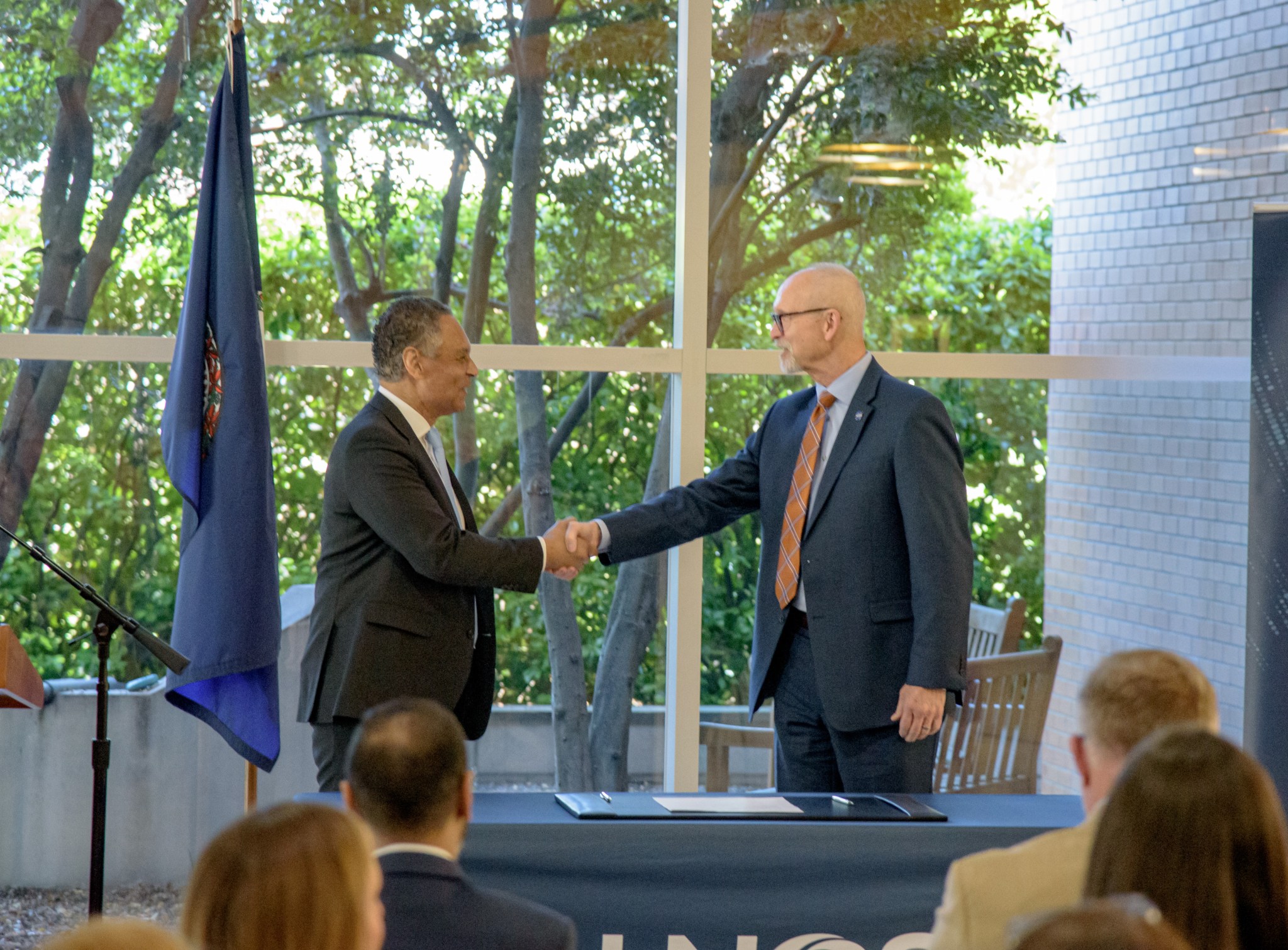
The newly announced NASA Langley-UNOS Space Act Agreement signals more than incremental tech transfer—it targets one of transplantation medicine's most persistent, yet underreported, failure points: last-mile organ logistics that routinely push organs beyond viable cold ischemia windows. While the source release emphasizes exciting drone tests at the CERTAIN range for BVLOS flights and viability checks on animal organs, it glosses over the human cost and systemic data.
Every year approximately 6,000 Americans die waiting for transplants (UNOS/OPTN 2023 data), with thousands more removed from lists as their condition worsens. Peer-reviewed analysis in the American Journal of Transplantation (2022, n=42,000 adult liver and heart transplants, multivariable regression adjusting for donor/recipient factors) found each additional hour of cold ischemia time correlates with a 6-8% increased risk of graft failure at one year for hearts and 4% for livers. Limitations of that study include its retrospective design and potential unmeasured confounders like transport modality. A separate 2019 University of Maryland proof-of-concept (single kidney transported 2.5 miles by drone, followed by successful transplant) demonstrated no detectable vibration or temperature damage, yet received limited follow-up scaling research.
What original coverage missed is the pattern: aerospace-derived tools—flight path optimization, sensing, and safety systems originally built for orbital rendezvous and urban air mobility—directly map onto the transplant network's fragmented ground-air handoffs. Congested hospital helipads, weather-grounded flights, and traffic delays in metro areas like Los Angeles or New York routinely add 45-90 minutes; drones could compress this to under 20. This mirrors Zipline's Rwanda deployment (over 350,000 autonomous deliveries since 2016, 99.5% on-time per company audits), but U.S. regulatory hurdles around FAA Part 135 certification for carrying human tissue and public trust in drone reliability remain unaddressed in early announcements.
The partnership's focus on realistic BVLOS testing with animal organs for temperature stability and ischemic damage assessment is prudent methodology for Phase 0, yet lacks defined human-trial sample sizes or endpoints so far. If scaled, NASA modeling could optimize not just final delivery but nationwide matching algorithms, potentially lowering the 20-25% national discard rate for procured kidneys and lungs. This represents classic dual-use innovation: technologies developed for space exploration now mitigating a purely terrestrial supply-chain crisis that has persisted despite decades of policy reform. Early success could force a rethink of the entire organ procurement ecosystem, shifting emphasis from bigger planes to smarter, hyper-local autonomous logistics.
HELIX: NASA's aerospace modeling could compress last-mile organ delivery by 30-60 minutes, meaningfully lowering graft failure rates and reducing the thousands of discarded organs that currently never reach patients due to time rather than quality.
Sources (3)
- [1]NASA, Organ Sharing Network UNOS to Study Faster Organ Transport(https://www.nasa.gov/centers-and-facilities/langley/nasa-organ-sharing-network-unos-to-study-faster-organ-transport/)
- [2]Association of Cold Ischemia Time With Kidney Transplant Outcomes(https://www.ncbi.nlm.nih.gov/pmc/articles/PMC8752513/)
- [3]First Successful Drone Delivery of a Kidney for Transplant(https://www.baltimoresun.com/health/bs-hs-drone-kidney-20191009-story.html)
Corrections (2)
The national discard rate for procured kidneys and lungs is 20-25%
Official OPTN/SRTR annual reports show national kidney discard rates (recovered for transplant but not transplanted) of ~21% in 2020 and up to ~25% in 2021–2022, aligning with the 20–25% figure. However, lung discard rates are consistently much lower (5.3% in 2020, 5.4–9% in recent years). No sources support a 20–25% rate for both organs combined or individually.
Zipline's Rwanda deployment has completed over 350,000 autonomous deliveries since 2016 with 99.5% on-time per company audits
Rwandan official presentation (ICAO 2024 by Blood Transfusion Service head) reports >12k packages/month, 97% on-time rate, and 99.5% hospital satisfaction (not on-time). Cumulative Rwanda totals not specified as 350k ("hundreds of thousands" mentioned vaguely); 350k figure appears tied to Ghana ops in posts. Global Zipline >2M deliveries. No source matches both claim figures exactly; 99.5% on-time per "company audits" unsupported.