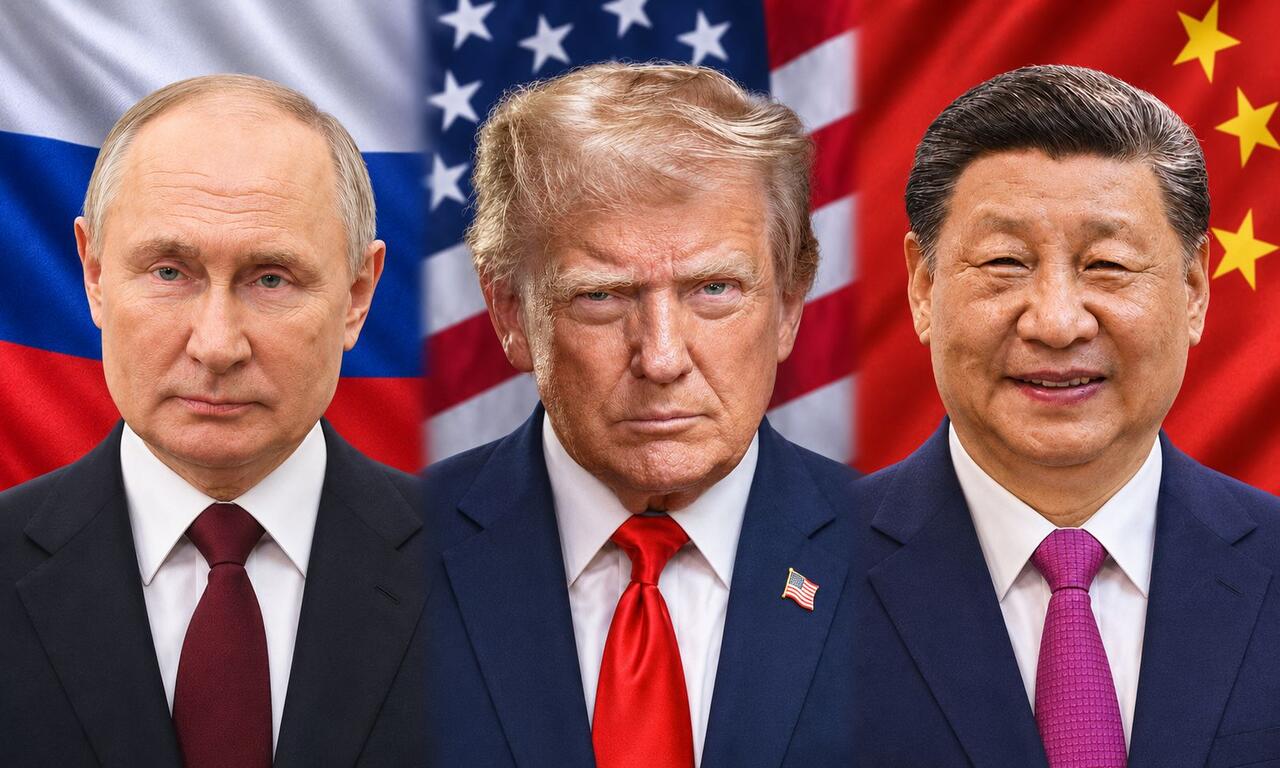
White House confirms Trump-Xi-Putin trilateral nuclear summit at Shenzhen APEC on Nov. 18-19
The White House confirmed a first Trump-Xi-Putin trilateral nuclear summit at APEC in Shenzhen, with no deal expected. The meeting matters because it creates a direct channel among the three largest nuclear powers while Washington and Moscow describe its purpose differently, especially on Ukraine.
The White House said Friday that President Trump will meet Chinese President Xi Jinping and Russian President Vladimir Putin in Shenzhen on Thursday, during the Asia-Pacific Economic Cooperation summit hosted by China on Nov. 18-19. White House spokeswoman Olivia Wales said Trump would discuss reducing nuclear weapons, calling proliferation dangerous. Officials said the leaders do not expect a concrete agreement and that Trump and Putin will not hold a separate one-on-one meeting.
The documented record shows a gap between the two sides. New START, the last treaty capping US and Russian strategic arsenals, the long-range weapons counted under the treaty, lapsed on Feb. 5 without a replacement, leaving no bilateral limits after decades. Trump previewed the meeting on Nov. 8, saying he would discuss denuclearization and Iran. Beijing rejected joining disarmament talks after the lapse, saying Washington and Moscow have special and primary responsibilities. Kremlin aide Yuri Ushakov said Moscow, Beijing and Washington were in principle ready for the meeting.
The summit's significance lies in the mismatch of agendas. The White House frames the meeting as an initial conversation on nuclear risk, not a Ukraine negotiation, and says Washington runs a separate track with Kyiv and Moscow. Moscow, however, has described the venue as a place to discuss settlement of the Ukraine war, with President Volodymyr Zelensky not invited. That divergence shows the three governments are testing a channel, while preserving different definitions of what the channel can deliver.
For Washington, a trilateral meeting offers leverage over nuclear limits and a way to keep China engaged without conceding parity. For Moscow, it offers a route to internationalize Ukraine and reduce isolation. For Beijing, participation raises its status while allowing it to avoid disarmament commitments. The cost is credibility: without an agreement, the meeting can be read as a statement of intent rather than policy convergence, and allies weigh the gap between declared intentions and policy.
It affects nuclear-arms-control diplomacy, alliance calculations in Europe and Asia, and the political costs for Ukraine if a Russia-China-US channel is framed around settlement without Kyiv.
Sources (1)
- [1]White House Confirms Unprecedented Trump-Xi-Putin Trilateral Summit: Nukes In, Ukraine Out(https://www.zerohedge.com/geopolitical/white-house-confirms-unprecedented-trump-xi-putin-trilateral-summit-nukes-ukraine-out)