Goldman Sachs Flags Persistent 2027 Oil Glut Despite SPR Rebuilds and Hormuz Normalization
Mainstream financial reporting confirms Goldman Sachs and peers anticipate a significant 2027 oil surplus (~2-4.8M bpd net after SPR demand) driven by Hormuz reopening and supply growth, despite inventory restocking needs, with price forecast cuts reflecting structural oversupply risks.
Wall Street analysts at Goldman Sachs and Morgan Stanley are highlighting structural oversupply risks in global oil markets extending into 2027, even as depleted inventories and post-conflict restocking provide temporary support. Goldman expects a global surplus averaging just over 3 million barrels per day (bpd) next year, with strategic petroleum reserve (SPR) rebuilding contributing more than 1 million bpd of demand but leaving a net surplus near 2 million bpd, according to co-head of global commodities research Samantha Dart.[1][2] This view follows the mid-June 2026 U.S.-Iran memorandum of understanding (MOU), which outlines steps toward reopening the Strait of Hormuz and easing sanctions on Iranian oil exports during a 60-day negotiation window.[3][4]
Goldman has lowered its 2027 average Brent forecast to $80 per barrel (down $5), citing stronger non-OPEC supply growth from the U.S., Brazil, Guyana, Venezuela, and the UAE, alongside persistent demand weakness partly linked to China's accelerating shift to electric vehicles.[5][6] Morgan Stanley has taken a more aggressive stance, slashing its Brent price targets and projecting a 4.8 million bpd surplus in 2027 as Hormuz flows recover faster than anticipated—potentially to 65% of pre-conflict levels—compounded by robust U.S. exports and soft Chinese imports.[7][8]
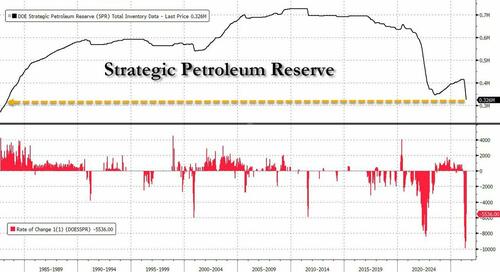
These forecasts point to multi-year implications beyond quarterly volatility: downward pressure on prices could influence OPEC+ production decisions, accelerate or delay energy transition investments, and reshape geopolitical dynamics around chokepoints like Hormuz. While near-term inventory rebuilds from multi-decade lows (including the U.S. SPR at 1983 levels and commercial stocks at Cushing) may provide a price floor, analysts emphasize that normalization of flows and supply growth are likely to dominate longer-term balances.
Goldman Sachs: Multi-year surplus of ~2M bpd net in 2027 will cap price recovery even with inventory rebuilds, pressuring transition timelines and Middle East export strategies.
Sources (6)
- [1]Goldman flags oil surplus even as nations rebuild stockpiles(https://www.straitstimes.com/business/companies-markets/goldman-forecasts-return-to-oil-oversupply-as-impact-of-iran-war-fades)
- [2]Goldman Sachs Warns Oil Inventory Rebuild Won’t Prevent 2027 Supply Glut(https://oilprice.com/Latest-Energy-News/World-News/Goldman-Sachs-Warns-Oil-Inventory-Rebuild-Wont-Prevent-2027-Supply-Glut.html)
- [3]Goldman lowers 2027 Brent oil forecast on supply growth, demand risks(https://www.reuters.com/business/energy/goldman-lowers-2027-brent-oil-forecast-supply-growth-demand-risks-2026-06-12/)
- [4]Morgan Stanley cuts Brent price view as Hormuz flows recover, flags 2027 surplus(https://www.reuters.com/business/energy/morgan-stanley-cuts-brent-price-view-hormuz-flows-recover-flags-2027-surplus-2026-06-30/)
- [5]READ: Full text of U.S.-Iran memorandum of understanding(https://www.axios.com/2026/06/17/read-full-us-iran-deal-memorandum-understanding)
- [6]2025–2026 Iran–United States negotiations(https://en.wikipedia.org/wiki/2025%E2%80%932026_Iran%E2%80%93United_States_negotiations)