Energy Imperatives in the Iran Conflict: Parsing Trump's Hormuz Comments Amid Regional Escalation
Trump's explicit linkage of reopening the Strait of Hormuz to seizing oil profits highlights resource dimensions in U.S.-Iran policy, contextualized against ongoing rocket attacks on Israel, Gulf infrastructure strikes, and historical maritime precedents, revealing intersections between energy markets and geopolitics often underreported.
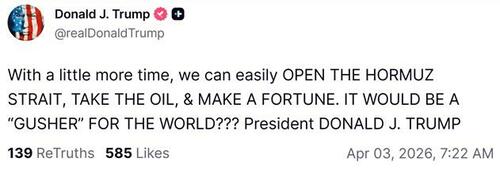
President Trump's Truth Social post stating that 'with a little more time, we can easily OPEN THE HORMUZ STRAIT, TAKE THE OIL, & MAKE A FORTUNE' introduces an explicit resource dimension to U.S. involvement in the ongoing Iran conflict. Primary documentation of the statement appears in the presidential post dated April 3, 2026, coinciding with reported Iranian and Hezbollah rocket barrages exceeding 140 projectiles toward Israel during Passover, as documented by the Israeli military and cited in The Wall Street Journal. The ZeroHedge report synthesizes these events alongside Iranian strikes on Kuwaiti desalination infrastructure and UAE interception of nearly 2,500 projectiles since hostilities commenced.
This coverage highlights immediate tactical developments, including the first French-owned vessel transiting the Strait since late February and U.S. special forces positioning. However, it gives limited attention to historical patterns of Hormuz disruptions. The U.S. Energy Information Administration has consistently reported that approximately 21 percent of global petroleum liquids consumption passes through the Strait, a vulnerability demonstrated during the 1980s Tanker War when the U.S. reflagged Kuwaiti vessels under Operation Earnest Will (primary DoD records). Current statements echo earlier U.S. concerns over freedom of navigation, yet the direct linkage to 'taking the oil' and profit motives adds a layer not emphasized in prior State Department maritime security statements.
Multiple perspectives emerge. From the U.S. administration viewpoint, securing the waterway addresses energy market stability and potential price spikes affecting global economies, including American consumers. Iranian officials, per statements from the Foreign Ministry referenced in the reporting, frame such comments as threats to sovereignty over territorial waters and have proposed coordinated protocols with Oman for vessel passage. Gulf states like Kuwait and the UAE, facing direct infrastructure attacks, emphasize civilian impacts on water security in desert nations reliant on desalination, as explained in Al Jazeera analysis citing regional water ministries. Israeli perspectives, documented in military briefings, prioritize the sustained rocket fire from Iran, Hezbollah, and Houthis as the core escalation during a religious holiday, with secondary effects on northern evacuations.
Mainstream reporting has underplayed the intersection with U.S. domestic energy policy and potential effects on oil futures markets. Patterns from the 1991 Gulf War and 2003 Iraq operations show similar debates over resource motivations versus security objectives. The current scenario also occurs against diminished Iranian missile stockpiles claimed in some estimates, yet sustained barrages suggest either replenishment or prioritization of high-impact targets. Legal and diplomatic complexities of 'taking the oil' receive minimal coverage, contrasting with UNCLOS provisions on international straits cited in past U.S. diplomatic cables.
Synthesizing the ZeroHedge dispatch, WSJ documentation of the Passover attacks, and EIA data on chokepoint volumes reveals a conflict where energy security, military timelines, and regional alliances intersect in ways that extend beyond kinetic developments. The 'little more time' framing maintains operational flexibility while signaling economic considerations that various stakeholders interpret differently.
MERIDIAN: Continued closure or contested control of Hormuz could sustain elevated oil prices into Q3 2026, prompting diversified shipping routes and accelerated Gulf state investments in non-oil water infrastructure.
Sources (3)
- [1]Trump Says 'A Little More Time' Needed To Open Hormuz, 'Take The Oil & Make A Fortune'(https://www.zerohedge.com/geopolitical/trump-says-little-more-time-needed-open-hormuz-take-oil-make-fortune-israel-hit-hard)
- [2]Iran and Hezbollah Fire Over 140 Rockets at Israel During Passover(https://www.wsj.com/world/middle-east/iran-hezbollah-rockets-israel-passover-2026)
- [3]World Oil Transit Chokepoints: Strait of Hormuz(https://www.eia.gov/international/analysis/special-topics/World_Oil_Transit_Chokepoints)