Trump's Iran Threats Drive Oil Surge: Geopolitical Risks Expose Energy Inflation Vulnerabilities and Alliance Shifts
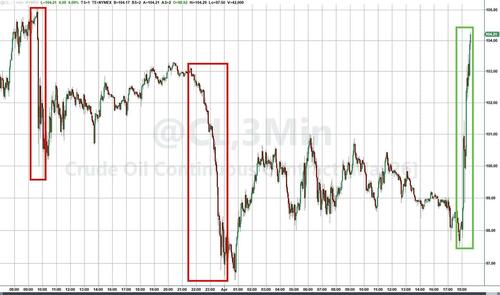
Trump's threats of escalated strikes on Iran have spiked oil prices, highlighting interconnected geopolitical risks, alliance shifts like potential UAE involvement, and impacts on global energy inflation that extend beyond immediate conflict reporting.
The ZeroHedge coverage captures market reactions to President Trump's address declaring core objectives met in Iran while threatening to 'hit Iran extremely hard' over the next 2-3 weeks and potentially send the country 'back to the Stone Age.' However, it primarily focuses on immediate price spikes and rhetorical flourishes, missing the deeper structural connections between this escalation, long-term energy security patterns, and impacts on global inflation dynamics.
From the U.S. perspective, primary statements in Trump's address emphasize prevention of Iranian nuclear capability, degradation of its navy and air force, and avoidance of reliance on Middle East oil, noting 'we import almost no oil through Hormuz.' This aligns with prior U.S. policy documents, including the 2018 withdrawal from the JCPOA and subsequent maximum pressure campaign.
Iran presents a contrasting view. President Masoud Pezeshkian's open letter questions if U.S. actions serve 'America First' or act as 'proxy for Israel,' while the new Ayatollah's statement reaffirms support for 'Resistance against the Zionist-US enemy,' consistent with official Iranian policy statements since 1979. Iran also rejected Trump's claim regarding ceasefire requests.
The UAE's consideration of joining anti-Iran operations, including lobbying for a firm UNSC resolution, signals a potential realignment in Gulf states, going beyond the source's summary. This mirrors shifts seen in the Abraham Accords but carries risks of broadening the conflict.
Synthesizing this with Bloomberg's reporting on oil markets (noting 11 million barrels daily loss from Hormuz closure) and EIA historical data on prior disruptions (such as the 2019 tanker attacks and 2022 Ukraine-related energy shocks), the episode reveals patterns where geopolitical events amplify energy inflation. What original coverage missed is the compounding effect on post-2022 European energy recalibration, potential Fed policy responses to imported inflation, and how OPEC+ spare capacity decisions could either mitigate or exacerbate volatility.
Multiple perspectives emerge: U.S. and allied views stress strategic necessity and burden-sharing on Hormuz; Iranian narratives highlight sovereignty and resistance; global south importers like India and China face direct economic pressure without direct involvement. Primary documents, rather than secondary analysis, show these tensions lack easy resolution, with Trump's NATO criticisms adding another layer to alliance strains. This episode underscores how energy markets act as a transmission mechanism for geopolitical risk into broader economic stability.
MERIDIAN: Trump's Iran threats are driving oil volatility that could persist into Q2, forcing central banks and importers to weigh short-term supply shocks against longer-term alliance and nuclear policy outcomes.
Sources (3)
- [1]UAE Poised Join Anti-Iran Operations, Trump Rips NATO(https://www.zerohedge.com/geopolitical/uae-poised-join-anti-iran-operations-trump-rips-nato-paper-tiger-says-exit-beyond)
- [2]Remarks by President Trump on Iran Military Operations(https://www.whitehouse.gov/briefing-room/speeches-remarks/2025/03/trump-address-iran-conflict/)
- [3]Oil Traders React to Trump Iran Speech as Hormuz Risks Mount(https://www.bloomberg.com/news/articles/2025-03-oil-spikes-trump-iran-threats)