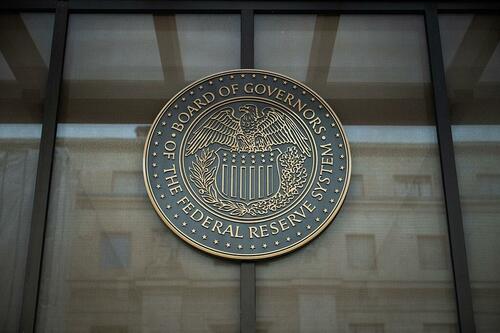
Reassessing Federal Reserve Independence: Constitutional Tensions in a Geopolitically Volatile Economy
Balanced examination of arguments against Fed independence, integrating constitutional primary sources, recent Court rulings, and geopolitical economic pressures while presenting both supportive and critical perspectives on monetary autonomy.
The argument presented in Alexander William Salter's piece via AmericanMind.org, hosted on ZeroHedge, contends that Federal Reserve independence lacks robust economic justification and violates core constitutional principles. It highlights how the correlation between independence and low inflation weakens under varied empirical methods, emphasizing instead deeper institutional factors such as rule of law and property rights protections. The article further asserts that the Fed's insulation from removal and oversight contravenes Congress's enumerated powers under Article I, Section 8 of the U.S. Constitution to 'coin Money' and 'regulate the Value thereof,' while critiquing the Court's tolerance of the Fed as a 'special case' despite recent rulings limiting agency independence.
This coverage connects to broader patterns but misses key linkages to the current geopolitical environment. Post-2020 inflation dynamics were shaped not only by domestic fiscal responses to COVID-19 but by external shocks including the Russia-Ukraine conflict's impact on energy and food prices, as well as U.S.-China supply chain strains. Primary documents like the Federal Reserve Act of 1913 (12 U.S.C. § 221 et seq.) established the system's hybrid public-private structure with deliberate insulation via 14-year terms for governors, a framework Congress has amended multiple times without eliminating independence.
Multiple perspectives exist on this issue. Proponents of independence, drawing from the 1951 Treasury-Fed Accord (a primary agreement between the Treasury and Federal Reserve), argue it enables credible commitment to price stability, preventing the short-term electoral manipulations observed in some emerging economies. They cite the Fed's swift actions during the 2008 financial crisis and 2020 pandemic as evidence that autonomy supports market stability and limits yield spikes that could arise from perceived political meddling. In contrast, critics aligned with Salter's view see independence as unaccountable delegation that distorts interest rates as signals of time preference and capital allocation, potentially fueling asset bubbles while shielding decision-makers from democratic accountability.
Recent Supreme Court precedent in Seila Law LLC v. Consumer Financial Protection Bureau (2020), 591 U.S. 197, invalidated removal protections for the CFPB director, signaling limits on insulating executive functions. However, the Court has not directly revisited the Fed's structure, leaving ambiguity. What the original source underplays is how politicization risks could manifest in today's high-debt environment: interference might erode the dollar's reserve status, elevate Treasury yields through credibility loss, and transmit volatility to global markets dependent on U.S. monetary signals.
Synthesizing these, the debate reflects ongoing tension between self-government and technocratic expertise. Legislative reforms narrowing the dual mandate or adjusting removal standards could enhance accountability, yet must be weighed against historical lessons from periods of greater political influence over monetary policy, which often correlated with higher inflation volatility. In a landscape marked by great-power competition and supply disruptions, the independence question directly implicates inflation control, bond market functioning, and international economic stability without a singular resolution.
MERIDIAN: Debates over Fed independence intensify as geopolitical shocks test monetary policy; greater political oversight could stabilize domestic accountability but risks undermining inflation credibility and global yield stability.
Sources (3)
- [1]The Case Against Federal Reserve Independence(https://www.zerohedge.com/political/case-against-federal-reserve-independence)
- [2]U.S. Constitution, Article I, Section 8(https://www.archives.gov/founding-docs/constitution-transcript)
- [3]Seila Law LLC v. Consumer Financial Protection Bureau, 591 U.S. 197 (2020)(https://www.supremecourt.gov/opinions/19pdf/19-7_8m59.pdf)