Permian Basin Oil Theft Exposes Systemic Vulnerabilities in U.S. Energy Infrastructure
Oil theft in the Permian Basin signals broader physical security gaps in U.S. energy infrastructure. Industry losses of $1-2B annually, corroborated by Dallas Fed surveys and GAO reports, highlight risks that could reduce investment and affect global markets, beyond the criminal activity emphasized in initial coverage.
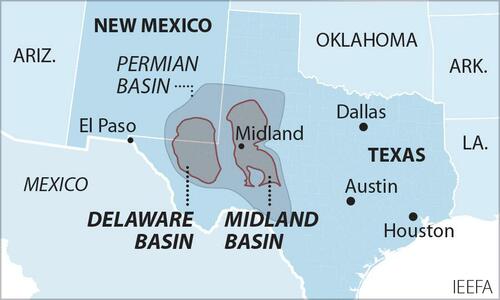
Recent reporting on oil theft in the Permian Basin, centered on Martin County, Texas, describes criminals using vacuum trucks to siphon crude in broad daylight, with industry estimates of $1-2 billion in annual statewide losses. While the coverage correctly notes the scale of the Permian’s production—roughly 5.5 million barrels per day per EIA primary data—and highlights involvement of the Texas Railroad Commission task force and the FBI, it overemphasizes singular policy explanations and underplays structural infrastructure weaknesses that extend beyond local crime.
Primary documents from the Federal Reserve Bank of Dallas Energy Survey (Q1 2024) show more than 60% of responding executives reporting direct impacts from theft and related crime, consistent with statements from the Permian Basin Petroleum Association. A 2023 GAO report (GAO-23-105865) on critical energy infrastructure previously identified physical access vulnerabilities at remote production sites as a recurring concern, noting that such gaps could be exploited not only by opportunistic criminals but by more organized actors. The original coverage missed this continuity with earlier warnings about both physical and cyber risks, including parallels to the 2021 Colonial Pipeline shutdown, which demonstrated how single-point disruptions cascade to regional supply shortages.
Multiple perspectives emerge in primary records. Industry groups such as the Texas Independent Producers and Royalty Owners Association frame the issue as an economic and security threat exacerbated by high WTI prices and remote operations, advocating for hardened perimeters and federal coordination. Texas state officials, via Railroad Commission updates, emphasize enforcement through new task forces and data-sharing with the FBI. In contrast, some local law enforcement assessments point to a mix of cross-border and domestic actors, while market analysts note that stolen volumes—estimated by Sheriff Randy Cozart at 500 barrels weekly in one county—remain small relative to total Permian output and may not directly constrain physical supply, though revenue losses can deter marginal investment.
Synthesizing these with EIA monthly production data and the GAO physical security assessment reveals an underappreciated pattern: the same characteristics that make the Permian efficient (dispersed wellheads, extensive unpoliced roads, and rapid scaling) also render it inherently difficult to secure. This mirrors documented challenges in other energy hubs where theft has preceded more serious sabotage. The national security dimension arises not from the current theft volume itself, but from the demonstrated ease of access, which could constrain future domestic supply growth and introduce volatility into global oil markets already sensitive to Middle East disruptions. Official primary records show increasing interagency attention, yet concrete infrastructure standards for remote oilfield sites remain underdeveloped compared to pipelines and refineries.
MERIDIAN: Local oil theft in West Texas demonstrates accessible vulnerabilities in dispersed energy infrastructure that could be scaled by more sophisticated actors, potentially constraining U.S. production growth and adding friction to global oil market stability.
Sources (3)
- [1]Alarming West Texas Oil Theft Emerges As National Security Threat(https://www.zerohedge.com/energy/alarming-west-texas-oil-theft-emerges-national-security-threat)
- [2]Federal Reserve Bank of Dallas Energy Survey(https://www.dallasfed.org/research/surveys/des)
- [3]GAO-23-105865: Critical Infrastructure Protection(https://www.gao.gov/products/gao-23-105865)