Russia-China Multipolar Declaration: From Tactical Alignment to Systemic Civilizational Project
The 2026 Russia-China joint declaration codifies a sophisticated multipolar vision encompassing security, governance, and civilizational pluralism. Far from mere tactical alignment, successive official statements and integrated economic projects reveal a coherent alternative to Western hegemony, with implications for Global South realignment and erosion of unipolar institutions.
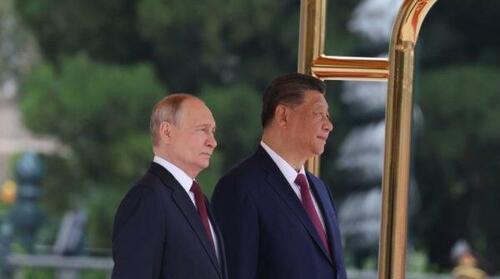
While mainstream coverage often portrays the Russia-China partnership as a marriage of convenience forged by Western sanctions and the Ukraine conflict, the May 20, 2026 Joint Declaration on the Emergence of a Multipolar World and International Relations of a New Type reveals a far more coherent, long-term project. Signed by Presidents Putin and Xi in Beijing shortly after a Trump visit that yielded no major deals, the document explicitly rejects 'hegemony,' 'unilateralism,' and a return to the 'law of the jungle,' while advocating polycentrism, indivisible security, sovereign equality, and reform of global governance structures centered on a strengthened but rebalanced United Nations.[1][2]
This builds directly on prior joint statements from 2022 and 2024, demonstrating continuity rather than ad-hoc reaction. Deeper connections emerge in the material and ideological layers: synchronization of China's Belt and Road Initiative with Russia's Eurasian Economic Union and the Northern Sea Route (Arctic Silk Road); joint technological sovereignty initiatives to circumvent Western export controls on semiconductors, AI, and space systems; and coordinated diplomacy in BRICS and the SCO to expand parallel financial architectures and trade in non-dollar currencies. The declaration's emphasis on 'civilizations with ancient history' and respect for civilizational diversity frames their convergence as an alternative to liberal universalism, appealing directly to the Global South's desire for non-interference and multiple development paths.
Mainstream outlets continue describing this as 'loose alignment,' yet the pattern—ignored 2021 Russian security proposals to NATO precipitating the SMO, repeated affirmations of 'no-limits' partnership, and explicit calls for a new security architecture that rejects bloc expansion and proxy wars—indicates a deliberate systemic challenge. By positioning themselves as drivers of changes 'not seen in 100 years,' as Xi stated in 2023, Moscow and Beijing are constructing both the narrative and infrastructure for a post-unipolar order. The 'spaceship' metaphor captures their accelerating integration across energy, logistics, defense-adjacent tech, and multilateral forums, one that could render Western containment strategies increasingly obsolete.
Liminal: The Russia-China multipolar project is hardening into parallel institutions and infrastructure that will accelerate de-dollarization and Global South defections from Western-led bodies, forcing a fragmented international order by the early 2030s.
Sources (4)
- [1]Putin and Xi Sign ‘Multipolar World’ Declaration in Beijing(https://www.themoscowtimes.com/2026/05/20/putin-and-xi-sign-multipolar-world-declaration-in-beijing-a92796)
- [2]'Multipolar world': What Xi and Putin announced after Beijing summit(https://www.aljazeera.com/news/2026/5/20/multipolar-world-what-xi-and-putin-announced-after-beijing-summit)
- [3]Press statements following Russia-China talks(http://en.kremlin.ru/events/president/news/79787)
- [4]China-Russia joint statement marking 'new era'(https://geopoliticaleconomy.com/2024/05/24/china-russia-joint-statement-new-era-75th-anniversary/)