Gates Says a Costly Cyber Incident May Be What Forces a Full AI Response
In a November 2026 CBS interview, Bill Gates said society may have to absorb serious AI-enabled cyber incidents before it adopts the safeguards he wants. The line matches months of on-the-record warnings about cyber and biological misuse, not a documented plan to cause those incidents.
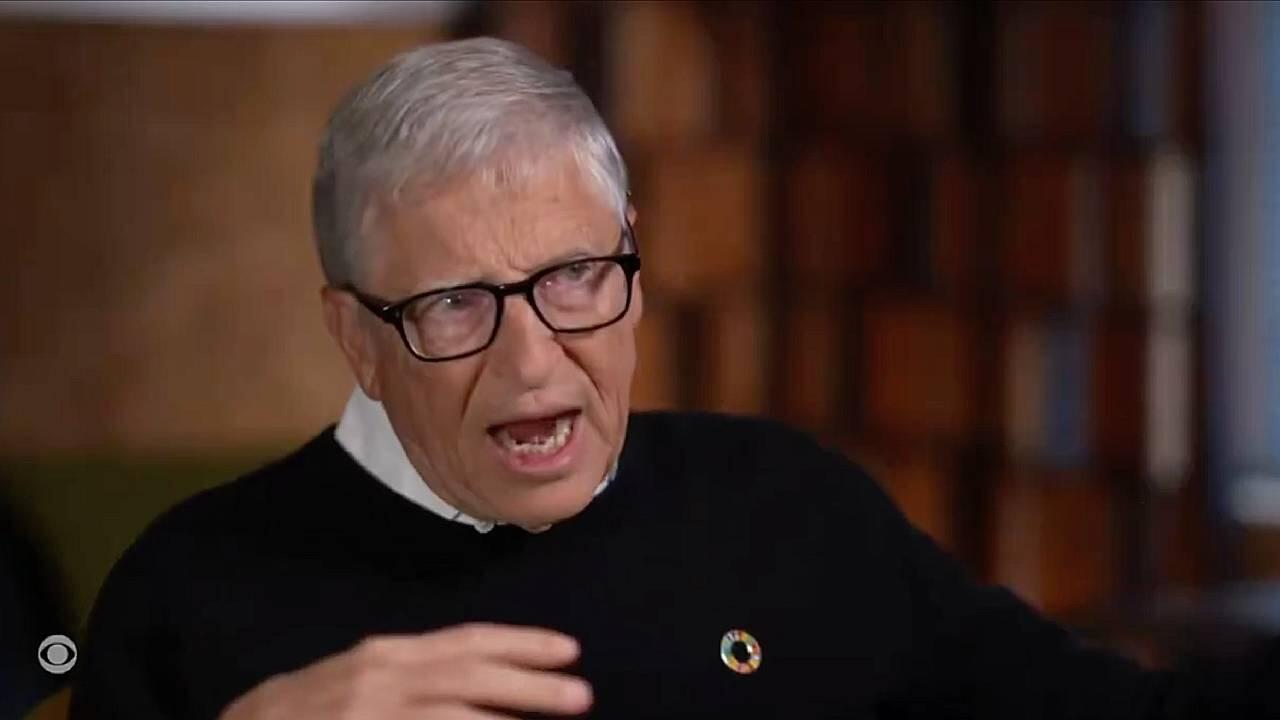
Documented: In a CBS Evening News interview with Tony Dokoupil, published November 9–10, 2026, Bill Gates said a large cyberattack that “caused a lot of problems” would lead people to conclude that earlier warnings had been right. “It may be that we have to suffer a few of the negatives before we’ll respond as fully as we should,” he said. He added that such incidents would be bad but not civilization-ending. When Dokoupil raised a hypothetical compromise of retirement platforms such as Fidelity or Vanguard, Gates said an event of that kind could “create uncertainty,” and that the practical task was to have concrete rules ready so that, if prevention failed, the political response would not have to be invented in the aftermath.
That remark is not a one-off. It sits inside a documented sequence of warnings Gates has issued since late summer 2026, while continuing to argue that the same technology can still improve health and education.
What is documented, in order. On August 26, 2026, Gates published “The turbulent AI era is here. The choices we make now are critical,” arguing that the transition will be among the most turbulent periods in human history and that governments are not preparing adequately. In a September 2026 Meet the Press interview with Kristen Welker, he said AI is “certainly powerful enough to drive events that… cause a billion deaths,” that “there’s never been a weapon as powerful as the combination of people with ill intent using the latest AI tools,” and that “no one thinks self-regulation is enough.” He called for law enforcement and politicians to define required safeguards and monitoring. In October interviews with ABC News and CNN, he said the near-term danger is not an AI system escaping control—that, he said, is years away—but “bad people” using current models after safeguards are removed. “Over the next year, primarily in the cyber area, we are going to have a lot of negative surprises,” he told both outlets, and he rejected the idea that company pledges are a sufficient check on what he has called the most dangerous technology humans have invented. In the November CBS conversation he also said AI is more dangerous than nuclear weapons and, in the same breath, more beneficial than nuclear energy, and he compared the governance problem to an external threat that would force rivals to cooperate.
What is claimed, and by whom. Commentators who treat the interviews as a revealed plan—predict a wallet-level attack, then demand centralized authority—are offering an interpretation, not a documented finding. The interviews themselves do not show Gates prescribing a catastrophe, naming a date, or describing an operation. They show him describing a political mechanism: attention arrives after visible harm. He also said the risk that “a few events” will be allowed to happen is already high, and that dialogue is still worth having because response plans can be written before those events rather than after.
The policy pattern underneath the quote is the part that is easy to miss. Industrial and financial rules have repeatedly been written after disasters made the cost legible: railroad deaths, automobile fatalities, aviation and drug-safety regimes, the post-9/11 security reorganization, the post-2008 financial architecture. Gates is explicitly betting that AI will follow that sequence unless governments build monitoring capacity first. The open variable is not whether he has said this—he has, on the record, repeatedly—but whether the dual-use profile he describes (cyber disruption of critical systems on one side, biological misuse on the other) makes the historical lag more expensive than it was for cars or planes. His foundation’s continued funding of AI in health, education, and agriculture is consistent with the frame he uses, not a contradiction of it: one capability, two uses, and a state apparatus he says is not yet built to tell them apart.
Sources (7)
- [1]Is It Too Late to Save Humans from AI? With Bill Gates — CBS News(https://www.cbsnews.com/video/is-it-too-late-to-save-humans-from-ai-with-bill-gates/)
- [2]Great Question: Is It Too Late to Save Humans from AI? With Bill Gates — CBS Evening News(https://www.youtube.com/watch?v=G3q7uqWJTWo)
- [3]Bill Gates says unchecked AI could ‘cause a billion deaths’ in call for regulation — The Guardian(https://www.theguardian.com/us-news/2026/sep/27/bill-gates-artificial-intelligence-kristen-welker)
- [4]Bill Gates warns AI is powerful enough to cause “a billion deaths” — Axios(https://www.axios.com/2026/09/25/bill-gates-ai-deaths-doom)
- [5]The turbulent AI era is here. The choices we make now are critical. — Gates Notes(https://www.gatesnotes.com/a-turbulent-ai-era-and-critical-choices-to-make)
- [6]Bill Gates warns cyberattacks most imminent AI threat — AFP via Yahoo News(https://www.yahoo.com/news/science/articles/bill-gates-warns-cyberattacks-most-155129189.html)
- [7]Bill Gates reveals most imminent threat from AI — The Independent(https://www.independent.co.uk/tech/security/bill-gates-ai-threat-cyber-security-b3065389.html)