Bennett-Lapid 'Together' Alliance: Zionist Realignment Poised to Challenge Netanyahu and Reshape Israel's Geopolitical Posture
Naftali Bennett and Yair Lapid have formed the 'Together' alliance to unseat Netanyahu in 2026 elections, creating a Zionist center-right bloc focused on security, Haredi draft, and anti-corruption. Polls show it competitive; deeper implications include pragmatic shifts in governance that could ease U.S.-Israel tensions and alter regional dynamics on Iran and normalization deals.
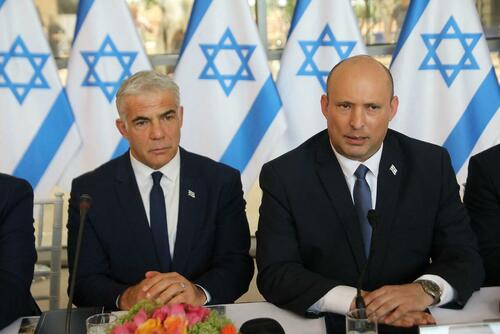
In a significant development with far-reaching implications for Middle East stability and U.S. foreign policy, former Israeli Prime Ministers Naftali Bennett and Yair Lapid have merged their parties into a unified 'Together - Led by Bennett' ticket ahead of elections required by October 2026. Announced at a joint press conference, Bennett will lead the slate, with Lapid subordinating his Yesh Atid party in what both describe as a patriotic act to end division and replace Benjamin Netanyahu after three decades in power. Bennett, positioning himself as a 'right-wing, liberal Zionist,' has explicitly ruled out reliance on Arab parties, emphasizing a 'bloc of the entire Israeli nation' that draws from center, right, religious, and secular elements while prioritizing security, education, economic relief, corruption fighting, and Haredi military conscription.
Recent polling cited across Israeli media suggests the new alliance could secure around 27-31 seats initially, with potential to reach 41 if former IDF Chief of Staff Gadi Eisenkot joins—positioning it as a formidable counterweight to Netanyahu's Likud, though still short of a 61-seat majority without broader support. This marks their second major attempt to oust Netanyahu, following their short-lived 2021 coalition that ended his 12-year streak.
While mainstream U.S. coverage has been relatively muted amid other global crises, Israeli and international outlets detail the move's deeper mechanics. The alliance revives the 'brotherhood' between Bennett's right-wing base and Lapid's centrists, but with notable differences from 2021: a firmer rejection of non-Zionist partners and focus on post-October 7 security realism. Bennett's invitation to Eisenkot, whose party has polled strongly in the merger scenario, signals an effort to consolidate military credibility and appeal to voters seeking competent governance over ideological extremes.
Connections often missed in initial reporting include the potential for this realignment to recalibrate Israel's approach to Gaza reconstruction, West Bank settlements, and Iran policy. A Bennett-led government, less entangled in Netanyahu's personal legal battles and coalition dependence on far-right partners like Itamar Ben-Gvir, could pursue more pragmatic technocratic reforms—integrating ultra-Orthodox communities into the workforce and military to ease economic burdens, while maintaining a hard security line. This matters profoundly for U.S. policy: Washington has navigated tensions with Netanyahu's government over judicial reforms, Gaza conduct, and regional diplomacy. A less polarizing Israeli leadership might facilitate renewed momentum on normalization deals with Saudi Arabia or other Gulf states, reduce friction in U.S. military aid debates, and present a more unified front in containing Iranian influence.
Critics from both flanks question whether the alliance truly escapes the 'reform bloc' dynamics or merely repackages settlement expansion and Greater Israel aspirations without addressing Palestinian statehood. As The Guardian noted, analysts draw parallels to opposition coalitions toppling entrenched leaders elsewhere. Haaretz and AP reports highlight commitments to limit prime ministerial terms and avoid past pitfalls of ego-driven fragmentation. Netanyahu's coalition remains ahead in some projections, but the clock is ticking on his longest-serving tenure.
This development represents more than electoral maneuvering—it signals an internal Israeli course correction that could diminish reliance on extremist elements, foster domestic cohesion, and indirectly reshape U.S. leverage in brokering regional security architectures. Whether it delivers the 'new chapter' Bennett promises depends on sustaining the cross-faction trust that has eluded Israeli politics for years.
Liminal Analysis: This center-right unification could fracture Netanyahu's coalition by siphoning moderate votes, enabling a more stable but still hawkish Israeli government that streamlines U.S. diplomatic efforts in the Gulf while accelerating internal reforms like Haredi conscription.
Sources (6)
- [1]Naftali Bennett and Yair Lapid announce united run under Bennett in 2026 elections(https://www.timesofisrael.com/naftali-bennett-and-yair-lapid-announce-united-run-under-bennett-in-2026-elections/)
- [2]Two former Israeli prime ministers join forces against Netanyahu in upcoming elections(https://apnews.com/article/israel-politics-netanyahu-bennett-lapid-daa0ac88d1750ddb95a65d65adff6444)
- [3]Former Israeli Premiers Join in Bid to Oust Netanyahu in Elections(https://www.nytimes.com/2026/04/26/world/middleeast/israel-netanyahu-lapid-bennett.html)
- [4]Analysis: Bennett-Lapid alliance attempt to unseat Israel’s Netanyahu(https://www.aljazeera.com/news/2026/4/27/analysis-bennett-lapid-alliance-attempt-to-unseat-israels-netanyahu)
- [5]'Israel must change direction': Netanyahu rivals join forces(https://www.theguardian.com/world/2026/apr/27/netanyahu-opposition-announce-new-party-naftali-bennett-yair-lapid)
- [6]Naftali Bennett, Yair Lapid join forces under unified party(https://www.jpost.com/israel-news/politics-and-diplomacy/article-894194)