Institutional Entry into Prediction Markets: Reshaping Information Aggregation, Election Forecasting, and Geopolitical Risk Hedging
Traditional finance giants Schwab and Citadel are evaluating prediction market entry, signaling possible institutionalization. This analysis connects the development to historical forecasting accuracy, ongoing CFTC and state regulatory conflicts, academic literature on futarchy, and implications for geopolitical risk hedging, presenting proponent, skeptic, and cautious institutional perspectives without endorsing any.
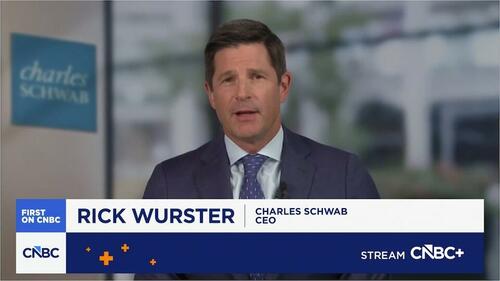
The April 2025 comments by Charles Schwab CEO Rick Wurster and Citadel Securities President Jim Esposito, as reported by CoinTelegraph and aggregated on ZeroHedge, indicate that two pillars of traditional finance are actively evaluating entry into prediction markets. Wurster stated it would be 'quite straightforward' for Schwab to offer such products while emphasizing alignment with long-term wealth building and avoidance of sports, politics, or pop culture bets. Esposito noted Citadel is monitoring developments, sees potential liquidity ramp-up, and views election-linked event contracts as legitimate hedging tools for portfolio risks tied to policy shifts.
This coverage captures the immediate corporate posture but misses broader historical patterns, regulatory context, and structural implications for information markets. Prediction markets have repeatedly demonstrated superior forecasting accuracy compared to polls when participants risk capital. Primary evidence from the Iowa Electronic Markets, operated by the University of Iowa since 1988 under CFTC no-action letters, shows consistent outperformance in U.S. presidential elections, as detailed in the 2008 Journal of Economic Perspectives paper 'Prediction Markets' by Wolfers and Zitzewitz. Volumes on Polymarket and Kalshi reached a combined $23.6 billion in March 2025 per Token Terminal data, driven largely by 2024 election contracts that frequently diverged from legacy polling averages and aligned more closely with final outcomes.
What the original reporting underemphasized is the ongoing regulatory fragmentation. While the CFTC has granted limited approvals for certain event contracts (see CFTC Order No. 8732-24 approving Kalshi's economic indicator contracts in 2024), multiple state attorneys general have pursued enforcement actions treating these platforms as unlicensed sports betting, citing violations of UIGEA. Congressional records from the House Financial Services Committee hearing on July 2024 reveal lawmakers expressing concerns over insider trading and market manipulation, with some advocating expansion of CFTC oversight while others push for outright restrictions. These tensions were absent from the CEO soundbites.
Synthesizing the ZeroHedge/CoinTelegraph dispatch with Robin Hanson's 2013 paper 'Shall We Vote on Values, But Bet on Beliefs?' and the aforementioned Wolfers/Zitzewitz JEP survey reveals deeper connections. Hanson envisions prediction markets as superior mechanisms for policy evaluation—'futarchy'—where market prices on conditional events could guide decisions more effectively than voting or expert panels. This extends beyond domestic elections to geopolitical forecasting: contracts on outcomes such as trade agreement ratification, regional conflict escalation, or commodity disruptions have appeared on decentralized platforms, offering real-time probability signals that intelligence agencies and portfolio managers increasingly reference.
Multiple perspectives emerge. Proponents, including Citadel's Esposito, highlight industrial logic: election contracts provide a 'clean and distinct way to hedge' portfolio risks from anticipated regulatory or fiscal changes, potentially integrating with traditional derivatives. Institutional market-making could solve current liquidity and manipulation vulnerabilities seen in thinner crypto-native platforms. Skeptics, including consumer advocates and certain federal legislators, argue these instruments commodify democracy, incentivize perverse behaviors, and disproportionately benefit sophisticated actors—echoing criticisms leveled at Intrade prior to its 2012 shutdown. Schwab's conservative stance—eschewing politicized contracts—reflects a third view: curation to protect retail clients given documented poor long-term outcomes for speculative gamblers.
This development follows Schwab's recent launch of Bitcoin and Ether trading and fits a pattern of traditional finance absorbing formerly fringe innovations once liquidity thresholds are met. The entry of Citadel as a potential market maker could narrow spreads and enhance price discovery, yet it simultaneously invites closer scrutiny on conflicts of interest given the firm's existing prime brokerage and hedge fund relationships. Patterns from past cycles suggest regulatory clarity often lags innovation; the current debate over whether event contracts constitute gambling, securities, or commodities will likely shape whether prediction markets evolve into a mainstream asset class or remain siloed.
Viewed through the lens of information markets, this potential institutionalization could professionalize an asset class that has already begun displacing traditional polling in election forecasting. However, primary documents—from CFTC approvals to congressional hearing transcripts—demonstrate that questions of manipulation safeguards, retail protection, and jurisdictional boundaries remain unresolved. The convergence of traditional finance with these platforms thus represents neither unambiguous progress nor inherent risk, but a pivotal stress test for how society aggregates dispersed knowledge on future geopolitical and policy events.
MERIDIAN: Major traditional finance players exploring prediction markets could increase liquidity and legitimacy for event contracts used in election and geopolitical forecasting, yet persistent regulatory fragmentation between CFTC approvals and state gambling enforcement creates uncertain pathways for mainstream adoption.
Sources (3)
- [1]Charles Schwab, Citadel Securities Weigh Entering Prediction Markets(https://www.zerohedge.com/markets/charles-schwab-citadel-securities-weigh-entering-prediction-markets)
- [2]Prediction Markets(https://www.aeaweb.org/articles?id=10.1257/jep.21.4.147)
- [3]Shall We Vote on Values, But Bet on Beliefs?(https://mason.gmu.edu/~rhanson/futarchy.pdf)