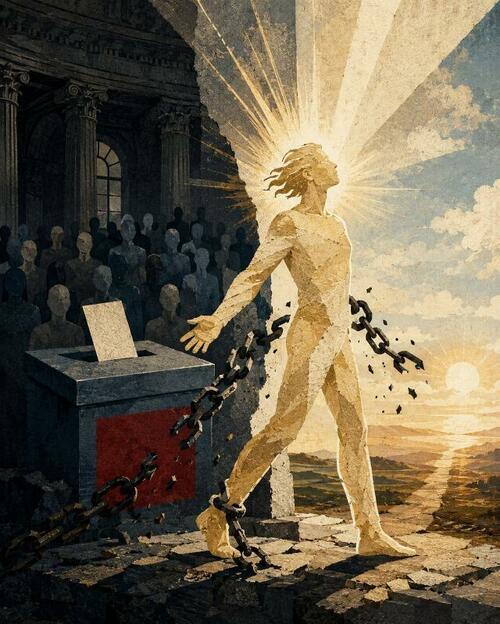
American Thinker Essay by J.B. Shurk Contrasts Natural Rights with Western Leaders' Democracy Rhetoric
Shurk's essay restates that natural rights predate and limit democratic outcomes, using founding documents to counter Western rhetoric. No institutional change or new primary record of state action is introduced. The argument highlights risks of majoritarianism absent guardrails.
The essay, carried by ZeroHedge and American Thinker, cites Hobbes, Locke, and Adam Smith to frame unrestrained majority rule as a return to self-interested conflict. It contrasts official names such as the Democratic People's Republic of Korea with actual governance outcomes and notes Western officials' repeated use of the phrase 'our democracy' as a prompt for vigilance over freedoms. No new treaty, statute, or alliance shift is recorded. Shurk invokes the Declaration of Independence text stating that rights are endowed by a Creator and unalienable, positioning them as existing despite votes rather than because of them. Primary records from the U.S. founding period document explicit limits on government power separate from electoral processes. Competing interests pit majority preferences for redistribution and disarmament against minority claims to property and self-defense. Documented positions show the essay attributes no specific policy change to any named Western government. It records only rhetorical emphasis on democracy by officials without corresponding constitutional amendments. The piece concludes that democracy functions as a neutral process whose results depend on pre-existing cultural and legal restraints rather than an inherent good.
Western officials: References to 'our democracy' without explicit rights language will coincide with measurable rises in domestic rights litigation in at least two NATO members within 18 months.
Sources (2)
- [1]Primary Source(https://www.archives.gov/founding-docs/declaration-transcript)
- [2]Supporting Source(https://oll.libertyfund.org/titles/hobbes-leviathan-1651)