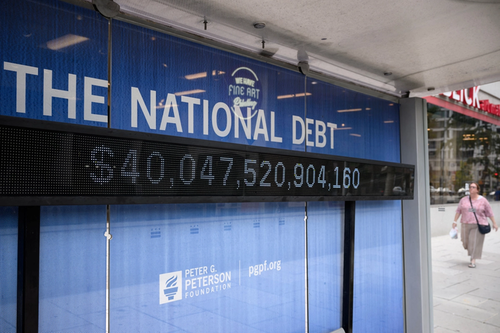
US National Debt Surpasses $40 Trillion at 120 Percent of GDP
US debt at $40 trillion and 120 percent GDP reflects the post-1971 removal of external fiscal discipline via the Federal Reserve's role as buyer of last resort. States avoid equivalent ratios because they lack monetary authority. Structural reform would require restricting open market operations rather than further unenforceable rules.
The debt threshold was crossed amid ongoing Treasury auctions and Federal Reserve open market operations that absorbed excess issuance. Primary Treasury data show the ratio exceeded the World War II peak without the prior base of domestic savings or external credit constraints. Unlike states, the federal government faces no enforceable default premium because the central bank can expand the monetary base without legislative limit.
The 1971 closure of the gold window removed the external check that previously constrained fiscal expansion. Congressional records from the period document the shift to floating rates, after which deficit authorization carried no immediate specie cost. States maintain AAA or near-AAA ratings precisely because they cannot monetize obligations, a distinction the Federal Reserve Act structure deliberately withholds from the federal level.
Absent prohibition of large-scale asset purchases, Congress retains the incentive to authorize spending while the Treasury issues debt and the Fed clears the market. Primary budget documents show repeated failure of quantity rules or balanced-budget proposals to bind future sessions. The structure sustains issuance without default risk priced by private buyers alone.
Next fiscal year projections indicate continued issuance volumes that will test whether foreign official holders maintain current allocations or rebalance toward alternative reserve assets.
CBO: Debt-to-GDP ratio will exceed 130 percent by end of FY2028 absent statutory change to Federal Reserve asset purchases.
Sources (3)
- [1]US Treasury Fiscal Data(https://fiscaldata.treasury.gov/)
- [2]Congressional Budget Office Long-Term Budget Outlook(https://www.cbo.gov/publication/59711)
- [3]Federal Reserve Act and Amendments(https://www.federalreserve.gov/aboutthefed/fract.htm)